

Key Takeaways
- Full-service RV parks offer hookups, level sites, and nearby amenities that reduce physical demands on senior travelers.
- National Forest dispersed camping is free or low-cost but requires self-sufficiency and may lack accessible infrastructure.
- Medical proximity, mobility needs, and rig size are critical factors when choosing between the two options.
- Dispersed camping suits active seniors comfortable with off-grid living; RV parks better serve those prioritizing comfort and safety.
- Neither option is universally superior — the right choice depends on your health, experience level, and trip goals.
Our Verdict
For most senior RV travelers — especially those managing health conditions, mobility limitations, or larger rigs — full-service RV parks provide the infrastructure and peace of mind that makes travel genuinely enjoyable. National Forest dispersed camping remains a rewarding option for physically active, experienced seniors who are comfortable with self-sufficiency and don't need hookups or nearby medical facilities. The wisest approach for many is a hybrid: anchor most nights at established parks while incorporating the occasional dispersed stay near scenic public lands.
| Best for | Recommended |
|---|---|
| Seniors with mobility challenges or medical needs | Full-service RV parks |
| Active, self-sufficient seniors seeking solitude and scenery | National Forest dispersed camping |
| Larger Class A or fifth-wheel rigs | Full-service RV parks |
| Budget-conscious travelers with solar or generator capability | National Forest dispersed camping |
Understanding the Core Difference
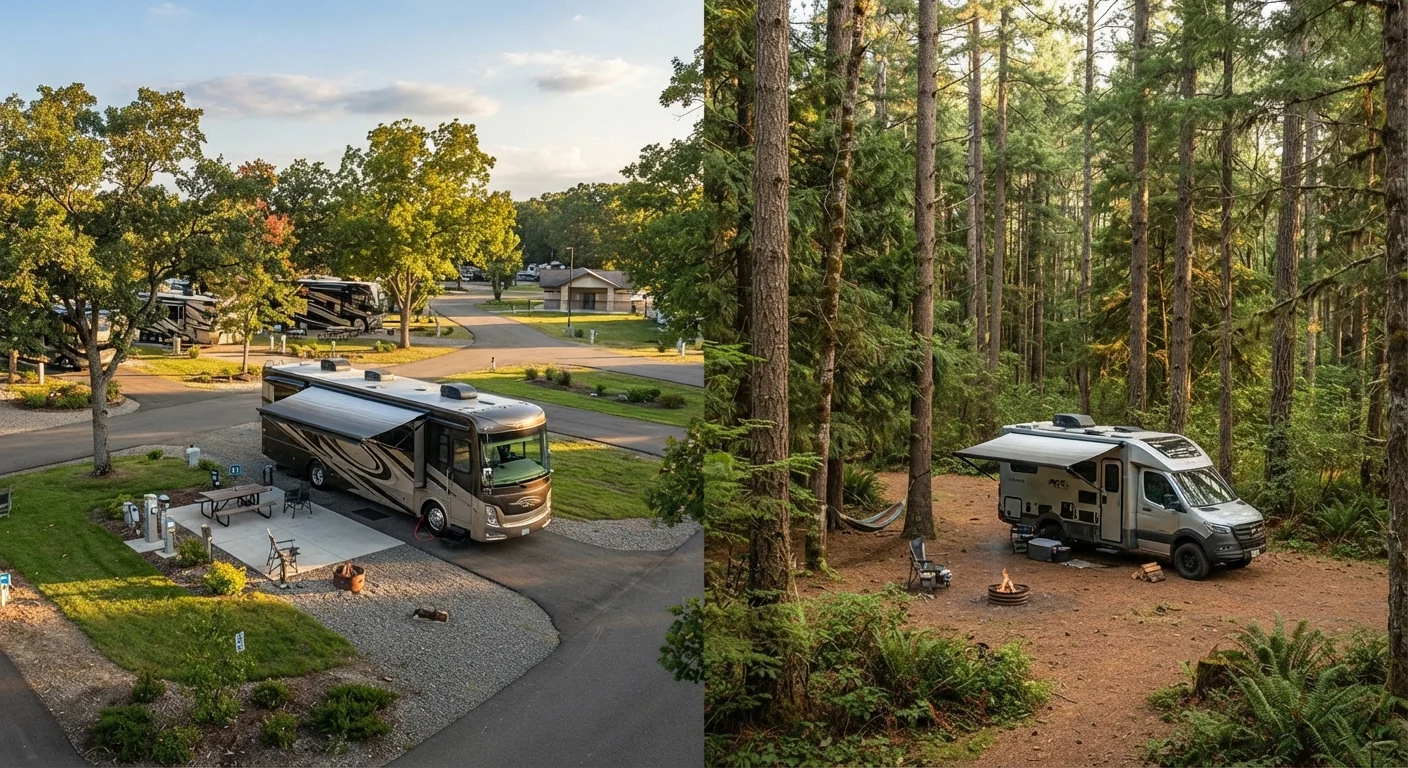
When senior RVers weigh their overnight options, two choices often come up: the structured comfort of a commercial or public RV park, and the rugged freedom of National Forest dispersed camping — staying on undeveloped public land outside designated campgrounds, typically at no cost or a modest fee.
RV parks range from basic county-run sites to full-amenity resorts with electrical, water, and sewer hookups (called full hookups), paved pads, laundry facilities, and sometimes on-site staff. Dispersed camping, by contrast, means finding a suitable flat spot in a National Forest, often with no utilities, no marked site, and no services within miles.
For a broader view of what shapes a senior-friendly overnight stop, see our guide on what campground features genuinely improve the senior RV experience. The gap between these two camping styles is wide — and for older travelers, the implications for comfort, safety, and logistics are significant.
| Full-Service RV Parks | National Forest Dispersed Camping | |
|---|---|---|
| Cost | $30–$80+ per night typical | Free or minimal fee |
| Utilities (hookups) | Electric, water, sewer available | None — fully off-grid |
| Site accessibility | Paved or gravel, level pads common | Uneven terrain, unpaved roads |
| Restroom/shower access | On-site facilities standard | None — self-contained only |
| Medical proximity | Often near towns and services | Frequently remote, limited cell service |
| Suitable rig size | Most sizes, including large rigs | Smaller rigs generally advisable |
| Privacy and solitude | Limited — sites are close together | High — often completely secluded |
| Reservations required | Often needed, especially peak season | Generally first-come, no reservation |
| Best for seniors who… | Want comfort, routine, and safety net | Are self-sufficient and active |
Where Full-Service RV Parks Shine for Seniors
For many senior travelers, the value of a full-service RV park comes down to predictability. You arrive knowing your site is level (or can be adjusted with hookup access nearby), that a restroom or shower facility is a short walk away, and that cell service or Wi-Fi is available if a medical need arises.
Hookups eliminate the need to manage propane-heavy generator use, monitor tank levels constantly, or seek dump stations — all tasks that become more taxing over long trips. Electrical hookups also mean running air conditioning or heating without constraint, which matters considerably for seniors managing temperature-sensitive health conditions.
Plan Around Medical Access on Long Trips
When building your route, note the distance between each overnight stop and the nearest urgent care or hospital. Apps and websites maintained by state health departments can help you locate facilities along your planned corridor. Keeping this information printed and accessible in the cab adds a practical safety layer, regardless of which campsite type you choose.
Proximity to towns is another understated advantage. Most established RV parks sit within a reasonable drive of pharmacies, urgent care centers, and grocery stores. For travelers on regular medications or with ongoing health management needs, this accessibility can be the deciding factor. Learn more about what distinguishes truly well-designed facilities in our article on what makes an RV park truly senior-friendly.
The Appeal — and Real Limits — of Dispersed Camping
National Forest dispersed camping offers something RV parks rarely can: genuine solitude, dramatic scenery, and a sense of adventure that many experienced RVers prize. There are no registration lines, no neighbor 10 feet away, and often no fees. For seniors who are physically capable, well-equipped, and enjoy off-grid living, it can be deeply satisfying.
However, the practical barriers are real. Access roads to dispersed sites are often unpaved, narrow, and uneven — potentially problematic for larger rigs or for drivers who prefer predictable surfaces. There are no utility connections, meaning water must be carried in, grey and black tanks managed carefully, and power generated on-site. Cell coverage is frequently absent.
Dispersed Camping Demands Real Self-Sufficiency
Before committing to a dispersed site, honestly assess your ability to handle a mechanical issue, medical situation, or weather event without outside assistance. If you rely on CPAP equipment, refrigerated medications, or frequent medication reminders via phone, off-grid camping without reliable power and cell service presents genuine risks. Always inform someone of your location and expected return before heading into a remote area.
Rig size is a practical filter: many Class B campervans or smaller Class C motorhomes handle dispersed terrain far more easily than a 40-foot Class A or a fifth-wheel. If you're weighing how vehicle type intersects with destination choice, our piece on choosing RV destinations based on road grades and comfort offers useful context.
Making the Right Call for Your Trip
The right camping style isn't determined by preference alone — it's shaped by your health needs, rig capabilities, travel pace, and how much uncertainty you're comfortable managing. Seniors newer to RV travel, or those returning after a health event, generally benefit from starting with established parks before attempting off-grid stays.
For those drawn to public lands scenery without giving up hookups entirely, a middle path exists: many national park campgrounds and some National Forest sites now offer partial or full hookups with improved accessibility. See our overview of national parks with full-hookup RV sites for options that blend scenery with infrastructure.
Whether you're considering year-round RV life or planning seasonal trips, campsite choice plays a large role in overall well-being on the road. Our Senior RV Living hub covers the full range of planning topics to help you travel with confidence. Whatever your choice, verify road conditions, site accessibility, and local services with the relevant land management agency before departure — conditions can change seasonally and vary significantly by location.
This article is for general informational purposes only. Readers with specific health conditions or mobility concerns should consult qualified healthcare and travel professionals before planning extended RV travel.