

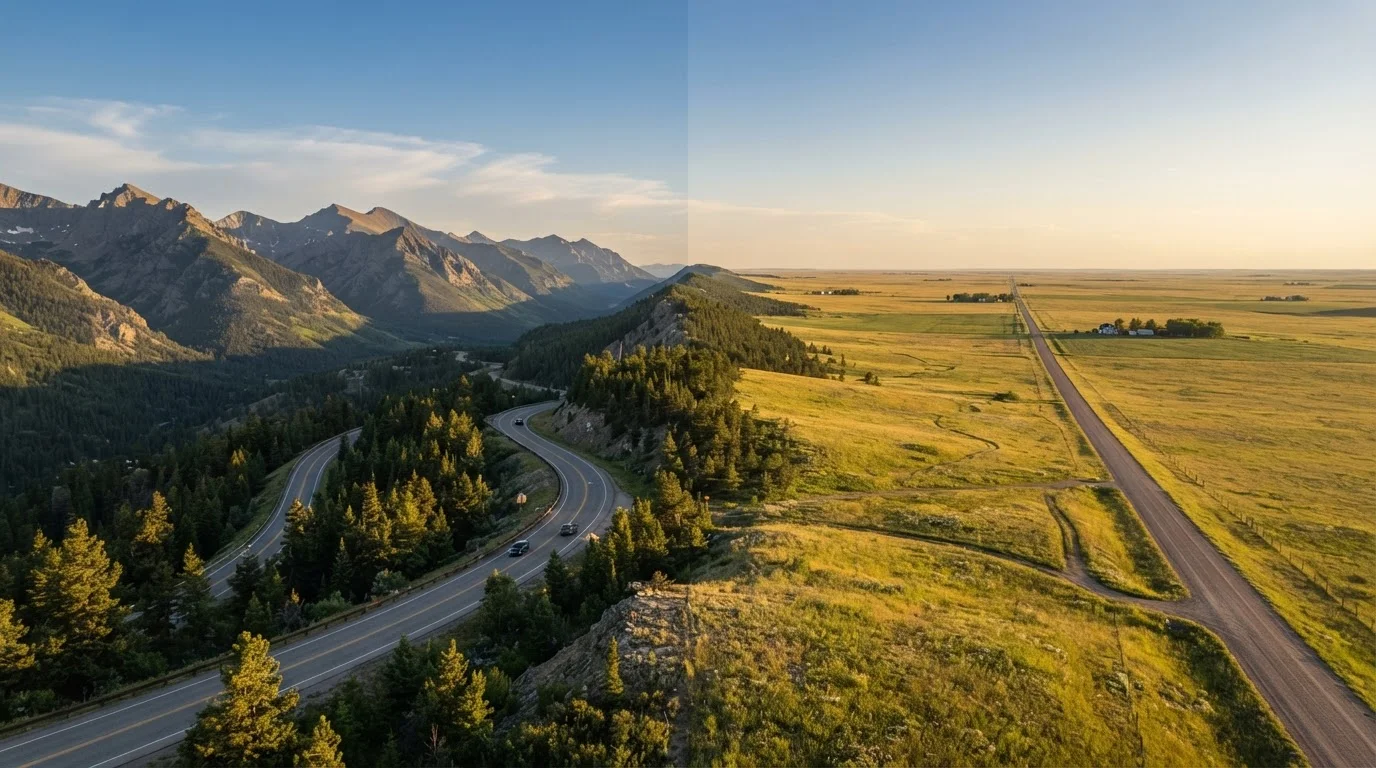
Key Takeaways
- Mountain RV destinations offer dramatic scenery but come with steeper roads, altitude effects, and limited site leveling.
- Flatland campgrounds typically provide easier driving, more level sites, and simpler access to services.
- Altitude above 6,000 feet can affect energy, sleep quality, and comfort — consult your doctor before high-elevation trips.
- Road grade and RV engine strain are real concerns on mountain routes, especially for larger or older rigs.
- Senior travelers benefit most from matching their destination type to their physical comfort level and rig capability.
Our Verdict
Neither mountain nor flatland destinations are universally superior — each suits a different traveler profile. Flatlands offer predictable, accessible driving and campground infrastructure that many senior travelers find easier to manage, while mountains reward those who can handle the physical and mechanical demands with unmatched scenery and cooler climates.
| Best for | Recommended |
|---|---|
| Travelers prioritizing easy driving and level campsites | Flatland destinations |
| Those seeking cooler summer temperatures and dramatic views | Mountain destinations |
| RVers with larger rigs or vehicles with limited towing power | Flatland destinations |
| Active seniors comfortable at elevation who want scenic exploration | Mountain destinations |
How Terrain Shapes the Senior RV Experience
Choosing between a mountain and a flatland RV destination involves far more than personal scenery preference. For senior travelers, terrain directly affects driving difficulty, campsite comfort, physical well-being, and access to medical or emergency services. Understanding these differences before booking can make the difference between a restorative trip and an exhausting one.
Flatland regions — such as the Texas Hill Country's lower corridors, the Great Plains, and parts of the Gulf Coast — tend to offer long, straight roads with gentle grades, predictable weather patterns, and campgrounds with well-leveled sites. Mountain regions, including the Rockies, the Appalachians, and the Sierra Nevada, deliver sweeping vistas and cooler summer temperatures, but they demand more from both the driver and the rig. See our Senior RV Living hub for broader guidance on making RV travel accessible and comfortable at any age.
Mountain Destinations: Scenery With Conditions
Mountain RV travel rewards patience and preparation. Passes and switchbacks can reach grades of 6–10%, which places significant strain on an RV engine and transmission going uphill and requires careful brake management on the descent. Larger Class A motorhomes and fifth-wheels often feel these grades most acutely.
Elevation adds another layer of consideration. Many popular mountain campgrounds sit above 7,000 feet. At these altitudes, reduced oxygen levels can cause temporary fatigue, shortness of breath, headaches, and disrupted sleep — particularly in the first day or two. Seniors managing heart or lung conditions should consult a healthcare provider before planning high-altitude stays. This is general information, not medical advice; always discuss elevation travel with your own physician.
Site leveling can also be inconsistent in mountain parks, which are often built into hillside terrain. Uneven sleeping surfaces and difficult entry steps are real comfort concerns. That said, mountain campgrounds frequently offer stunning surroundings, wildlife viewing, and natural shade that makes summer travel genuinely pleasant. For a detailed look at altitude preparation, see staying comfortable at elevation in the Rockies.
Ease Into Altitude Gradually
If your mountain route includes campgrounds above 6,000 feet, consider spending one or two nights at a mid-elevation site first — around 4,000 to 5,000 feet — before ascending further. This gives your body time to begin adjusting and can significantly reduce fatigue and headache. Stay well hydrated and avoid strenuous activity on your first day at high elevation.
Flatland Destinations: Accessibility and Ease
Flatland RV destinations earn strong marks on accessibility. Driving on level terrain reduces fuel consumption, minimizes mechanical strain, and makes for a less fatiguing experience behind the wheel. For seniors who prefer shorter driving days, flatland routes make it easy to stop frequently without navigating complex mountain descents.
Campground infrastructure in flatland regions is often more standardized. Sites are more consistently level, hookups are reliable, and campgrounds near towns give easier access to grocery stores, pharmacies, and medical facilities — a genuine comfort factor for many older travelers. The Great Plains states, the southeastern lowlands, and the Midwest offer wide selections of well-maintained RV parks with full hookups and accessible bathhouses.
Scenery in flatland areas is sometimes underestimated. Prairie sunsets, wildflower meadows, and river valley corridors can be quietly spectacular. However, summer heat in lower-elevation regions — particularly the Southwest flatlands — can be intense, requiring careful attention to timing and RV cooling capacity.
| Mountain Destinations | Flatland Destinations | |
|---|---|---|
| Driving difficulty | High — steep grades, switchbacks | Low — level, straightforward roads |
| Site leveling | Often uneven, hillside terrain | Generally flat, consistent sites |
| Altitude effects | Possible fatigue, sleep disruption above 6,000 ft | Minimal at low elevation |
| Summer temperatures | Cooler, often pleasant | Can be very hot in southern regions |
| Access to services | May be limited in remote parks | Typically closer to towns and hospitals |
| Scenic value | Dramatic — peaks, valleys, forests | Subtle — prairies, river corridors, sunsets |
| RV mechanical strain | Higher — engines and brakes work harder | Lower — minimal strain on rig |
For a broader look at how to evaluate any campground's senior-friendly features, the article on campground selection priorities beyond price offers practical criteria worth reviewing before you book.
Planning Your Route With Terrain in Mind
Regardless of which terrain type appeals to you, route planning matters enormously. Mountain roads may require you to research maximum vehicle grades, tunnel restrictions, and seasonal road closures. Many mountain passes in Colorado and Wyoming, for example, close entirely in winter and may have narrow lanes unsuitable for wide RVs.
Flatland routes offer more flexibility in timing and vehicle size, but distance between services can be long across rural stretches — requiring fuller fuel and water tanks than you might carry on a more developed mountain route.
Our resource on America's most scenic RV routes for slower-paced exploration includes options across both terrain types, matched to travelers who prioritize comfort and unhurried pacing. And if you're weighing whether a full-service park or more remote camping suits your style, the comparison of RV park vs. dispersed camping for seniors explores that question directly. Thorough planning through the RV Trip Planning hub will help you build a trip that matches your comfort level, rig, and health needs.
6–10%
Typical road grade on mountain passes
Many western mountain highways post grade warnings in this range, which meaningfully increases engine and brake load for larger RVs.
6,000 ft
Elevation where altitude effects often begin
General altitude physiology guidance suggests that many people begin to notice reduced oxygen availability above approximately 6,000 feet of elevation.