

Key Takeaways
- Florida offers humid, coastal warmth ideal for beach lovers, while Arizona's dry heat suits those sensitive to humidity.
- Both states have strong senior-friendly infrastructure, including well-developed healthcare networks and accessible attractions.
- Arizona's desert terrain can involve elevation changes, while Florida's flat landscape is generally easier to navigate on foot.
- Summer heat in both states can be intense; cooler months — particularly November through April — tend to be most comfortable for senior visitors.
- Arizona's dry air may benefit some respiratory conditions, but always consult a healthcare professional before traveling with health concerns.
Option A
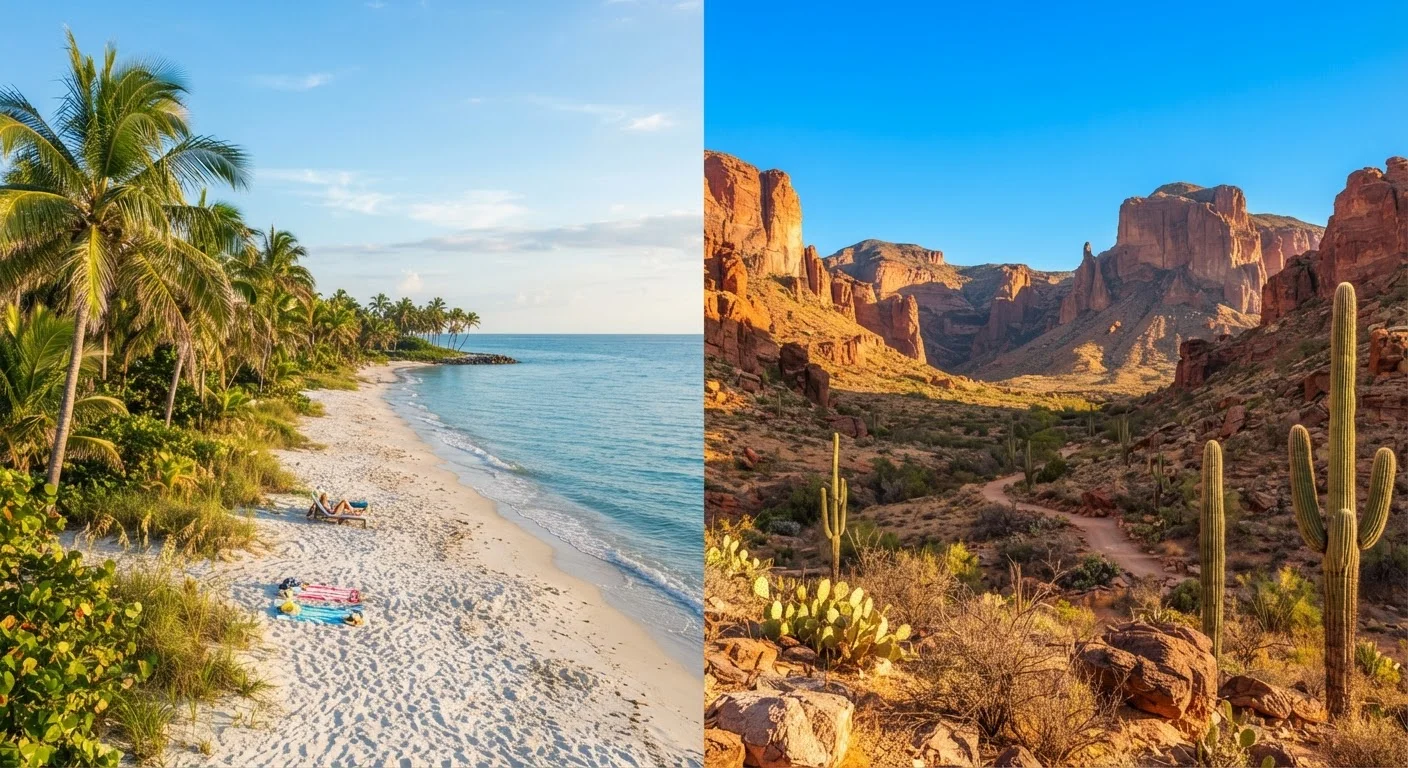
Florida
The coastal, humid, beach-and-water escape.
Best for: Seniors who want oceanfront access, flat terrain, mild winters, and a lively coastal atmosphere.
Option B
Arizona
The dry, desert, low-humidity retreat.
Best for: Seniors who prefer a drier climate, dramatic scenery, and quieter, less crowded outdoor settings.
If you love the beach and ocean activities
Florida
Florida's extensive coastline offers calm Gulf waters and Atlantic beaches, with flat, easy-to-walk shorelines well suited to older adults.
If humidity is a concern or discomfort for you
Arizona
Arizona's desert climate is notably dry year-round, which many visitors find more breathable and physically comfortable than Florida's humid air.
If you want accessible national parks and natural landmarks
Arizona
Arizona is home to the Grand Canyon, Sedona, and Saguaro National Park, many of which offer accessible visitor trails and shuttle options.
If you prefer flat terrain and easy walkability
Florida
Florida is one of the flattest states in the US, making it significantly easier to navigate for seniors with mobility considerations.
If you plan to travel by RV or spend extended time outdoors
Florida
Florida's extensive RV park network and mild winter temperatures make it a practical base for longer warm-weather stays. See our Florida RV guide for details.
Climate: Humid Coast vs. Dry Desert
Both Florida and Arizona earn their reputations as warm-weather havens, but the character of that warmth differs considerably. Understanding this distinction is key for senior travelers planning a comfortable stay.
Florida's climate is subtropical, meaning warm temperatures come paired with significant humidity — particularly in summer, when heat index values can make outdoor activity feel more taxing than the thermometer suggests. Winters, especially from November through March, are Florida's sweet spot: mild, sunny, and far less oppressive. Coastal breezes along both the Gulf and Atlantic sides offer some natural relief.
Arizona operates on an entirely different climate model. The state is largely arid, with low humidity throughout the year. Summer temperatures in cities like Phoenix routinely exceed 105°F — genuinely dangerous without adequate hydration and shade. However, the dry heat tends to feel less suffocating than Florida's humid equivalent. Monsoon season (roughly July through September) brings brief but intense afternoon thunderstorms that can disrupt outdoor plans.
For seniors considering the best travel window, both states shine most brightly in late fall and early spring. Our seasonal temperature reference guide offers a helpful month-by-month breakdown for both destinations.
| Criterion | Florida | Arizona |
|---|---|---|
| Climate type | Subtropical, humid | Arid, dry desert |
| Best travel months | November – April | October – April |
| Summer conditions | Hot and very humid | Extremely hot, dry |
| Terrain | Flat, sea-level | Mixed; flat cities, rugged parks |
| Walkability for seniors | Generally excellent | Good in cities; varies in nature areas |
| Primary draw | Beaches and coastal life | Desert scenery and national parks |
| Healthcare access | Strong statewide | Strong in metro areas; limited rurally |
| Humidity level | High | Low |
Terrain, Accessibility, and Getting Around
Florida's defining geographic feature is flatness. The state sits barely above sea level, and this translates directly into easier navigation — whether on foot, by wheelchair, or using a mobility aid. Beachfront boardwalks, paved waterfront promenades, and accessible resort facilities are common across popular destinations like Sarasota, Naples, and St. Augustine. Public transit exists in larger metro areas, though many seniors find a rental car or rideshare service the most practical option for getting around.
Arizona presents a more varied landscape. While cities like Phoenix and Scottsdale are largely flat and very car-friendly, the state's natural attractions — Sedona's red rock formations, the South Rim of the Grand Canyon, and Tucson's desert trails — involve uneven terrain and, in some cases, significant elevation. The Grand Canyon's South Rim does offer accessible paved paths and shuttle services, but it's important to plan ahead and check current accessibility conditions before visiting.
Warm climates offer more than just comfort — they come with practical travel advantages that can make a meaningful difference in day-to-day mobility and enjoyment. Whichever state you choose, researching specific venues for accessibility features ahead of time is always worthwhile.
#1
Florida's rank for US retiree migration
Florida consistently ranks as the top destination for Americans relocating in retirement, according to US Census Bureau migration data.
~330
Average sunny days per year in Phoenix, AZ
Phoenix averages around 299–333 sunny days annually, making it one of the sunniest major cities in the United States.
105°F+
Typical Phoenix summer high temperatures
Phoenix regularly records summer highs exceeding 105°F, underscoring the importance of heat precautions for senior visitors during peak months.
Healthcare Access and Senior-Friendly Infrastructure
Both Florida and Arizona rank among the top US states for retirement-friendly living, and that reputation is partly built on strong healthcare infrastructure.
Florida hosts a large concentration of hospitals, specialist clinics, and senior care facilities — a direct result of decades of retiree migration. Major metropolitan areas including Tampa, Orlando, and Miami offer comprehensive medical services, and even smaller coastal communities tend to have accessible urgent care and pharmacy options nearby.
Arizona has similarly invested in healthcare capacity, particularly in the Phoenix–Scottsdale metro area and Tucson. The state's large retiree population has driven development of senior-focused medical centers and wellness communities. That said, rural areas of Arizona — such as the regions surrounding the Grand Canyon or remote desert parks — can be hours from the nearest hospital. Seniors with ongoing health needs should plan accommodations accordingly.
Travel insurance that covers medical evacuation and pre-existing conditions is worth considering for any extended trip to either state. Policies vary considerably in what they cover, so reading plan documents carefully and consulting a licensed insurance adviser is advisable before purchasing. This content is general information and is not a substitute for personalised insurance or medical advice.
Activities and What Each State Does Best
Florida's strengths are water-based and culturally varied. Calm Gulf Coast beaches — particularly around Clearwater, Sanibel, and Marco Island — are popular for their gentle surf and accessible shores. Wildlife experiences like manatee watching, nature cruises, and birding in the Everglades draw nature enthusiasts. Florida's cultural calendar is full year-round, with performing arts centers, historic districts, and vibrant dining scenes across most of its coastal cities.
For those considering an extended Florida visit by road, Florida's RV parks and accessible campground network offer a flexible way to explore at a comfortable pace.
Arizona rewards a different kind of traveler. The state's national parks and monuments are world-class: the Grand Canyon, Monument Valley, Petrified Forest, and Saguaro National Park are among the most visited natural sites on the continent. Sedona, in particular, has developed a strong wellness and arts tourism identity, with spa retreats, gallery districts, and gentle scenic drives that don't require strenuous hiking. Scottsdale's golf culture and resort amenities also make it a draw for seniors seeking leisure-focused itineraries.
If neither domestic option fully satisfies, exploring international warm-weather alternatives may be worth considering as a complementary option.
This article provides general travel information for educational purposes and is not a substitute for personalised medical, insurance, or accessibility advice. Always verify current conditions, entry requirements, and health considerations with relevant official sources before traveling.