
New Zealand vs. Australia: Long-Haul Destinations Worth the Journey for Seniors

Key Takeaways
- Both countries are English-speaking with high-quality healthcare systems accessible to international visitors.
- Australia's major cities offer flat terrain and excellent public transport; New Zealand's landscape is more rugged and hilly.
- New Zealand's compact size makes it easier to cover key highlights without excessive internal travel.
- Australia's internal distances are vast — flying between cities is often necessary and adds to trip fatigue.
- Both destinations require careful planning for the long-haul flight, including medical preparation and rest stops.
- Terrain difficulty and pace of travel are the most important factors separating these two destinations for seniors.
Option A
New Zealand
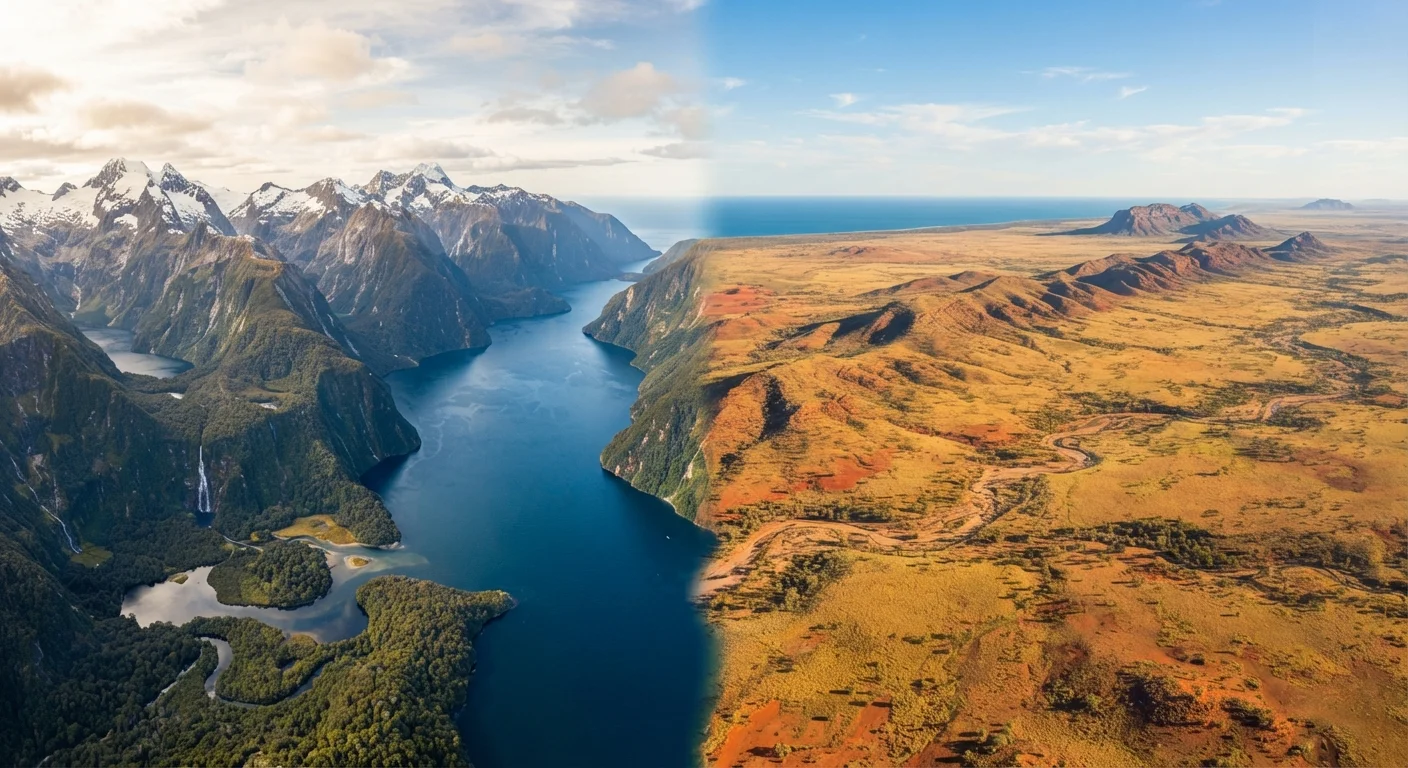
The compact, dramatic, and nature-immersive choice.
Best for: Seniors who prefer a slower pace, cooler temperatures, and extraordinary natural scenery in a compact geography.
Option B
Australia
The vast, culturally rich, and infrastructure-strong option.
Best for: Seniors who want urban comfort, warm coastal weather, and a wide variety of experiences across a large, well-connected country.
If you prefer cooler climates and dramatic scenery in a manageable area
New Zealand
New Zealand's South and North Islands can be explored thoroughly without the enormous internal distances that Australia requires. The cooler, temperate climate also suits seniors who find heat tiring.
If you prioritise urban comfort, warm weather, and accessible infrastructure
Australia
Cities like Sydney, Melbourne, and Brisbane offer excellent accessibility features, flat walkable areas, and strong senior-friendly amenities alongside world-class healthcare facilities.
If minimising physical exertion and rough terrain is the top priority
Australia
Coastal cities and major tourist regions in Australia tend to be flatter and easier to navigate than many of New Zealand's most celebrated scenic areas, which involve hilly or uneven ground.
If you want a single-base, slower-paced travel style
New Zealand
New Zealand rewards slower exploration — a week based in Queenstown or the Bay of Islands, for example, provides rich variety without requiring constant relocation.
If cruise travel is part of your itinerary
Australia
Australia's major port cities — particularly Sydney, Brisbane, and Fremantle — are among the Southern Hemisphere's most developed cruise hubs, with strong onshore accessibility.
Why These Two Destinations Deserve Serious Consideration
For senior travelers venturing beyond North America or Europe, New Zealand and Australia represent two of the most consistently welcoming long-haul options. Both are English-speaking, politically stable, and equipped with healthcare infrastructure that meets high international standards. But they are not interchangeable — the differences in geography, terrain, climate, and travel pace matter considerably when comfort and ease are priorities.
Understanding what makes a country truly senior-friendly involves more than language and scenery. It means assessing the physical demands of getting around, the proximity of healthcare, and how forgiving the overall travel rhythm is for older adults. On those criteria, New Zealand and Australia tell quite different stories.
| Criterion | New Zealand | Australia |
|---|---|---|
| Primary language | English | English |
| Geographic size | Compact (similar to Colorado) | Vast (continental scale) |
| Internal travel | Short drives or domestic flights | Frequent domestic flights needed |
| Terrain difficulty | Often hilly or rugged | Mostly flat in major cities |
| Climate | Temperate, cooler overall | Varied — tropical to Mediterranean |
| Healthcare infrastructure | Strong in cities, limited rurally | Strong, especially in major cities |
| Cruise port access | Auckland, Wellington, Christchurch | Sydney, Brisbane, Fremantle |
| Best travel pace | Slow, base-focused exploration | City-by-city or regional focus |
Terrain, Accessibility, and Getting Around
Australia's major cities — Sydney, Melbourne, Adelaide, Brisbane — are built on relatively flat coastal land and feature mature public transit systems, wide footpaths, and abundant accessibility infrastructure. Seniors with mobility considerations will generally find urban Australia easier to navigate than most comparable long-haul destinations. The challenge is scale: Australia is a continent, and traveling between cities often requires domestic flights that add to overall trip fatigue.
New Zealand is dramatically beautiful but physically demanding in many of its most iconic areas. Queenstown, Milford Sound, and the volcanic plateau of the central North Island involve uneven terrain, significant elevation changes, or boat and helicopter access. That said, many scenic highlights — Rotorua's geothermal areas, the Bay of Islands, Christchurch's flat city center — are genuinely accessible without strenuous activity. Seniors who research specific sites carefully can build a very manageable New Zealand itinerary.
For a broader look at how terrain and infrastructure affect senior travel choices, see our guide to accessible destinations and safe environments.
268,021 km²
Total land area of New Zealand
New Zealand's compact size means even its most remote highlights are within a few hours of a major city or airport.
7,692,024 km²
Total land area of Australia
Australia is the world's sixth-largest country by area, making selective regional planning essential for senior travelers with limited stamina.
14–20+ hrs
Typical US-to-Oceania flight time
Flights from the US East Coast to Sydney or Auckland are among the longest commercial routes; rest planning and medical consultation before travel are strongly advisable.
Healthcare Access and Travel Safety
Both Australia and New Zealand maintain publicly funded healthcare systems and high standards of hospital care in their major cities. For international visitors, healthcare services are available but generally come at out-of-pocket cost — making comprehensive travel insurance an important consideration before departure. (Travel insurance details vary by provider and personal circumstance; consult a licensed adviser and review policy documents carefully before purchasing any coverage.)
Australia's larger population means more hospitals and specialist facilities, particularly in its major urban centers. New Zealand's more rural regions — particularly the South Island's west coast — can be farther from full hospital services. Seniors with ongoing health conditions should map their planned itinerary against healthcare facility locations as part of trip planning.
Regardless of destination, the long-haul flight itself — often 14 to 20-plus hours from the US East Coast — warrants advance preparation. Consulting a physician before booking is strongly advised for any senior with cardiovascular, respiratory, or mobility concerns. This article provides general travel information only and is not a substitute for personal medical advice.
Climate, Pace, and What the Journey Actually Feels Like
Australia's climate varies dramatically by region: the northern tropics are hot and humid, while the southern cities enjoy a temperate Mediterranean-style climate. Seniors who find heat physically taxing should plan carefully around season and region. Traveling Australia's east coast from Sydney to Cairns in the cooler months (May through September) offers warmth without extreme heat.
New Zealand's climate is cooler overall and more variable. The South Island in particular can be chilly and wet, even in summer — which in New Zealand runs from December through February. The North Island is warmer and wetter, with Northland and the Bay of Plenty offering the mildest conditions. Layering clothing for New Zealand travel is essential regardless of season.
Pace is where New Zealand arguably has an edge for seniors seeking a less rushed experience. Its compact geography makes it possible to spend more time in fewer places — a style of travel that pairs well with the advice in our piece on island hopping vs. a single destination. Australia, by contrast, almost rewards a more selective approach — choosing one or two regions rather than trying to cover the whole country in a single trip.
Whichever destination you choose, maximising rest and comfort on extended trips is especially important after a long-haul flight of this length.
This article is for general informational purposes only. It does not constitute medical, insurance, legal, or financial advice. Travelers should verify all entry requirements, health and safety conditions, and coverage details with official government sources and qualified professionals before making any travel arrangements.