

Key Takeaways
- Not all Mediterranean cruise ports are walkable — terrain, surfaces, and distances vary significantly between stops.
- Ports like Dubrovnik and Santorini involve steep climbs and uneven cobblestones that can challenge many seniors.
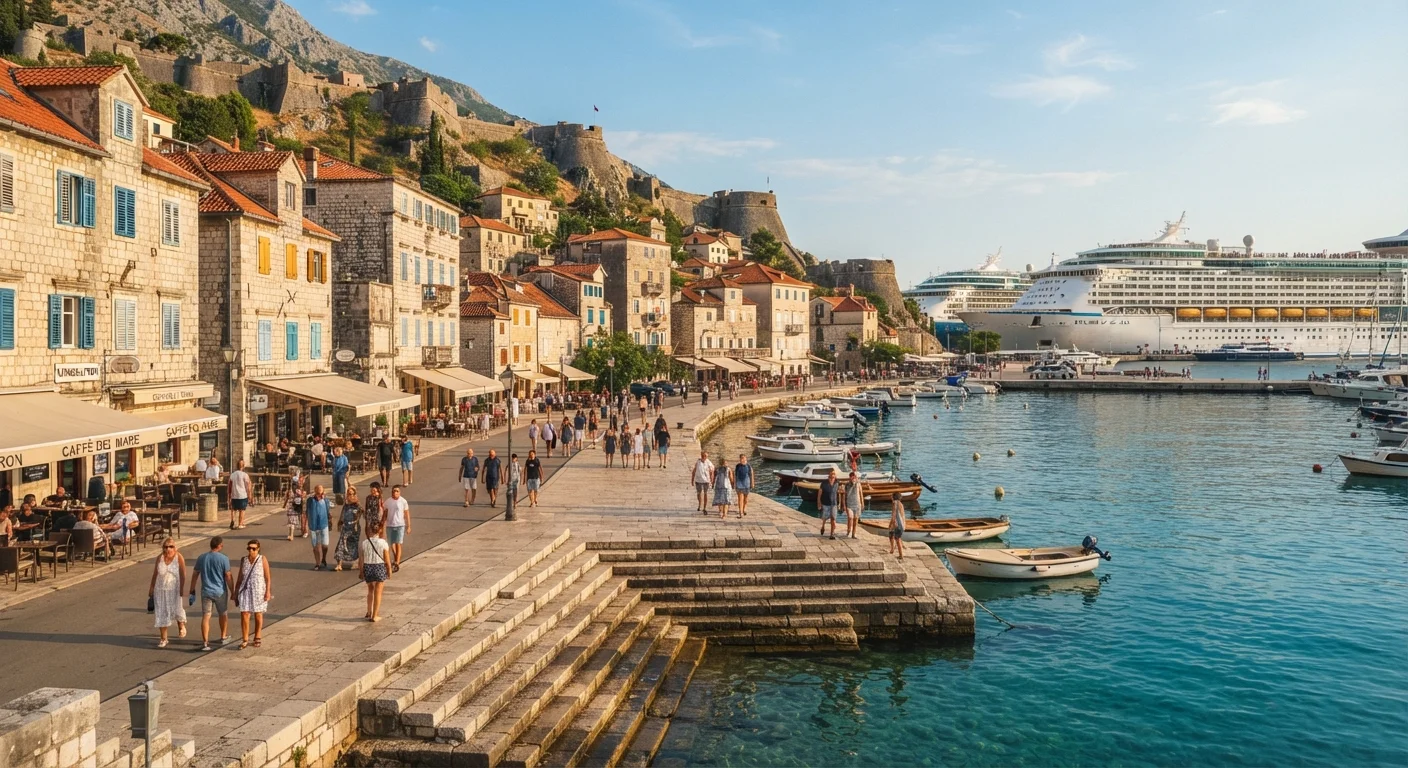
- Flat, paved waterfronts at ports like Kotor and Civitavecchia offer a more manageable on-foot experience.
- Shore excursion alternatives exist at most ports for travelers who prefer to avoid difficult terrain.
- Planning ahead by researching each port's layout can help seniors avoid unexpected physical strain.
Our Verdict
Mediterranean cruises offer some of the world's most beautiful port experiences, but the physical demands vary enormously from stop to stop. Seniors who research terrain and pace their days thoughtfully can enjoy even the more challenging ports — while those with limited mobility will find certain stops better suited to guided excursions than independent walking.
| Best for | Recommended |
|---|---|
| Seniors who walk comfortably but want to avoid steep climbs | Kotor or Civitavecchia |
| Travelers with mobility aids or limited stamina | Guided accessible shore excursions |
| Active seniors comfortable with uneven surfaces | Dubrovnik Old Town on a quiet morning |
| Those wanting iconic scenery without difficult walking | Santorini cable car or boat access |
Why Port Accessibility Matters More Than You Think
A Mediterranean itinerary looks spectacular on paper — ancient ruins, clifftop villages, azure harbors. But the physical reality of each port can catch travelers off guard. Many of the region's most photographed towns were built centuries before accessibility was a consideration, with narrow alleys, steep staircases, and uneven cobblestones as standard features.
For senior travelers, the difference between a memorable afternoon ashore and an exhausting, uncomfortable one often comes down to terrain. Understanding what each port actually looks like at ground level — not just in promotional photos — is essential planning, not optional.
Evaluating shore excursion difficulty before you sail is one of the most practical steps you can take. But the first step is knowing what each port's independent walking experience actually involves.
Port-by-Port Accessibility Comparison
The ports below represent some of the most frequently visited stops on Mediterranean itineraries. Each has a distinct physical profile that directly affects how manageable independent exploration is for older adults.
| Santorini | Dubrovnik | Kotor | Civitavecchia | Valletta | |
|---|---|---|---|---|---|
| Flat waterfront access | Minimal — steep climb required | Limited — steps at entry points | Yes — compact flat center | Yes — flat pier area | Yes — walkable from terminal |
| Cobblestone/uneven surfaces | Extensive throughout | Polished, slippery stone | Moderate in Old Town | Minimal in port area | Some historic streets |
| Step frequency | Very high — caldera access | High — walls and entries | Moderate at town level | Low in port area | Low to moderate |
| Independent walkability rating | Challenging | Moderate to challenging | Moderate | Easy to moderate | Easy |
| Accessible excursion availability | Cable car; guided options | Guided flat-route tours | Good options available | Rome transfers available | Good in-town options |
| Crowd pressure in peak season | Very high | Very high | Moderate | Moderate | Moderate |
A few important notes on the table above: "Flat waterfront" ratings assume access from the main pier area. Inland areas of nearly every port introduce more challenging terrain. Seasonal crowds also affect walkability — narrow lanes that feel manageable in spring can become physically difficult in peak summer. Consult a detailed port-by-port walkability breakdown for more granular analysis.
The Hardest Ports for Independent Walking
Santorini (Thira), Greece is among the most visually stunning stops on any Mediterranean itinerary — and among the most physically demanding. The caldera villages of Fira and Oia sit hundreds of feet above the water. Reaching them from the tender pier involves either a steep zigzagging path of roughly 580 steps, a cable car (which often has long queues in summer), or a mule ride. Once in the villages, paths are narrow, uneven, and frequently interrupted by steps. Travelers with knee or hip concerns should plan carefully.
Dubrovnik, Croatia presents a different challenge. The Old Town is breathtaking and relatively compact, but it sits behind walls and is accessed by stone staircases. Cobblestone surfaces are polished smooth by millions of visitors, making them slippery when wet. The city walls walk — a popular activity — involves significant climbing with limited seating. That said, the main Stradun promenade is relatively flat and manageable for a shorter stroll.
Visit Dubrovnik Early in the Day
Dubrovnik's Old Town is significantly more navigable before large tour groups arrive mid-morning. If your ship anchors early, heading ashore at opening hours gives you more space on the Stradun and easier access to key sites. Comfortable, non-slip footwear with good ankle support is strongly recommended on any cobblestone port.
More Manageable Ports Worth Knowing
Kotor, Montenegro offers a walled Old Town that is compact and largely flat at its lower levels. The main square and surrounding lanes are accessible by foot without significant climbing, though the famous fortress walk above town is steep and not suitable for those with limited mobility. Many seniors find Kotor's waterfront and historic center among the more comfortable independent-walking experiences in the Adriatic.
Civitavecchia, Italy — the port for Rome — is itself a flat, modest town. The pier area connects fairly directly to town amenities. Most visitors use this port as a transfer point to Rome, which involves a roughly 90-minute train ride. Rome itself is a mixed picture: many historic sites involve significant walking and uneven ground, though areas like the Vatican and Trastevere have relatively navigable sections.
Valletta, Malta is compact, walkable from the cruise terminal, and flat along its main arteries. It is one of the smaller European capitals and genuinely manageable on foot for most seniors. Wider context on accessible European destinations is available in our guide to accessible European cities for senior travelers.
Practical Strategies for Any Mediterranean Port
Independent walking is only one option. At most Mediterranean ports, organized excursions — including those designed with limited mobility in mind — provide a viable alternative that removes the stress of navigating unfamiliar terrain. Before booking, ask specifically about walking surface types, distance, step counts, and rest stops. Vague descriptions like "easy walking" can mean very different things.
Timing matters too. Arriving at popular sites early in the morning — before larger tour groups — reduces crowd pressure and makes narrow lanes far easier to navigate. Hiring a private driver for the day is another approach that many travelers find gives them the sightseeing experience without physical strain.
For those traveling with mobility aids, verifying equipment ahead of time is essential. Narrow historic lanes and steep inclines in many Mediterranean ports can make wheeled mobility aids impractical in certain areas. The realities of cruise accessibility for wheelchair users are worth reviewing before finalizing any itinerary.
If you are weighing Mediterranean against other cruise regions, the comparison between Caribbean and Mediterranean cruises for seniors addresses port accessibility differences between the two regions in broader terms.
This article provides general travel information. Port conditions, accessibility infrastructure, and excursion offerings can change. Always verify current details with your cruise line and consult official tourism resources before traveling.