

| Flattest major port | Palma de Mallorca, Spain |
| Most challenging for mobility aids | Dubrovnik, Croatia (steep limestone steps throughout Old City) |
| Tender port risk | Affects ports without dedicated cruise docks; boarding involves a small boat transfer |
| Accessible Acropolis pathway | Available at Athens (Piraeus), Greece — elevator and ramp access provided |
| Typical port time | 6–10 hours depending on itinerary |
| Barcelona terminal access | Direct dock with flat waterfront promenade connection |
Why Walkability Matters for Senior Cruise Passengers
The Mediterranean is one of the world's most beloved cruise regions, but its ports vary enormously in how easy they are to explore on foot or by mobility aid. Cobblestone lanes, steep hillside climbs, and tender-only landings can make some ports genuinely challenging, while others offer flat seafront promenades and modern terminal facilities that welcome travelers of all mobility levels.
Understanding a port's terrain before you arrive lets you plan your time confidently — whether that means booking a low-impact guided excursion, staying close to the waterfront, or simply knowing to bring comfortable supportive footwear. For a broader framework on evaluating shore excursion difficulty and duration, see our guide to senior-friendly shore excursions.
| Flattest major port | Palma de Mallorca, Spain |
| Most challenging for mobility aids | Dubrovnik, Croatia (steep limestone steps throughout Old City) |
| Tender port risk | Affects ports without dedicated cruise docks; boarding involves a small boat transfer |
| Accessible Acropolis pathway | Available at Athens (Piraeus), Greece — elevator and ramp access provided |
| Typical port time | 6–10 hours depending on itinerary |
| Barcelona terminal access | Direct dock with flat waterfront promenade connection |
Port-by-Port Accessibility Snapshot
The following overview covers widely visited Mediterranean cruise stops, organized by general walkability and accessibility for travelers using canes, walkers, or wheelchairs. Conditions can change seasonally and with ongoing infrastructure improvements, so always verify current accessibility details with your cruise line before sailing.
Barcelona, Spain
Barcelona's cruise terminal connects directly to La Barceloneta waterfront, which features flat, wide promenades. The Ramblas boulevard is mostly flat but crowded. Many major attractions have elevator access. Cobblestones appear in the Gothic Quarter, making that area less suitable for wheeled mobility aids.
Civitavecchia (Rome gateway), Italy
The port itself is straightforward to navigate, but the journey to Rome involves a 90-minute transfer each way — often by bus or train — which can be tiring. Travelers who prefer a shorter, lower-effort day may find staying in the port town more manageable.
Dubrovnik, Croatia
Dubrovnik's famous Old City walls and limestone streets are visually stunning but physically demanding. Steps are widespread, surfaces can be slippery, and summer heat is intense. The cable car to Mount Srđ is accessible but requires a short walk. Travelers with limited mobility may benefit from a waterfront café day rather than a walking tour.
Athens (Piraeus), Greece
Piraeus port is large and modern. Athens itself presents a mixed picture: the Acropolis has an accessible pathway and elevator for visitors with mobility needs, but surrounding streets are uneven. A guided, accessible tour is generally the most practical option.
Palma de Mallorca, Spain
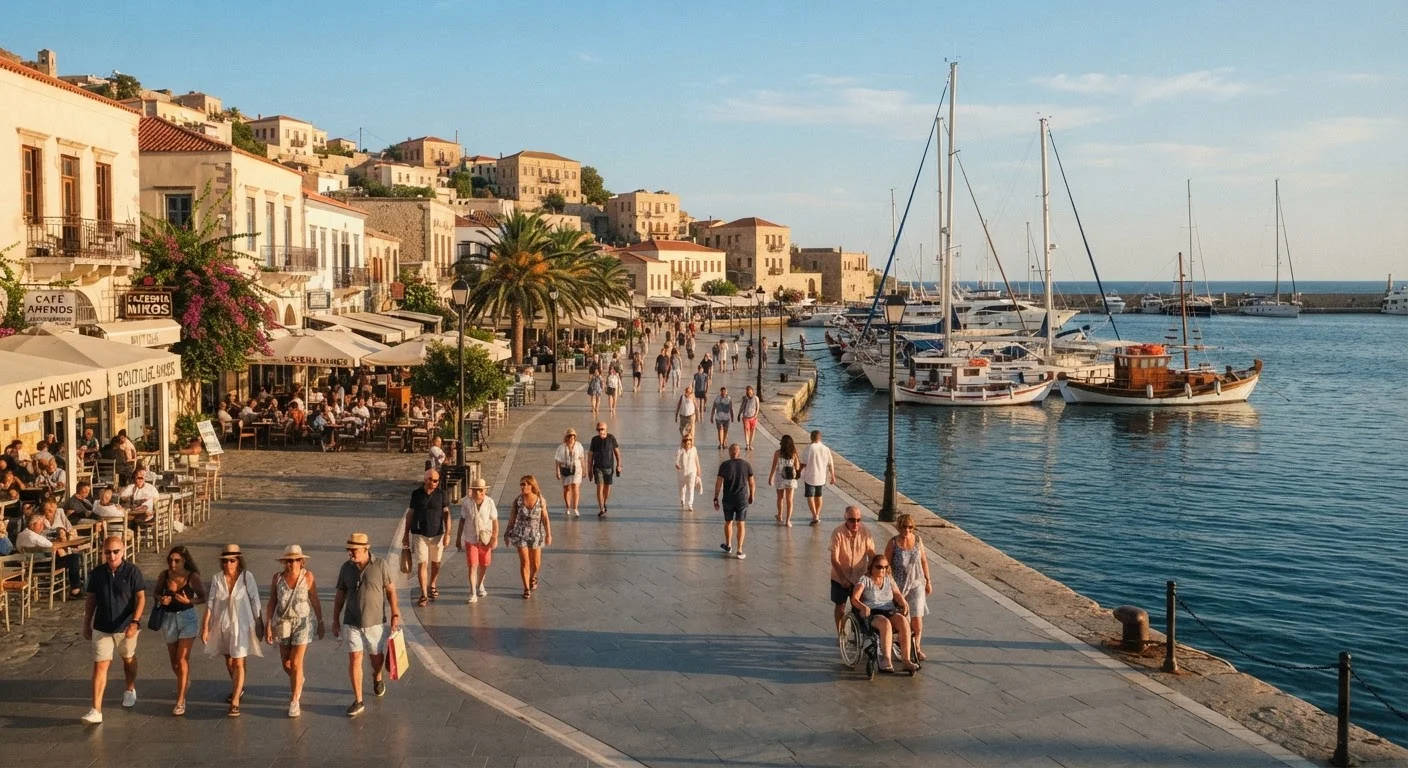
Palma offers a relatively flat old town with a wide seafront boulevard. The cathedral and nearby gardens are accessible. It is considered one of the more manageable Mediterranean ports for travelers using mobility aids.
Kotor, Montenegro
Kotor's medieval walls require significant stair climbing — largely unsuitable for mobility aids. The town square, however, is flat and pleasant for a leisurely waterfront visit without ascending the fortifications.
For a deeper look at realistic terrain conditions across the region, the Mediterranean ports accessibility guide provides candid port-level detail.
Tender port
A port where the cruise ship anchors offshore and passengers travel to land via a smaller vessel called a tender. This transfer can present challenges for travelers using wheelchairs or walkers.
Gangway
The walkway or ramp connecting the cruise ship to the pier. Gangway angle and width vary by ship and port, which can affect accessibility for mobility aid users.
Shore excursion
An organized activity or tour offered at a port of call, typically coordinated through the cruise line or a local operator. Excursions vary widely in physical demand and accessibility.
Cobblestone terrain
Uneven stone paving common in historic Mediterranean town centers. It can be difficult to navigate with wheeled mobility aids and increases fall risk for those with balance challenges.
Practical Tips for Planning Accessible Port Days
No port is uniformly accessible or inaccessible — the experience depends heavily on where you go within it. Use these practical strategies to make the most of each stop:
- Request accessibility information in advance. Contact your cruise line's accessibility desk before departure. Ships often have printed or digital port guides detailing terrain, distances, and known barriers.
- Prioritize waterfront areas. Most Mediterranean ports have accessible seafront promenades even when hillside districts are not. A harbor-view meal or a short waterfront stroll can be deeply enjoyable without physical strain.
- Ask specifically about tender ports. At some ports, passengers must transfer from the ship to shore via a smaller boat called a tender. This step involves a boarding transfer that can be difficult for travelers using walkers or wheelchairs. Confirm whether your port is a direct dock or tender stop.
- Build in rest time. Mediterranean summers are hot. Fatigue and heat together significantly increase the physical challenge of any port. Plan for midday shade and water.
Before booking, it is equally important to assess the ship itself. Cruise accessibility features every senior should ask about covers what to confirm regarding gangway policies, cabin layouts, and mobility aid storage. For travelers managing specific mobility challenges, the Mobility & Accessibility hub offers practical guidance beyond the cruise context.
This article provides general travel information for educational purposes only. Port conditions, accessibility infrastructure, and cruise line policies vary and may change. Always verify details directly with your cruise operator and relevant official sources before traveling.