

Key Takeaways
- Costa Rica offers genuinely accessible eco-experiences when you choose the right regions and tour operators.
- Humidity and altitude vary dramatically between zones — researching each destination's climate is essential.
- Many lodges and tour operators cater specifically to slower-paced, comfort-focused travel.
- Pacing your itinerary with rest days protects your energy and enjoyment throughout the trip.
- Dry season (December through April) generally offers the most comfortable travel conditions for seniors.
- Always verify accessibility features and trail difficulty with providers before booking.
What you will need
Why Costa Rica Works for Senior Travelers
Costa Rica has earned a reputation as one of the world's great eco-tourism destinations, and for good reason: it packs extraordinary biodiversity into a small country, making it possible to encounter monkeys, toucans, sea turtles, and volcanic landscapes without covering enormous distances. For older travelers, this concentration is a genuine advantage.
Beyond wildlife, the country maintains a broadly welcoming culture and a well-established tourism infrastructure. Many regions have paved roads, private shuttle services, and lodges that prioritize comfort. English is widely spoken in tourist areas, which reduces the friction of navigating a foreign country.
That said, Costa Rica is not uniformly accessible. Terrain ranges from sea-level beaches to mountain cloud forests above 5,000 feet. Some popular attractions involve steep hikes, unpaved jungle paths, or boat crossings. Understanding which zones suit your physical comfort — and which require extra planning — is the starting point for a rewarding trip. For broader context on what makes a destination genuinely welcoming for older visitors, see what factors make a country truly senior-friendly.
Dry Season Offers the Most Comfortable Conditions
December through April is Costa Rica's dry season, when rainfall is minimal and roads are most accessible. This period also sees higher visitor numbers, so booking accommodations well in advance is advisable. If you prefer fewer crowds, the early weeks of the dry season (December and January) tend to strike a reasonable balance.
Choosing the Right Regions
Not every corner of Costa Rica demands the same physical effort. Matching your chosen regions to your mobility and stamina is the single most important planning decision you will make.
- Guanacaste (Pacific Northwest): Relatively flat, dry, and sunny. Beach towns like Tamarindo and Playa Flamingo are well-developed with paved roads and accessible beachfront hotels. This is one of the most senior-friendly entry points to the country.
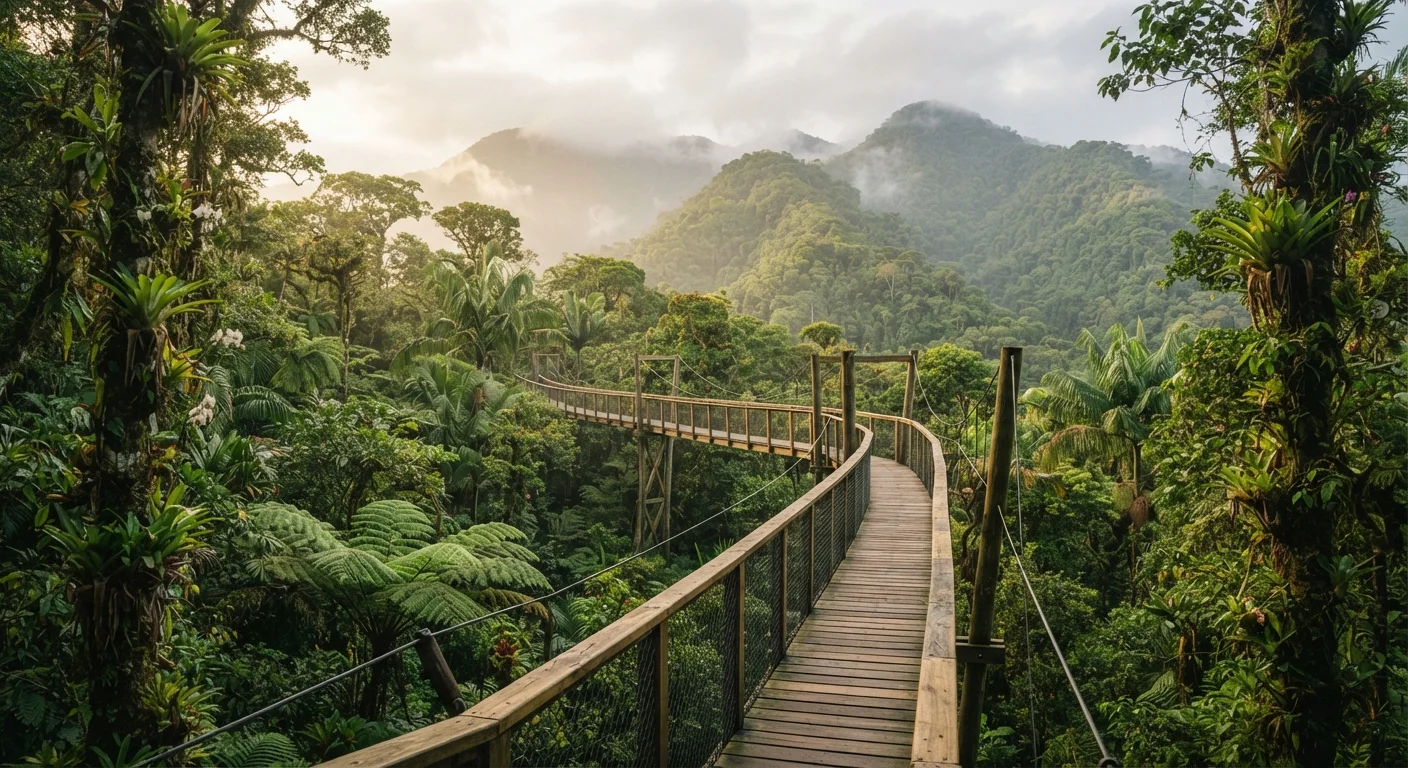
- Arenal Volcano region: Moderate elevation (~1,600 feet) with flat lakeside walking paths, hot springs, and hanging bridge walks through the rainforest canopy. Bridges are well-maintained and do not require significant climbing.
- Manuel Antonio: A compact national park with relatively short, shaded trails leading to both wildlife-rich jungle and beach. The park gets busy; morning visits in dry season are more comfortable.
- Monteverde Cloud Forest: Beautiful but cooler, misty, and at higher elevation (~4,600 feet). Walking surfaces can be uneven. Worth considering only if mobility is strong and the altitude is manageable. Always review how altitude and humidity may affect you personally — how environmental conditions affect older travelers is a useful resource before finalizing your itinerary.
A practical senior itinerary might combine a beach region with Arenal, skipping the most demanding highland areas entirely without missing the country's highlights.
What You'll Need Before You Go
Preparation specific to Costa Rica's environment will make the trip considerably smoother.
What you will need
Confirming your health status, travel insurance coverage, and physical readiness with your physician before departure is strongly advised. This is general travel planning guidance, not medical advice — always consult your own healthcare provider for personal recommendations. For broader wellness strategies during extended trips, the Travel Health Tips hub offers practical guidance tailored to senior travelers.
How to Plan Your Eco-Adventure Step by Step
The steps below walk through how to structure a senior-appropriate Costa Rica trip, from initial research through day-to-day pacing. Follow them in order — skipping ahead often means discovering an accessibility problem after a booking is made.
Define Your Physical Comfort Boundaries
Before researching destinations or lodges, write down your honest baseline: How far can you walk comfortably on flat ground? How do you manage stairs or uneven terrain? Do heat and humidity significantly affect you? These answers will eliminate or prioritize regions before you spend time researching options that aren't realistic.
Choose Your Regions Based on Terrain and Climate
Using the regional breakdown above, select two or three zones that match your comfort profile. For most seniors, a combination of one coastal area and one mid-elevation nature destination (such as Arenal) provides variety without overextension. Confirm the distance between your chosen zones and factor in travel time — Costa Rican road conditions mean that 60 miles can take two or more hours.
Contact Lodges and Tour Operators Directly About Accessibility
Do not rely solely on online listings. Contact each lodge or tour operator and ask specific questions: Are there stairs between the entrance and guest rooms? What is the walking surface on trails? Can excursions be adapted for slower pace? Reputable eco-lodges catering to a broad audience will answer these questions transparently.
Plan Your Itinerary With Built-In Rest Days
Draft your day-by-day schedule and then deliberately add a low-activity or free day for every two to three active days. On rest days, plan simple pleasures: a meal at a lodge restaurant, a soak in hotel hot springs, or gentle birdwatching from a deck. This structure prevents cumulative fatigue from compressing your experience into the final days of the trip.
Pack and Prepare for Tropical Conditions
Costa Rica's climate requires specific gear regardless of region. Pack lightweight, moisture-wicking clothing, a broad-brimmed hat, high-SPF sunscreen, and insect repellent. Bring a reusable water bottle and refill it constantly. If you use prescription medications, carry more than you expect to need. Review entry requirements, recommended vaccinations, and any active health advisories with your physician and on official government travel advisory resources before departure.
Confirm Travel Insurance Covers Your Specific Needs
Standard travel insurance policies often exclude pre-existing conditions unless specifically added. Before purchasing, review the policy document carefully and confirm it covers medical evacuation, trip interruption, and any conditions relevant to your health history. This is general guidance — consult a licensed insurance adviser for recommendations suited to your personal situation, as coverage terms vary significantly by provider and policy.
Verify All Health and Entry Information Officially
Travel health requirements, visa rules, and entry conditions for Costa Rica can change. Always consult the US Department of State's travel advisory page and speak with a licensed healthcare provider or travel medicine clinic before departure. The information in this article is general and educational — it does not substitute for personalized medical or legal advice.
Staying Comfortable Throughout Your Trip
Comfort in Costa Rica isn't only about choosing the right regions — it's about how you manage each day once you arrive. Heat and humidity, even in drier zones, are more taxing than travelers expect. Seniors can be more sensitive to dehydration and heat stress; carrying water at all times and scheduling active excursions for early morning is a reliable strategy.
Rest days built deliberately into your itinerary are not wasted days — they protect the energy you need for the experiences you care most about. A good rule of thumb: plan no more than two consecutive activity-heavy days before scheduling a lighter day. This approach to pacing is explored in depth in this complete planning guide for comfort and rest on extended trips.
Warm climates consistently rank among the travel environments seniors find most accommodating. Why warm-weather destinations suit senior travelers so well explains the practical and physiological reasons behind that pattern. If Costa Rica feels like too much activity for a first international trip, lesser-known warm destinations offering a quieter pace may be worth exploring first.
Humidity Can Be More Taxing Than Heat Alone
Even at moderate temperatures, Costa Rica's humidity — particularly on the Caribbean side and in lower-elevation rainforests — can feel significantly more draining than dry heat. Seniors who are sensitive to humidity should prioritize Guanacaste or higher-elevation options during the dry season and should never underestimate how quickly dehydration can develop. If you have cardiovascular or respiratory conditions, discuss humidity tolerance with your physician before booking.