

Key Takeaways
- Research accessible transit options at your destination before you arrive.
- Rental mobility scooters and wheelchair services are available in many cities.
- Apps and city maps can help you plan routes that minimize unnecessary walking.
- Booking accessible transport in advance reduces stress on travel days.
- Communicating your needs clearly to tour operators and drivers improves your experience.
What you will need
Why City Accessibility Planning Matters for Seniors
Navigating an unfamiliar city when walking long distances is difficult can feel daunting — but with the right preparation, it is entirely manageable. Cities around the world have made meaningful strides in accessible infrastructure, and senior travelers who plan ahead can take full advantage of these resources.
The key challenge is that accessibility varies enormously: what works smoothly in one city may require a completely different approach in another. A neighborhood that looks flat on a map may have uneven cobblestones; a transit system with excellent elevator coverage in the center may have gaps in outer areas. Knowing what questions to ask — and who to ask — before you arrive makes an outsized difference to your experience on the ground.
If you are still in the early stages of planning, our introduction to accessible trip planning is a helpful starting point. And if your journey begins with a flight, navigating large airports when mobility is a challenge covers the airport portion of your journey in detail.
Use Your Destination's Tourism Office
Many city tourism offices and visitor centers maintain up-to-date accessibility guides, including maps of step-free routes and lists of mobility-friendly attractions. Contacting them before you arrive can save considerable time and uncertainty on the ground.
What You Need Before You Start
Preparation makes every step more comfortable. Before working through the steps below, gather the tools and information that will support your planning.
What you will need
Accessibility-focused mapping app (e.g., Google Maps with accessible routing)
Plan step-free walking and transit routes suited to mobility limitations.
Portable folding rollator or cane
Provides additional stability on uneven city surfaces during short walks.
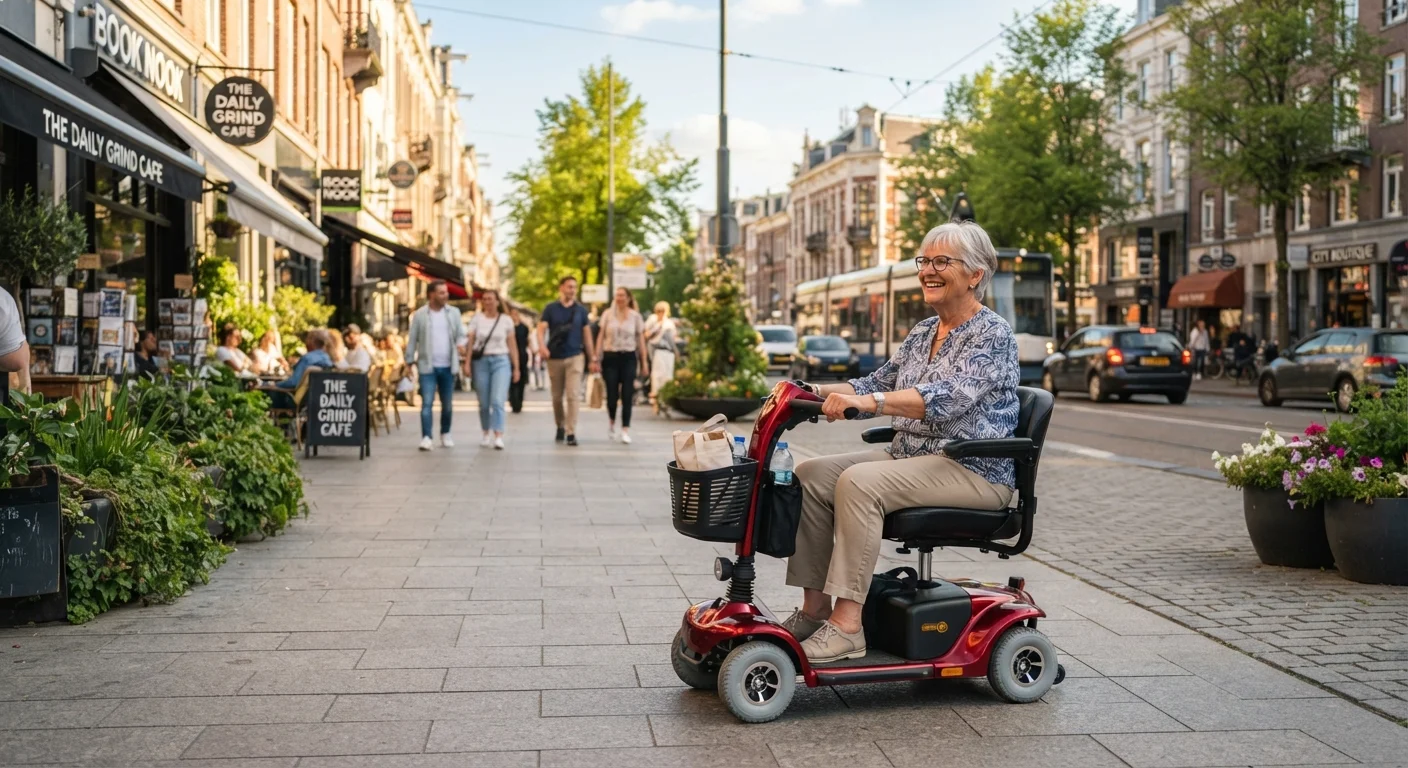
Rental mobility scooter or manual wheelchair
Enables independent city exploration without requiring extended walking.
City transit accessibility guide
Identifies accessible bus, metro, and tram routes with elevator and ramp access.
Rideshare or accessible taxi app
Arranges door-to-door transport when public transit is impractical or unavailable.
Always Consult Your Doctor Before Traveling
This article provides general information and is not medical advice. If you have a health condition affecting your mobility, speak with your healthcare provider before planning extended travel. They can offer personalized guidance suited to your specific needs.
Step-by-Step: Navigating a New City Comfortably
Follow these steps in order to build a practical, accessible plan for getting around your destination. Each step can be adapted to your specific needs, whether you use a cane occasionally or rely on a powered mobility scooter full time.
Research your destination's accessibility landscape
Start by identifying what mobility support your destination offers. Most major cities publish accessibility guides through their official transport authority websites, detailing which metro or subway stations have elevators, which bus routes are step-free, and where accessible drop-off points are located near key attractions.
Look for city-specific resources such as disability travel networks or tourism board accessibility pages. If you are new to accessible trip planning, start by making a short list of the places you most want to visit and work backward from there.
Identify mobility aid rental options at your destination
Many cities — particularly those with large tourism industries — offer mobility scooter and wheelchair rentals by the day or week. These can often be delivered to your hotel or picked up near major transport hubs. Search for medical equipment rental companies in your destination city well before you travel, since availability can be limited during peak season.
If you plan to bring your own device, review our guide to choosing between a rollator and transport wheelchair to ensure you have the most practical option for sightseeing and daily touring.
Plan accessible transit routes in advance
Before each day's outing, map your route using an app that offers accessible routing. Many mainstream navigation apps now include options to avoid stairs and find elevator-accessible entrances. Download offline maps of your destination in case connectivity is unreliable.
Identify the nearest accessible bus stop or metro station to each attraction, and note any potential pain points — such as stations under renovation or areas with cobblestone surfaces — that may require an alternative plan.
Arrange door-to-door transport for longer journeys
For days involving more travel between areas, consider booking accessible taxis or rideshare vehicles with wheelchair-accessible options. Many cities have dedicated accessible transport services that can be pre-booked. Communicate your specific needs at the time of booking — not on the day — to ensure the right vehicle is assigned.
Guided accessible tours are another strong option: many tour operators specialize in low-mobility itineraries that pace sightseeing around rest stops and seated transport. This pairs well with pre-trip accessibility planning to ensure operators understand your needs before you arrive.
Confirm your hotel's accessibility and storage for aids
Your accommodation is the operational base for everything. Confirm in advance that your room has adequate space to store and charge a mobility scooter or wheelchair, that corridors and bathroom doorways meet your requirements, and that the hotel entrance is step-free.
For a thorough checklist of what to ask and verify, see our guide to hotel stays with mobility aids, which covers room layout, equipment storage, and advance confirmation steps in detail.
Build rest time and pacing into each day's plan
Even with excellent transport support, navigating a new city involves unexpected exertion. Plan your itinerary with deliberate rest breaks built in — identify benches, café seating, or lobby areas near your planned stops where you can sit comfortably. Avoid scheduling more than two major attractions per day, especially early in a trip before you've settled into the local environment.
Spreading activity across shorter windows helps conserve energy and reduces the risk of overextension. For broader wellness strategies while traveling, explore our travel health tips hub.
Verify Accessibility Details Directly with Providers
Accessibility standards vary significantly between cities and countries. Information listed on websites or apps may be outdated. Always confirm wheelchair ramp availability, elevator status, and service coverage by contacting transit authorities or venues directly before your trip.
Staying Safe and Confident on the Move
Getting around a new city with mobility considerations is as much about confidence as it is about logistics. Knowing your options — and having backup plans ready — removes a great deal of the anxiety that can otherwise overshadow an otherwise enjoyable trip.
Keep the travel safety tips hub in mind as you finalize your plans, particularly around staying connected, managing medications on the go, and knowing when to ask for help. If you are traveling with a mobility aid on the flight itself, our guide to traveling with mobility aids on planes covers the rules and preparation steps involved.
This article is for general informational purposes only and does not constitute medical or professional advice. If you have health conditions affecting your mobility or stamina, consult a qualified healthcare professional before traveling.