
The Norwegian Fjords by Cruise Ship: Scenery, Ports, and Pacing for Older Travelers

Key Takeaways
- Norwegian fjord cruises offer dramatic scenery without demanding physical activity from passengers.
- May through August provides the most daylight and mildest temperatures for comfortable travel.
- Several fjord ports are compact and walkable, making independent exploration manageable.
- Shore excursions vary widely in difficulty — always confirm accessibility details before booking.
- Choosing a mid-sized ship reduces crowding and often improves access to smaller ports.
- Consult your physician before travel and pack all medications in carry-on luggage.
Why the Norwegian Fjords Work Well for Senior Cruisers
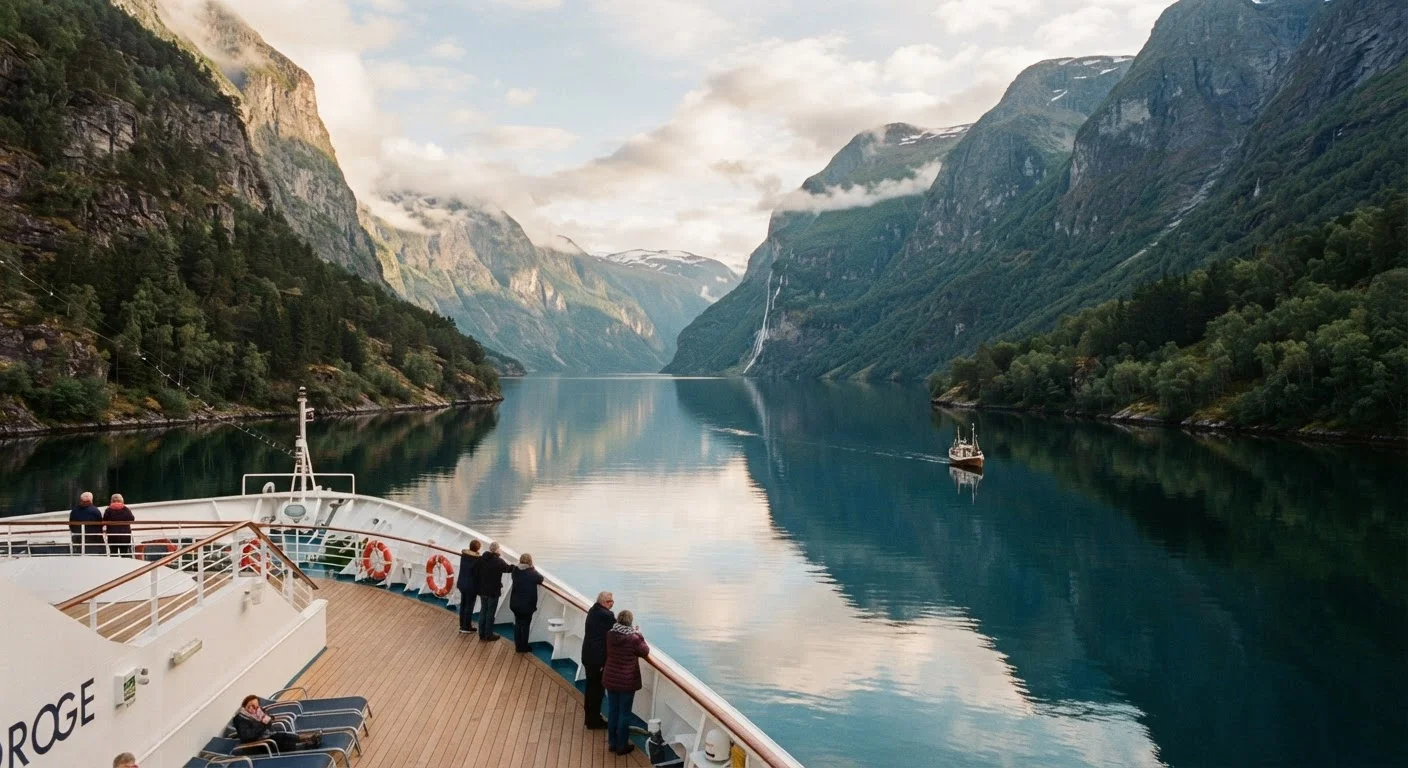
Few destinations combine visual grandeur with gentle on-ship pacing as naturally as the Norwegian fjords. Sheer cliff walls, cascading waterfalls, and glassy inlets unfold from the ship's deck — meaning much of the most spectacular scenery requires no walking at all. This makes a fjords itinerary particularly well-suited to older travelers who want immersive natural beauty without strenuous activity.
Because ships navigate slowly through narrow waterways, there is ample time to observe the landscape from deck chairs, observation lounges, or balcony cabins. The cruising experience itself is the attraction, not simply a transfer between ports.
For travelers evaluating cruise styles, our guide comparing river and ocean cruises explores how different vessel types affect comfort and accessibility — useful context before choosing a fjords itinerary.
1,190+
Fjords along Norway's coastline
Norway's coast contains more than 1,190 fjords, offering cruise itineraries remarkable variety in scenery and port selection.
~20 hours
Daylight hours in midsummer
At peak summer in northern Norway, passengers can enjoy nearly 20 hours of daylight for on-deck fjord viewing.
2 km
Walkable village area in Flåm
The village of Flåm's core area near the dock extends roughly 2 km, making it one of the most manageable ports for independent exploration.
Best Time of Year to Sail
The fjords are accessible by cruise ship roughly from April through October, but May through August is generally the most comfortable window for senior travelers. Temperatures along the coast typically range from the mid-50s to mid-60s Fahrenheit (around 12–18°C) during this period, and daylight hours are long — giving passengers extended time to view scenery from deck.
June and July bring the phenomenon of the midnight sun in northern regions, where the sun remains above the horizon well into the evening. While this can disrupt sleep for light-sensitive travelers, blackout curtains in cabins help manage the effect. September offers fewer crowds and quieter ports, though rain becomes more frequent and temperatures drop noticeably.
Pack Layers for Variable Fjord Weather
Norwegian coastal weather can shift quickly even in summer — mornings on deck may feel cool while afternoons warm considerably. Packing lightweight, packable layers (a fleece mid-layer and a waterproof outer shell) allows you to stay comfortable throughout the day without carrying heavy luggage. Waterproof footwear with non-slip soles is also strongly recommended for wet dock surfaces and village pavements.
April and October are shoulder months with lower passenger volumes, but weather is less predictable and some smaller ports may have reduced services. Travelers with specific mobility or health requirements are generally better served by the more stable conditions of the peak summer months.
Key Ports and What to Expect Ashore
Norwegian fjords itineraries typically call at a combination of larger cities and small village ports. Understanding what each type offers helps set realistic expectations.
Bergen
Bergen is a common embarkation or turnaround port. Its historic Bryggen wharf district is UNESCO-listed and largely walkable on flat ground close to the pier, though the surrounding hills involve steeper terrain. A cable car (the Fløibanen funicular) provides an accessible way to reach a hilltop viewpoint without hiking.
Flåm
Flåm sits at the end of the Aurlandsfjord and is one of the most-visited village ports on any fjords itinerary. The village itself is very compact — the rail station, waterfront, and shops are within a few minutes' walk of the dock. The famous Flåm Railway offers a scenic train journey that is fully seated and requires minimal walking, making it one of the most accessible excursion options in the region.
Geiranger
Geiranger is a smaller port and access point for one of Norway's most dramatic fjords. The village is tiny and easily walked, though surrounding viewpoints involve winding mountain roads best reached by coach excursion rather than on foot.
For a broader look at evaluating port accessibility before you book, see our guide to senior-friendly shore excursions.
Choosing the Right Shore Excursions
Not all fjords excursions are created equal. Activity levels range from fully seated scenic drives and boat tours to moderate hikes on uneven terrain. Before booking any excursion, look for the operator's stated walking distance, surface type (cobblestones, gravel, or paved), and the number of steps or inclines involved.
Lower-intensity options that work well for older travelers in this region include:
- Scenic fjord boat cruises with seating throughout
- Coach tours to mountain viewpoints such as Ørnesvingen (Eagle Road) near Geiranger
- The Flåm Railway scenic train journey
- Short waterfront walks in compact village ports
Ask shore excursion staff specifically whether the boarding point involves steps or ramps — tender boats (small transfer vessels used when ships cannot dock directly) can involve steep gangways that may not suit all mobility levels.
Tender operations are common at smaller Norwegian ports and are rarely highlighted prominently in excursion descriptions, yet they present a real access challenge for travelers with limited balance or joint concerns.
Book excursions with a maximum group size listed — smaller groups move at a more comfortable pace and allow more flexibility if a participant needs extra time.
Large group excursions are optimized for efficiency, not individual pace, which can leave slower walkers feeling rushed or excluded from portions of the experience.
Avoid excursions described as "active," "hiking," or "moderate to strenuous" unless you have confirmed your fitness level with your physician. Weather can also affect surface conditions — paths that appear simple in dry weather may become slippery after rain.
Onboard Pacing and Comfort Considerations
One of the core advantages of a fjords cruise is that sea days and transit days — when the ship is actively navigating through the fjords — are built-in rest periods. Passengers are not required to be active; they can simply watch the scenery pass. This natural rhythm suits older travelers who benefit from alternating activity with rest.
When selecting a ship, mid-sized vessels (roughly 500–2,000 passengers) are often better suited to fjords itineraries than very large ships. They can access smaller ports that mega-ships cannot enter, and corridors, dining rooms, and deck spaces tend to feel less overwhelming. Our comparison of ocean liners and river cruises discusses how ship size affects the overall senior travel experience.
Request a cabin with a balcony if budget allows — watching fjord walls rise from your private outdoor space is one of the signature pleasures of this itinerary and eliminates the need to compete for deck space during scenic passages.
Notify Your Cruise Line of Accessibility Needs Early
Accessibility accommodations — including wheelchair-accessible cabins, priority boarding, and tender boat assistance — are allocated on a first-come, first-served basis and can fill up well before departure. Contact the cruise line's accessibility or special needs department as early as possible after booking to confirm what is available and document your requirements in writing. Do not assume that standard booking notes will be sufficient.
Health, Mobility, and Practical Preparations
As with any international cruise, preparation ahead of departure matters significantly. The information here is general in nature; always consult your own physician or specialist before traveling, particularly if you manage chronic conditions or take regular medications.
Norway has a well-developed healthcare infrastructure in its cities, but medical facilities in small fjord villages are limited. Ships carry onboard medical staff and basic facilities, though these are not substitutes for specialized care. Travel insurance that includes medical evacuation coverage is worth understanding carefully — policy terms vary widely, so read the actual document and speak with a licensed insurance adviser rather than relying on summary descriptions.
Practical steps worth taking before departure include confirming that all prescriptions are filled with enough supply to cover delays, carrying medications in your carry-on rather than checked luggage, and notifying the cruise line of any mobility aids or accessibility requirements well in advance of sailing.
For a comprehensive look at pre-cruise preparation, the Senior Traveler's Complete Guide to Cruising Comfortably covers everything from ship selection to disembarkation planning.
This article provides general travel information only and does not constitute medical, insurance, or financial advice. Consult qualified professionals for guidance specific to your personal circumstances. Verify all entry requirements, health recommendations, and travel advisories with official government and provider sources before traveling.