
Florida's Gulf Coast vs. Atlantic Coast: Which Side Suits Senior Travelers Better?

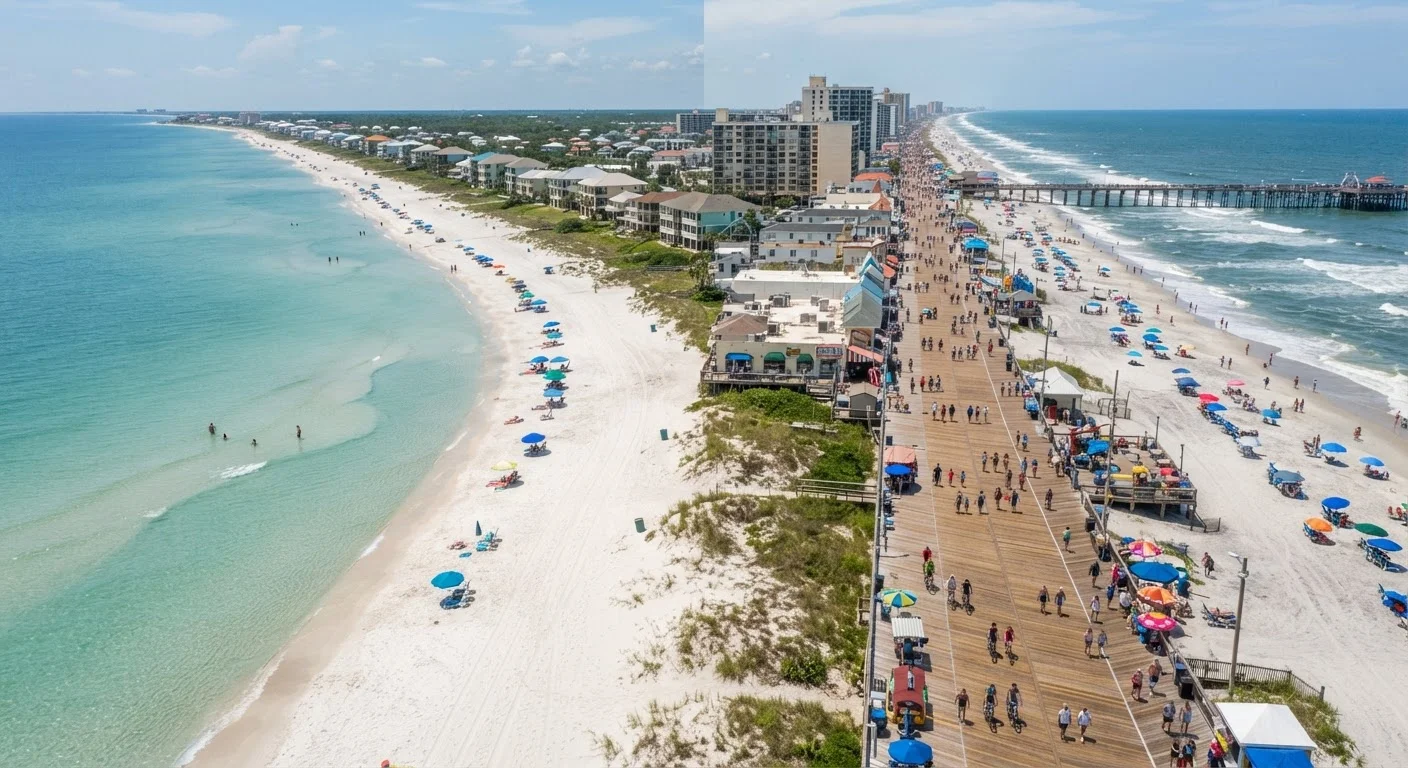
Key Takeaways
- The Gulf Coast offers calmer waters and softer sand, making beach access easier for seniors with mobility considerations.
- The Atlantic Coast provides closer proximity to major cities, airports, and healthcare facilities.
- Both coasts have warm climates, but the Gulf is generally more sheltered from Atlantic storm systems.
- Atlantic Coast cities like St. Augustine and Miami offer rich cultural experiences and walkable historic districts.
- Gulf Coast destinations such as Sarasota and Naples are consistently rated among Florida's most senior-friendly communities.
- Your ideal coast depends on whether you prioritize beach tranquility or urban accessibility.
Option A
Gulf Coast
The calm, unhurried side of Florida.
Best for: Seniors seeking gentle surf, soft sand, and a slower pace with easy beach access.
Option B
Atlantic Coast
The lively, well-connected alternative.
Best for: Older adults who want urban amenities, cultural attractions, and convenient transportation links.
If you want gentle, swimmable water and flat, walkable beaches
Gulf Coast
The Gulf's shallow gradient and calm surf make it far easier and safer for seniors to wade in and enjoy the water without strong waves or currents.
If you want easy access to airports, major hospitals, and city culture
Atlantic Coast
Cities like Fort Lauderdale, Miami, and Jacksonville sit on the Atlantic side and offer robust transportation infrastructure and renowned medical centers.
If you prefer a quiet, residential atmosphere with fewer crowds
Gulf Coast
Destinations like Sanibel Island and Marco Island maintain a low-key, unhurried character that suits seniors seeking relaxation over entertainment.
If history, architecture, and walkable cultural districts matter to you
Atlantic Coast
St. Augustine — the oldest continuously occupied European settlement in the US — and Flagler Beach offer compelling historic and scenic walking routes.
If you travel by RV and want established coastal campgrounds
Gulf Coast
The Gulf Coast corridor is well-served by RV-friendly parks with full hookups and flat terrain, as detailed in our guide to Gulf Coast RV camping.
Beach Character and Water Conditions
For many senior travelers, the beach itself is the destination — and the two coasts deliver notably different experiences at the waterline. The Gulf of Mexico is shallow and protected, producing water that is typically calm, warm, and clear. Wave action is minimal, which reduces the physical challenge of entering and exiting the water. The sand along much of the Gulf — particularly around Naples, Clearwater, and Siesta Key — is fine-grained quartz, cool underfoot and soft to walk on.
The Atlantic side is more energetic. Waves are larger and currents stronger, which some travelers enjoy but which can present a challenge for those with balance or mobility concerns. The sand tends to be coarser and darker, retaining more heat during midday hours. Beaches around Daytona and Cocoa Beach are wide and popular, with well-developed amenities such as paved paths, beach wheelchairs, and nearby restrooms — factors worth researching before you go.
| Criterion | Gulf Coast | Atlantic Coast |
|---|---|---|
| Water Conditions | Calm, shallow, minimal waves | Stronger waves, active surf |
| Sand Quality | Fine, white quartz — cool underfoot | Coarser, darker, retains heat |
| Pace of Life | Relaxed, residential | More urban, varied |
| Airport Access | Smaller regional airports | Major international hubs nearby |
| Healthcare Proximity | Strong in retirement-heavy cities | World-class in metro areas |
| Cultural Attractions | Arts, nature, wildlife refuges | Museums, history, space center |
| Cruise Port Access | Tampa, limited options | Port Canaveral, Port Everglades |
| Sunset Views | Over the water — spectacular | Over land — sunrise over ocean |
Climate, Seasons, and Storm Considerations
Both coasts share Florida's subtropical climate — hot, humid summers and mild winters — but they diverge in weather patterns. The Gulf Coast is more sheltered from the Atlantic's hurricane tracks, though it is certainly not immune to storms. Its western exposure also means spectacular sunsets that draw visitors year-round.
The Atlantic Coast receives more rainfall influence from easterly trade winds and can see stronger surf and wind during tropical weather events. Hurricane season runs June through November on both coasts; seniors planning travel during those months should monitor forecasts and ensure their travel plans allow flexibility. Winter months — roughly November through April — are widely considered the most comfortable period for visiting either coast, with lower humidity and temperatures in the low-to-mid 70s°F.
75°F
Average winter daytime high across Florida
Florida's mild winter temperatures make both coasts appealing escape destinations for northern retirees from November through April.
21%
Share of Florida's population aged 65 and older
According to US Census Bureau data, Florida has one of the highest concentrations of older adults of any state, reflecting its long-standing appeal to retirees.
1,350 miles
Total length of Florida's coastline
Florida has more coastline than any other contiguous US state, offering an exceptional range of beach environments across both coasts.
Accessibility and Senior-Friendly Infrastructure
Accessibility varies by specific town rather than coast as a whole, but some broad patterns hold. Gulf Coast cities such as Sarasota, Naples, and Fort Myers have invested heavily in senior-friendly infrastructure, partly because they attract a large retiree population year-round. Flat terrain, well-maintained sidewalks, and a high concentration of medical facilities make day-to-day navigation manageable. Sarasota in particular is frequently cited in planning resources as one of Florida's most livable cities for older adults.
On the Atlantic side, proximity to major metropolitan areas brings both advantages and trade-offs. Fort Lauderdale and Miami offer world-class medical centers and international airports, but urban density can mean heavier traffic and noisier environments. St. Augustine's historic district is compact and walkable, though some of its oldest streets have cobblestone surfaces that may require care. Seniors with specific mobility needs should research individual destinations and contact accommodations directly to confirm accessibility features before booking.
Check Accessibility Features Before You Book
Accessibility ratings for beaches, hotels, and attractions can vary significantly even within the same town. Florida's beaches are required under the Americans with Disabilities Act to provide beach wheelchair access at many public points, but availability and condition differ by location. Contact your specific destination's parks and recreation department or accommodation directly to confirm ramps, mat pathways, and mobility aids before finalizing travel plans.
Activities, Culture, and Pace of Life
The Gulf Coast leans toward nature-based leisure: shelling on Sanibel Island, birdwatching at Ding Darling National Wildlife Refuge, kayaking calm estuaries, and attending the performing arts in Sarasota. The pace is generally slower, which suits travelers who prefer unhurried days over packed itineraries.
The Atlantic Coast offers a richer urban cultural mix. Miami's museums, theater scene, and diverse cuisine appeal to seniors who enjoy city exploration. Kennedy Space Center on the Space Coast offers a fascinating and largely accessible attraction. For those interested in cruise departures, Port Canaveral and Port Everglades are major embarkation points — relevant if you're exploring options covered in our overview of senior-friendly cruise destinations.
If you're weighing Florida's appeal against other warm-weather options entirely, our comparison of Florida vs. Arizona for year-round warmth offers useful context for broader planning.