

Key Takeaways
- DVT is a blood clot in a deep vein, most commonly forming in the leg during prolonged immobility.
- Long-haul flights lasting four or more hours are associated with elevated clot risk, especially for older travelers.
- Seniors may face higher susceptibility due to age-related circulatory changes and common comorbidities.
- General precautions include regular movement, leg exercises, and adequate hydration during flights.
- Always consult a qualified healthcare provider before travel if you have known clotting risk factors.
Deep Vein Thrombosis (DVT)
Deep vein thrombosis, commonly abbreviated as DVT, is the formation of a blood clot inside a deep vein — most often in the leg. It can occur when blood flow slows for an extended period, such as during long-haul air travel. While DVT itself is a circulation concern, a complication arises if a clot breaks loose and travels to the lungs, a serious condition called pulmonary embolism.
DVT is classified as a venous thromboembolic (VTE) event. Risk factors include prolonged immobility, dehydration, advanced age, prior clotting history, and certain medical conditions or medications.
Why Long Flights and Blood Clots Are Connected
During a long flight, passengers spend hours in confined seats with limited ability to move their legs. This sustained stillness slows the normal pumping action of the leg muscles, which plays a key role in pushing blood back up toward the heart. When that circulation slows, blood can pool in the deep veins of the lower legs — creating conditions where a clot may form.
Cabin pressure and low humidity at altitude also contribute to mild dehydration, which can thicken the blood slightly and add to clotting risk. Most healthy travelers complete long-haul journeys without incident, but the combination of immobility, altitude, and dehydration means everyone on a long flight faces some degree of elevated risk compared to sitting on the ground.
For a broader picture of health considerations that often go unnoticed in travel planning, see hidden risks seniors overlook when planning international trips.
DVT Is Not the Same as General Leg Swelling
Many travelers experience mild ankle swelling on long flights — this is common and usually caused by fluid pooling, not clot formation. DVT is a distinct and more serious condition involving a clot inside a deep vein. If swelling is accompanied by pain, warmth, or redness in one leg specifically, medical evaluation is warranted. General puffiness in both feet after a flight is typically not DVT, but persistent or one-sided symptoms should always be assessed by a clinician.
Why Seniors May Face Greater Susceptibility
Age brings changes to vascular health that can raise DVT risk independently of travel. Blood vessel walls lose some elasticity over time, and circulation efficiency in the extremities can decline. Older adults are also more likely to have underlying conditions — such as heart disease, diabetes, varicose veins, or a history of previous clots — that compound this baseline risk.
Mobility limitations are another factor. A senior who finds it uncomfortable to stand or walk in a narrow aircraft aisle may spend longer stretches seated than a younger traveler would. Similarly, certain medications commonly used by older adults, including hormone therapies or treatments for cardiovascular conditions, can interact with clotting pathways. This makes pre-travel medical consultation especially important for seniors on complex medication regimens.
2–4×
Increased DVT risk on long-haul flights
Research published in medical literature has estimated that long-haul air travel roughly doubles to quadruples short-term DVT risk compared to non-travel periods, with risk rising further for individuals with additional predisposing factors.
4+ hours
Flight duration linked to elevated risk
Health organizations generally consider flights of four or more hours to be the threshold at which prolonged immobility meaningfully contributes to venous clotting risk.
~1 in 6,000
Estimated DVT rate per long-haul flight segment
Estimates vary across studies, but some analyses suggest symptomatic DVT occurs in approximately one per 4,000–6,000 long-haul passengers, with higher rates among those with underlying risk factors.
General In-Flight Precautions Worth Knowing
No single measure eliminates DVT risk, but a combination of practical habits during flight is generally recommended. The following are widely cited by health professionals as sensible in-flight practices — always discuss what is right for your individual situation with your physician before traveling.
- Move regularly: Stand up and walk the aisle for a few minutes at least once every one to two hours when the seatbelt sign is off.
- Perform seated leg exercises: Flex and extend your feet, rotate your ankles, and press your heels to the floor repeatedly to activate calf-muscle circulation while seated.
- Stay hydrated: Drink water consistently throughout the flight. Avoid relying heavily on alcohol or caffeinated beverages, which can contribute to dehydration.
- Wear loose, comfortable clothing: Avoid tight waistbands or anything that restricts circulation in the lower body.
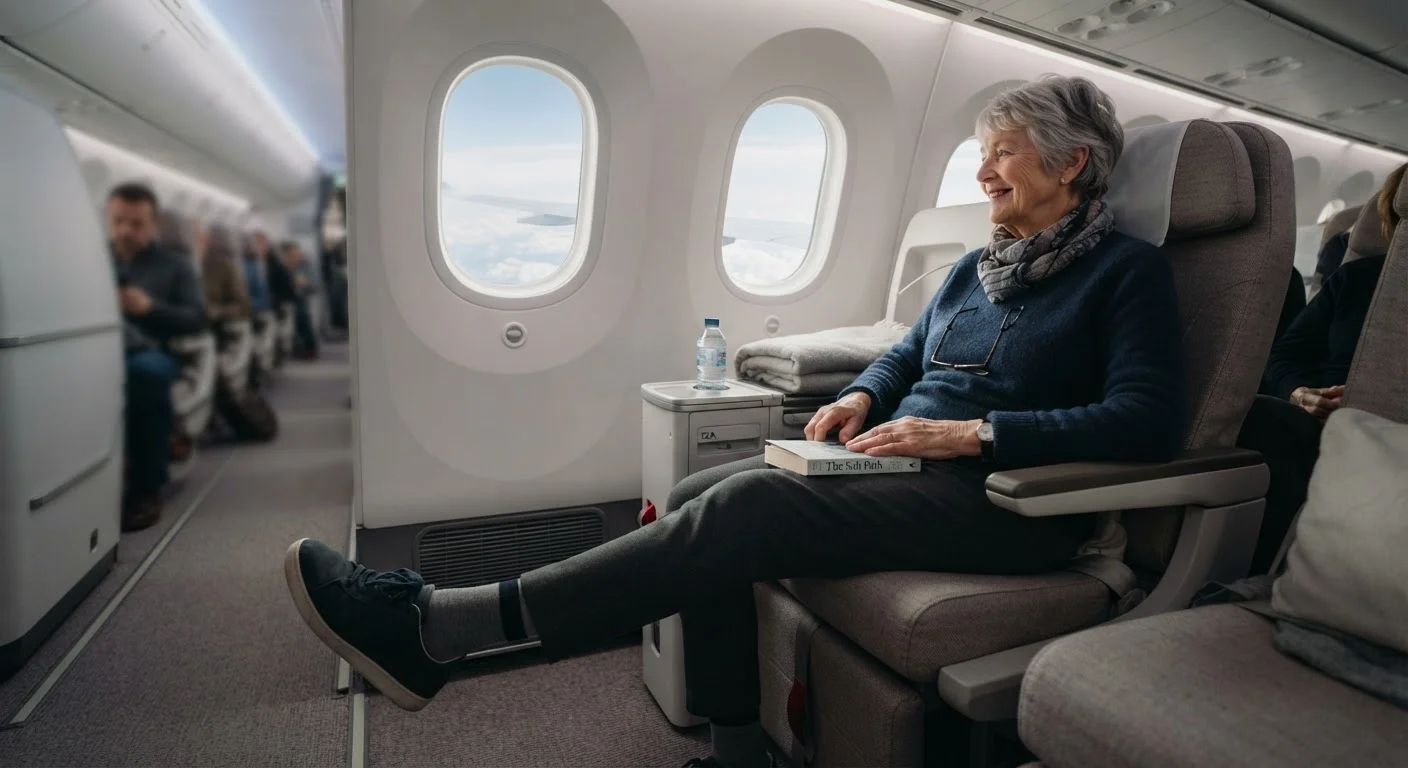
- Consider an aisle seat: Aisle seats make it easier to stand and move without disturbing other passengers.
For more on how seat choice, posture, and clothing affect overall in-flight comfort, see cabin comfort on long-haul flights.
Book an Aisle Seat for Easier Movement
When flying long-haul, selecting an aisle seat at booking gives you the freedom to stand and walk without asking your row-mates to move. This small logistical choice makes it far easier to follow a routine of regular movement throughout the flight. Many airlines allow seat selection at the time of booking or check-in — take advantage of it. See our senior flight planning guide for tips on choosing the right seat.
Before You Fly: Talking With Your Doctor
Seniors with known cardiovascular concerns, a prior DVT episode, recent surgery, or active cancer should have a direct conversation with their healthcare provider before booking a long-haul flight. A physician can assess your individual clotting risk, advise on whether compression stockings are appropriate, and determine if any medication adjustments are warranted. This is general health information — not a substitute for personalized medical guidance.
It is also worth noting that DVT risk does not apply exclusively to air travel. Extended coach bus rides, car trips, and train journeys can pose similar concerns if they involve many hours of immobility. For a companion overview of DVT risk across travel modes, visit DVT and long-distance travel.
For seniors building a complete air travel plan — from booking accessible seats to navigating airports — the complete senior air travel planning guide offers step-by-step guidance. You can also explore the full travel health tips hub for additional wellness strategies relevant to older travelers.
This article is for general informational and educational purposes only and is not a substitute for professional medical advice, diagnosis, or treatment. Always consult a qualified healthcare provider regarding any medical conditions or concerns before traveling.