

Key Takeaways
- Standard baggage sublimits often fall far short of replacing a power wheelchair or mobility scooter.
- Equipment delay coverage — separate from loss — may not be included unless explicitly stated in the policy.
- Airline-specific damage claims and insurance claims are separate processes with different deadlines.
- Pre-existing condition clauses can affect coverage for equipment tied to a documented medical need.
- Always read the policy's definitions section to understand exactly how 'mobility aid' is classified.
- Consulting a licensed insurance adviser before purchasing a policy is recommended for complex equipment needs.
Mobility Equipment Coverage Gap
A mobility equipment coverage gap occurs when a travel insurance policy fails to fully reimburse the loss, delay, damage, or breakdown of wheelchairs, scooters, walkers, or other assistive devices. Standard baggage clauses are often written with suitcases in mind, not power wheelchairs that may cost several thousand dollars. Understanding where these gaps exist before you travel allows you to ask the right questions and seek additional protection if needed.
Policies commonly classify mobility aids under 'personal effects' or 'baggage,' subjecting them to per-item sublimits and depreciation schedules that can substantially reduce any payout. Some plans treat power-assisted devices separately from manual ones.
Why Mobility Equipment Deserves Special Attention
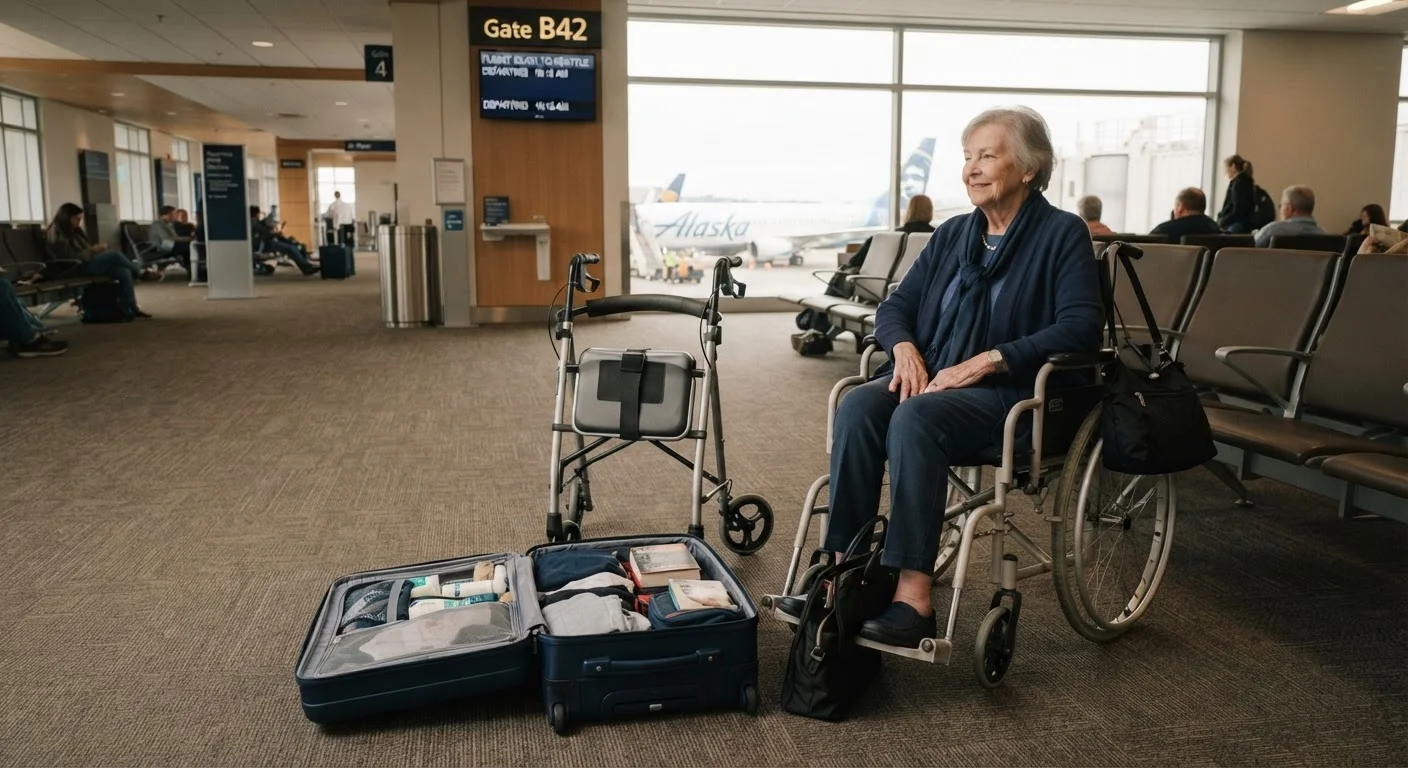
For many senior travelers, a wheelchair, rollator, or power scooter is not optional equipment — it is essential to independent movement. Yet most travel insurance policies were written with suitcases and laptops in mind, not assistive devices that can carry a replacement value of several thousand dollars or more.
The result is a set of coverage gaps that can catch travelers off guard at precisely the worst moment: when equipment is missing, broken, or sitting in a delayed cargo hold in another city. Understanding these gaps in advance is far less stressful than discovering them mid-trip.
A solid grounding in travel insurance basics is the starting point. From there, seniors who depend on mobility aids need to ask more targeted questions before accepting any policy.
Document Your Equipment Before Every Trip
Photograph your mobility aids from multiple angles before checking them or loading them into a vehicle. Record serial numbers, purchase dates, and approximate current values. This documentation makes both airline damage reports and insurance claims significantly more straightforward and harder to dispute.
The Sublimit Problem: When Coverage Doesn't Match Replacement Cost
Most travel insurance policies place a per-item sublimit on baggage claims — often between $250 and $500 per item. A basic manual walker might fall within that range. A power wheelchair typically costs many times more, meaning a policy that appears to include baggage coverage may reimburse only a fraction of the actual loss.
Depreciation is a second complicating factor. Many policies pay actual cash value rather than replacement value, factoring in the age and condition of the equipment. A three-year-old power scooter may be assigned a depreciated value that bears little resemblance to what a comparable rental or replacement would cost at your destination.
Baggage loss and delay coverage works in ways that surprise many travelers — seniors relying on mobility aids should review that framework carefully alongside any policy they consider.
$30,000+
Typical cost of a power wheelchair
According to U.S. Medicare coverage guidelines, complex power wheelchairs can exceed $30,000 in list price — a figure most standard baggage sublimits do not approach.
~$250–$500
Common per-item baggage sublimit
Many standard travel insurance plans cap individual item reimbursement in this range, creating a significant gap for high-value mobility equipment.
24 hours
Deadline to report airline equipment damage
U.S. Department of Transportation regulations require passengers to report damaged mobility equipment to the airline at the airport, generally within 24 hours of a domestic flight.
Equipment Delay: A Gap Within a Gap
Losing a mobility aid is devastating, but even a 24- or 48-hour delay can disrupt an entire trip. Equipment delay coverage — which would reimburse the cost of renting a comparable device while yours is in transit — is not universally included in standard plans. Some policies offer it only as part of a broader travel delay benefit, and even then, 'mobility aids' may not be listed as covered rentable items.
Travel delay coverage has its own triggering conditions and waiting periods. Seniors should confirm whether a delayed mobility aid specifically qualifies as a covered delay scenario under the plan they are reviewing.
It is also worth noting that accessibility-focused rental options vary significantly by destination. At some locations, a suitable rental may not exist at all, making equipment delay a more serious risk than a delayed suitcase.
Rental Availability Varies Widely by Destination
Even when a policy does reimburse equipment rental during a delay, finding a suitable rental at your specific destination is not guaranteed. Smaller cities, rural areas, and many international destinations have limited or no mobility aid rental infrastructure. Planning for this possibility — including identifying local resources in advance — is a practical safeguard. Accessibility prep before you book can help you assess what's realistically available at your destination.
Mechanical Breakdown, Airlines, and Pre-Existing Condition Clauses
Travel insurance generally covers accidental damage or loss — not mechanical or electrical failure. If a power wheelchair's motor malfunctions mid-trip, most standard policies will not reimburse repair or replacement costs. Some specialty plans or optional riders address this scenario, so it is a specific question worth raising with any insurer.
Airline damage is an important separate channel. Under U.S. Department of Transportation rules, airlines are liable for mobility equipment damaged during air travel. However, claims must typically be reported at the airport before leaving baggage claim, within tight deadlines. This process runs parallel to — and does not replace — a travel insurance claim, and travelers may need to pursue both simultaneously.
Pre-existing condition clauses add another layer of complexity. If your mobility aid is tied to a documented medical condition, an insurer may argue that a claim relating to that equipment falls within a pre-existing condition exclusion. Policies with a pre-existing condition waiver, purchased within the insurer's specified enrollment window, can close this gap — but the timing requirements are strict. Coverage gaps that catch senior travelers off guard explores this and other exclusions that often go unnoticed until a claim is filed.
Before confirming any reservation, planning around mobility needs with airlines and accommodations reduces the chance of equipment mishandling in the first place.
This article is for general informational purposes only and does not constitute insurance, financial, or medical advice. Coverage terms, exclusions, and eligibility vary by provider and individual circumstances. Always read full policy documents carefully and consult a licensed insurance adviser for guidance suited to your situation.