

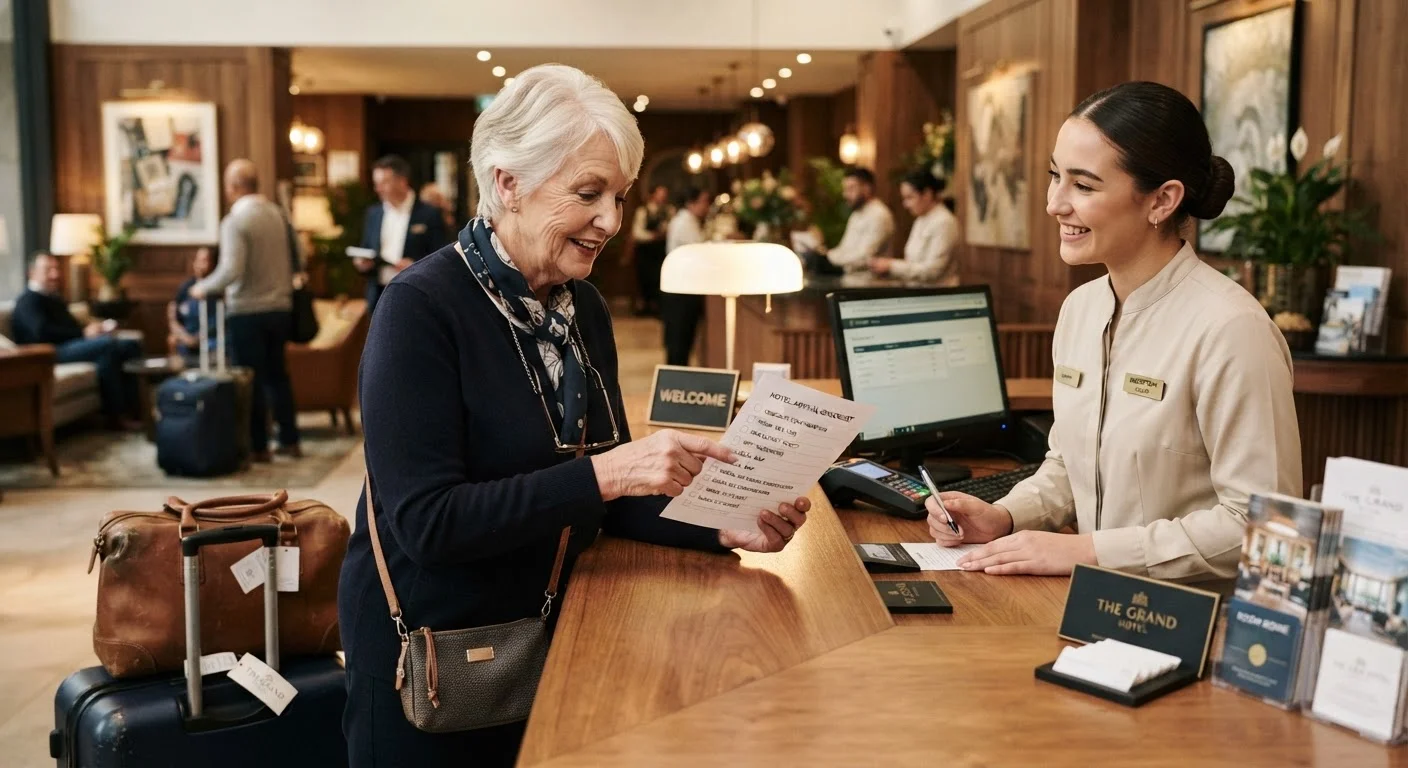
Key Takeaways
- Never assume accessibility features are available — confirm every detail directly with providers before booking.
- Hotels, airlines, and tour operators all have different accessibility policies that must be verified separately.
- Getting confirmations in writing protects you if a promised accommodation isn't available on arrival.
- Mobility aids, medications, and dietary needs each require targeted questions to different parties.
- Calling or emailing ahead is always more reliable than relying on website descriptions alone.
Summary
22 items · 30–60 minutes per provider contacted
Why Asking Beats Assuming
A hotel website may describe itself as "accessible" while meaning something quite different from what you need. A tour operator might list a trip as "easy" without factoring in cobblestone streets or a lack of elevator access. The gap between marketing language and lived reality is where travel stress tends to live — and the best way to close that gap is to ask specific, direct questions before any money changes hands.
This checklist is designed to be used as a working reference when you contact hotels, airlines, cruise lines, and tour operators. Keep it beside you during phone calls or paste the relevant questions into an email inquiry. The goal is not to anticipate every possible problem — it's to surface the issues that matter most to your particular needs so nothing catches you off guard mid-trip.
For a broader look at pre-trip preparation, see the Trip Prep Basics hub, which covers everything from documents to health precautions. If you're also arranging flights, our senior flight booking guide runs through seat selection, layover times, and onboard medical needs in detail.
Always Get Accessibility Promises in Writing
Verbal assurances are not enforceable. Once a provider confirms an accessible room, mobility aid storage, or any specific accommodation, ask for written confirmation by email before you finalize the booking. If the arrangement isn't honored on arrival, written evidence gives you a clear basis for requesting a remedy. This one step can prevent significant frustration and expense mid-trip.
Questions to Ask Hotels and Accommodation Providers
Accommodation is where accessibility gaps tend to be felt most acutely — an unsuitable room can affect your sleep, mobility, and overall wellbeing throughout the stay. Don't rely solely on the property's website; photos can mislead and descriptions are often vague. A direct conversation is far more reliable.
For a focused script you can use on the phone, see Calling Ahead: The Questions Worth Asking a Hotel Before You Arrive. If you have specific room-feature requirements — grab bars, roll-in showers, or low-profile beds — Accessible Room Requests walks you through exactly how and when to communicate those needs. You can also browse the Senior Hotel Tips hub for a wider range of guidance on finding suitable accommodation.
Hotel Accessibility — Physical Access
Hotel Accessibility — Equipment and Services
Airlines and Airports
Tour Operators and Cruise Lines
Questions for Tour Operators and Cruise Lines
Group tours and cruises can be wonderful experiences for seniors — but pacing, terrain, and physical demands vary enormously between itineraries. An operator who specializes in active hiking tours operates very differently from one focused on cultural sightseeing, and the same operator may run trips at different exertion levels. Asking the right questions up front prevents you from committing to an itinerary that won't suit your comfort level.
For a full rundown of what to clarify before joining any group trip — including cancellation policies and group size — see The Questions Worth Asking Before Booking Any Group Tour. If mobility is a primary consideration for you, Planning Around Mobility Needs covers how to communicate those requirements clearly across all types of providers.
"Accessible" Doesn't Mean the Same Thing Everywhere
Accessibility standards differ significantly between countries, properties, and operators. A room described as "accessible" in one destination may not meet the standards you're accustomed to at home. Always ask for specific measurements, features, and equipment rather than accepting a general label. When possible, look for recent guest reviews from travelers with similar mobility needs, as these often reveal details that official descriptions omit.