

Key Takeaways
- Sea days are ideal recovery windows — treat them as deliberate rest, not wasted time.
- Small cabin adjustments can meaningfully improve sleep quality and comfort onboard.
- Pacing your activities across port and sea days prevents cumulative fatigue.
- Ship amenities like thermal suites and quiet decks support physical recovery without extra cost.
- Consulting your doctor before the trip helps you manage health needs confidently at sea.
What you will need
Why Cruise Rest Is Different — and Worth Planning For
Land-based travel keeps you moving: hotels change, transport demands your attention, and sightseeing fills almost every hour. A cruise introduces something different — built-in transition days where the ship does the traveling while you simply exist onboard. For senior travelers, this structure is genuinely valuable, but only if you treat those sea days as recovery time rather than scheduling voids to fill.
Physical fatigue accumulates faster than most people expect on multi-day trips. Port days with shore excursions, uneven cobblestones, and variable weather can take a real toll. The good news is that the cruise format is uniquely well-designed to offset this — if you approach it with some intention. Our complete guide to cruising comfortably explores the full picture of what makes cruises a strong fit for older travelers.
What you will need
This article focuses on the practical steps you can take — before and during your voyage — to make rest and recovery a real part of your cruise experience, not an afterthought.
Step-by-Step: Setting Up for Genuine Rest at Sea
Earplugs or a white noise app
Blocks engine hum, corridor noise, and other ship sounds that can disrupt sleep.
Eye mask
Eliminates light intrusion through cabin portholes or gaps in curtains for deeper rest.
Compression socks
Supports healthy circulation during long periods of rest or sedentary sea-day lounging.
Portable lumbar pillow
Provides additional back support in cabin chairs, deck loungers, or show venues.
Refillable water bottle
Encourages consistent hydration throughout the day, especially in air-conditioned ship environments.
Plan your sea days before you board
Review your cruise itinerary and mark every sea day in advance. These are your recovery anchors — days with no shore logistics, no tender queues, and no time pressure. Resist the urge to fill them with back-to-back activities. Instead, decide ahead of time on one or two meaningful things you'd like to do (a spa visit, a gentle deck walk, a leisurely lunch) and leave the rest unscheduled. For help thinking through when to go ashore versus stay onboard, see our guide on shore excursions vs. ship-stay days.
Optimize your cabin for sleep
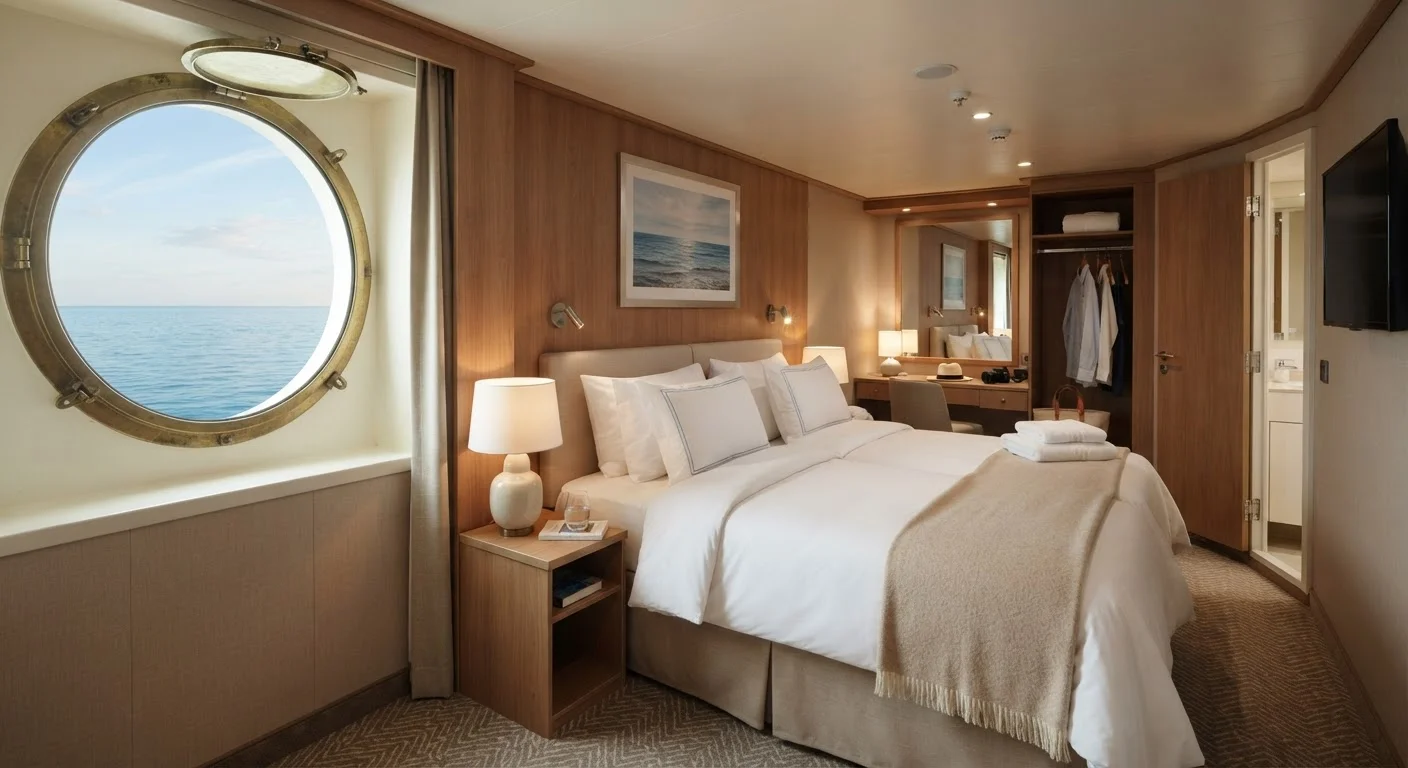
Request a cabin on a lower, more central deck where motion is gentler and corridor noise is reduced. Before your first night, adjust the thermostat to a cooler setting (most sleep research suggests cooler rooms support deeper rest), close blackout curtains fully, and identify any intrusive light sources — some cabin TVs emit standby glows that are worth switching off at the wall. Bring an eye mask and earplugs as backup. If noise remains a concern, a white noise app on your phone can help mask engine hum. For more strategies on maintaining restful sleep at sea, our article on sleep, jet lag, and disrupted routines covers this in depth.
Use ship facilities intentionally for recovery
Most mid-size and large ships offer amenities that actively support physical recovery — thermal suite pools, steam rooms, stretching classes, and quiet reading rooms. On sea days, these spaces tend to be calmer and less crowded than during port calls. A short session in a heated pool or a gentle stretch class can ease muscle stiffness without depleting your energy. For low-impact movement ideas suited to older travelers, explore our resource on gentle exercise options on a cruise.
Pace your meals and hydration across the day
Ship dining can tempt travelers into larger, heavier meals than usual — which, combined with reduced activity, can leave you feeling sluggish rather than rested. On sea days, aim for lighter, more evenly spaced meals. Prioritize hydration: air conditioning onboard dries cabin air significantly, and many passengers underestimate how much fluid they lose without physical exertion. Keep a refillable water bottle accessible in your cabin and set gentle reminders to drink regularly if you tend to forget.
Alternate rest with gentle movement throughout the day
True recovery isn't just about lying still — alternating rest with gentle movement actually supports better circulation and reduces stiffness. A slow morning walk around the promenade deck, followed by a rest period, followed by light stretching is a well-tolerated pattern for many older adults. Avoid prolonged sedentary periods, particularly if you have circulatory concerns. Our broader guide on seated exercise and movement breaks offers practical routines you can adapt to the ship environment.
Protect your sleep schedule across time zones
Longer cruises — particularly transatlantic or transpacific crossings — may shift ship time by an hour or more on consecutive nights. These small incremental changes are generally easier to adapt to than a single large jump, but they can still accumulate. Try to anchor your bedtime and wake time to local ship time rather than fighting the shift. Avoid bright screens for at least 30 minutes before bed, keep your cabin dark and cool, and resist the urge to nap excessively in the afternoon if nighttime sleep is your priority. For seniors considering extended crossings, our article on repositioning cruises for seniors explains what to expect from longer sea day stretches.
Sea Days Are a Feature, Not Filler
Many first-time cruisers feel guilty 'doing nothing' on sea days. Reframing rest as an active, intentional choice — rather than laziness — makes it far easier to actually benefit from it. A well-rested traveler enjoys port days more fully and returns home less depleted.
Don't Ignore Signs of Overexertion
Cruise ships can create a deceptive sense of ease that masks cumulative fatigue — the distance you walk across a large ship alone can exceed a mile per day. If you notice persistent tiredness, swollen ankles, or unusual breathlessness, reduce activity and speak with the ship's medical team. Most cruise ships have an onboard medical facility available around the clock.
For a broader look at how itinerary structure affects how tired you become over a longer journey, our article on how itinerary design affects physical recovery is a helpful companion resource. And if seasickness is a concern that might affect your rest, see our evidence-based overview of why seasickness isn't inevitable.
This article provides general travel wellness information for educational purposes only and is not a substitute for personalised medical advice. Always consult a qualified healthcare professional before traveling, particularly if you have existing health conditions or take regular medications.