

Key Takeaways
- Accessible cabins feature roll-in showers, grab bars, and lowered fixtures — request one early as availability is limited.
- Elevator placement and corridor width vary significantly between ships; research specific vessels before booking.
- Cruise lines can often loan manual wheelchairs onboard, but power wheelchairs must be brought by the passenger.
- Shore excursion accessibility varies widely by port — always verify conditions in advance.
- Disclosing mobility needs to the cruise line before sailing helps staff prepare appropriate assistance.
- Consulting your doctor before sailing is recommended if you use mobility aids or manage chronic conditions.
Accessible Cruise Travel
Accessible cruise travel refers to the range of onboard design features, services, and accommodations that allow passengers with limited mobility to navigate a ship safely and comfortably. This includes wheelchair-accessible cabins, elevator placement, wide corridors, and staff assistance programs. Understanding what a ship offers before you sail helps you plan a realistic, enjoyable voyage.
Under the Americans with Disabilities Act (ADA), US-flagged vessels and certain foreign-flagged ships operating from US ports must meet accessibility standards — though requirements and enforcement vary by vessel flag and route.
What Limited Mobility Looks Like at Sea
Limited mobility on a cruise ship can take many forms — using a cane or walker, relying on a manual or power wheelchair, recovering from a joint replacement, or simply managing reduced stamina and balance. The scale of a modern cruise ship — potentially spanning 15 or more decks and stretching over 1,000 feet — can feel daunting without the right preparation.
The good news is that contemporary large ships are generally built with accessibility in mind. Wide corridors, automatic doors, and multiple elevator banks have become standard on vessels commissioned in recent decades. Older or smaller ships, however, may present narrower passageways, raised door thresholds (also called sills), and fewer elevators — making research into your specific vessel essential before you commit.
For a broader look at how ships accommodate a range of physical needs beyond mobility, see our article on hearing and vision accessibility at sea.
~2%
Accessible cabins as share of total inventory
Industry estimates suggest accessible staterooms typically represent a small fraction of total cabin inventory on most ships, making early booking essential.
32"
Minimum doorway width for wheelchair access
The ADA recommends a minimum 32-inch clear doorway opening for wheelchair passage; many accessible cruise cabins meet or exceed this standard.
Over 50%
Cruise passengers aged 50 or older
According to Cruise Lines International Association (CLIA) research, the majority of cruise passengers are aged 50 and above, reflecting strong demand for accessible travel features.
Accessible Cabins: What They Include and Why They Matter
An accessible stateroom is the cornerstone of a comfortable voyage for anyone with limited mobility. These cabins are specifically designed — not simply modified — with features that make daily routines safer and more manageable.
- Roll-in showers with fold-down seats and handheld shower heads
- Grab bars near the toilet, shower, and bedside
- Wider doorways to accommodate wheelchairs and scooters (typically 32 inches or wider)
- Lowered closet rods, light switches, and peepholes
- Turning radius space inside the cabin for wheelchair maneuverability
Accessible cabins are limited in number on every ship — often just a handful per vessel category. Request one at the time of booking and confirm the specific features in writing. Waiting until closer to sailing significantly reduces your chances of availability.
Book Your Accessible Cabin Early
Accessible staterooms are among the first cabins to sell out on popular sailings. As soon as you have a voyage in mind, contact the cruise line's accessibility desk — not just a general booking agent — and confirm your specific requirements in writing. Follow up closer to sailing to ensure nothing has changed with your assignment.
Getting Around the Ship: Elevators, Corridors, and Deck Design
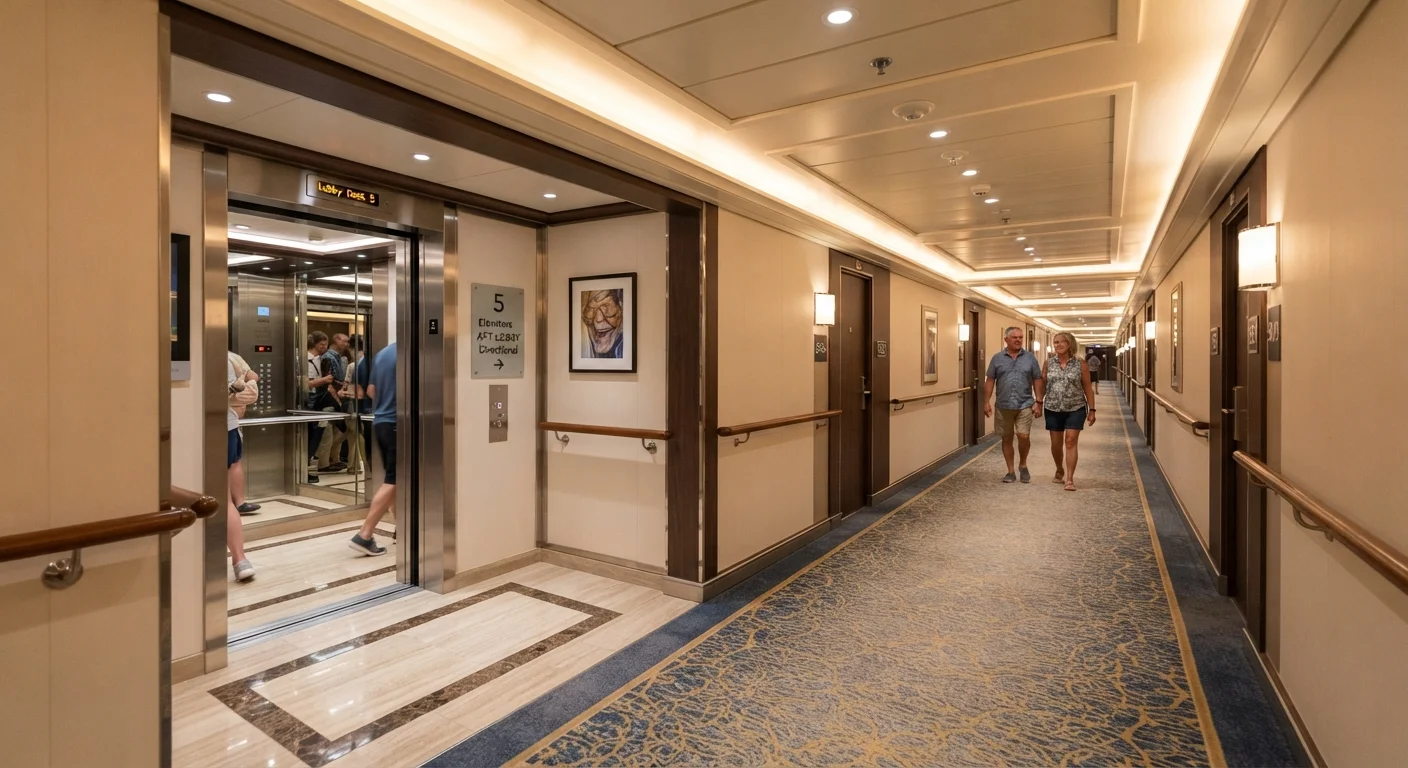
Once in your cabin, the broader ship layout will shape your daily experience. Elevator placement is one of the most important — and least publicized — accessibility factors on a cruise ship. On some vessels, elevators are clustered only amidships, requiring long corridor journeys to reach the forward or aft sections of the ship. Reviewing a deck plan before booking helps identify whether elevator access aligns with your cabin location and the venues you plan to use most.
Corridor widths on modern ships typically allow two wheelchairs to pass, but bottlenecks can occur near venue entrances and outdoor deck transitions. Raised thresholds at cabin doors and weather-deck access points are common even on newer ships — a detail worth noting if you use a low-clearance scooter or rollator.
Pool decks and outdoor areas often present the most variability. While pool lifts are available on many ships, they are not universal. Teak decking and uneven outdoor surfaces can also create traction challenges. Always scout new areas of the ship during quieter hours when possible.
For guidance on what to specifically ask before you book, our checklist on cruise accessibility features every senior should ask about walks through the key questions.
Mobility Aids, Shore Excursions, and Disclosing Your Needs
Bringing your own mobility aid is nearly always preferable to relying on ship-supplied equipment. Most cruise lines accommodate manual wheelchairs, rollators, and power scooters, provided your cabin can store the device when not in use. Confirm cabin doorway clearance and floor space dimensions with the cruise line directly — accessible cabin dimensions vary even within the same ship class.
Shore excursions introduce a separate set of accessibility variables. Port infrastructure, gangway angles, tender boat transfers (where passengers must board a small boat to reach shore), and excursion terrain all affect what is realistically manageable. Some ports are highly accessible; others involve cobblestones, steep hills, or unpaved paths. Our article on shore excursions for travelers with limited mobility covers how to evaluate these conditions before you go.
Disclosing your mobility needs to the cruise line before sailing — in writing, through their accessibility or special needs desk — is one of the most effective steps you can take. This allows the ship to assign appropriate embarkation assistance, note your needs with dining and housekeeping staff, and flag any onboard areas that may require advance planning. It also creates a record should issues arise during your voyage.
If you manage a chronic health condition alongside limited mobility, see our companion article on managing chronic conditions aboard for guidance on medical facilities, medication storage, and pre-sail consultations with your doctor.
This article provides general travel information for educational purposes only. It is not medical advice. Travelers managing health conditions or using mobility aids should consult a qualified healthcare professional before sailing.