

Key Takeaways
- Not all shore excursions labeled 'easy' are suitable for travelers with limited mobility — always verify specifics.
- Asking detailed questions before booking can prevent uncomfortable or unsafe situations at port.
- Pacing, surface terrain, and transportation type are as important as the activity itself.
- Ship-organized excursions often offer stronger accessibility guarantees than independent tours.
- Reserving rest days or ship-stay options alongside active excursions helps protect stamina.
- Consulting your physician before the cruise supports safer, more confident excursion planning.
Why Shore Excursion Planning Matters More When Mobility Is a Factor
Shore excursions are among the most anticipated parts of any cruise — but they can also be the most physically demanding. For travelers managing limited mobility, reduced stamina, or chronic pain, a poorly chosen excursion can turn a highlight into an ordeal. The good news is that careful planning makes a significant difference.
Most cruise lines offer excursions rated by activity level, but those ratings are broad. A tour listed as "easy" may still involve cobblestone streets, long walking stretches between stops, or vehicles with steep steps. Understanding what to look for — and what questions to ask — is the foundation of a positive port experience. For a broader look at how accessibility works beyond the pier, see our guide on navigating a cruise ship with limited movement.
Confirm the Terrain Before You Commit
The physical surface of a port town matters enormously. Many historic destinations feature uneven cobblestones, steep hills, or unpaved pathways that are genuinely difficult — even impossible — to navigate with a walker, cane, or wheelchair. Before booking, ask the excursion desk or tour operator specifically about walking surfaces, incline, and how long participants are expected to be on their feet.
Cruise line shore excursion staff can usually provide this detail if asked directly. Don't rely solely on general difficulty ratings; ask follow-up questions like: "Is the route paved throughout?" or "Are there any stairs or significant inclines?"
Cobblestones and steep hills can make a 'mild' excursion far harder than its rating suggests.
Evaluate the Transportation Involved
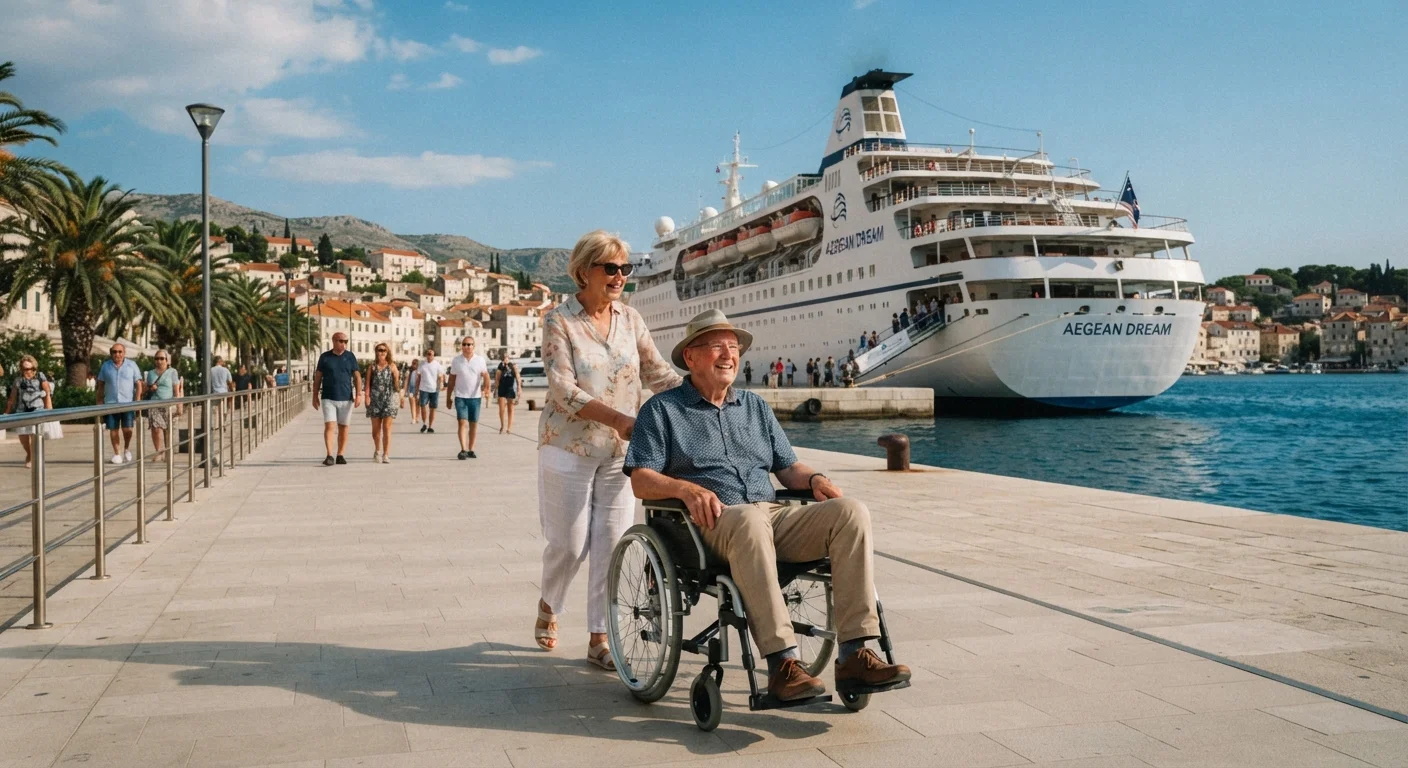
How you get from the ship to the attraction — and back — is as important as the activity itself. Some tenders (small boats used when ships cannot dock at a pier) require stepping across a moving gap, which can be challenging for those with balance issues. Bus transfers may involve high steps or limited space for mobility aids.
Ask whether the excursion departs directly from a docked pier or requires a tender. Inquire whether vehicles used are accessible, and whether your specific mobility aid — whether a wheelchair, rollator, or scooter — can be accommodated. Many cruise lines have policies requiring advance notice for mobility equipment on excursions.
Tender ports add a boarding challenge that can make some excursions inaccessible without advance planning.
Look for Excursions Designed With Accessibility in Mind
Some cruise lines explicitly designate certain excursions as wheelchair-accessible or mobility-friendly. These tours are planned around accessible transport, smooth surfaces, and a pace that allows time for those who move more slowly. They often include fewer stops with more time at each location, reducing the physical demand of moving in and out of vehicles repeatedly.
For a detailed framework on what these tours typically offer, see our guide to evaluating shore excursion accessibility. If the cruise line's offerings don't meet your needs, some ports have local operators who specialize in accessible tours — though it's worth verifying their accessibility claims independently before booking.
Accessibility-designated excursions are planned from the ground up for travelers with mobility needs.
Factor in Duration and Rest Opportunities
A four-hour excursion is not necessarily more tiring than a two-hour one — it depends entirely on how much of that time is spent standing, walking, or waiting in heat. Ask how much of the excursion involves active movement versus seated viewing or resting, and whether there are scheduled rest stops or seating available throughout.
Longer excursions with built-in rest periods and minimal walking can actually suit some travelers better than shorter, intensely active alternatives. The key is matching the pace of the tour to your realistic stamina for that day, accounting for any fatigue already accumulated during the voyage.
Duration alone doesn't predict fatigue — the ratio of rest to activity is what matters most.
Understand the Ship's Missed-Departure Policy
One practical reason to book through the cruise line rather than independently is the missed-departure guarantee. Ship-organized excursions are coordinated with the vessel's schedule; if a tour runs late, the ship will typically wait. Independent tours carry no such assurance, which can add anxiety — and real risk — if mobility or pacing issues cause unexpected delays.
This doesn't mean independent options are always the wrong choice, but the tradeoff is worth understanding. For travelers who find that ship-organized tours don't offer sufficient accessibility, it may be worth speaking with the shore excursion manager on board before the relevant port day to explore alternatives or request accommodations.
Ship-organized tours guarantee you won't be left behind — a meaningful safety net for slower-paced travelers.
Know Your Own Baseline — and Build In Recovery Time
Even a well-planned accessible excursion can be taxing if scheduled back-to-back with other demanding port days. Consider alternating active excursions with quieter port activities or ship-stay days to allow genuine recovery. This is especially relevant on longer itineraries where cumulative fatigue can build across the voyage.
If you have a specific health condition affecting mobility or stamina, discuss your itinerary plans with your physician before departure. They can offer guidance tailored to your situation and help you set realistic expectations for activity levels. For additional guidance on traveling with mobility challenges, our accessibility hub brings together resources across multiple aspects of accessible cruise travel.
Building recovery days into your itinerary is as important as choosing the right excursions.
Planning Ahead for a More Comfortable Port Day
Mobility-aware excursion planning isn't about limiting your experience — it's about protecting it. By applying the considerations above before you book, you give yourself far more control over how each port day unfolds.
Ask for a Written Description Before Booking
When reviewing excursion options, request a written itinerary or detailed description rather than relying on the summary title alone. Look specifically for mentions of walking distance, surface type, step counts, vehicle type, and seated time. If details aren't readily available, a direct conversation with the shore excursion desk — ideally before the cruise departs — can fill in the gaps and help you make a confident, informed choice.
If you've ever returned from a port day feeling wiped out, it may be worth revisiting your approach. Our article on why shore excursions feel exhausting explores how over-scheduling contributes to cruise fatigue — and how to adjust. And if you're weighing whether to go ashore at all, comparing excursions to ship-stay days can help you decide what best fits your energy on any given day.
This article is for general informational purposes only. Travelers with health or mobility conditions should consult a qualified healthcare professional before planning physically demanding activities.