

Key Takeaways
- Organizing claim documents before a trip — not after an incident — saves significant stress.
- Insurers generally require proof of purchase, medical records, and official incident reports to process claims.
- Missing even one key document can delay or reduce your reimbursement.
- Keep both digital and physical copies of every important document throughout your trip.
- Your policy document itself is the single most important reference — read it carefully before you travel.
Summary
18 items · 30–60 minutes
Why Documentation Makes or Breaks a Claim
Filing a travel insurance claim is rarely as simple as calling your insurer and describing what happened. Insurers are required to verify losses before they can reimburse them — and that verification depends entirely on the paperwork you provide. For senior travelers especially, being prepared with the right documents can mean the difference between a smooth reimbursement and a prolonged dispute.
The good news: most of what insurers ask for is straightforward to collect — if you know what to gather and when. This checklist walks you through every category of documentation you're likely to need, organized by the type of claim. For a broader understanding of how coverage works before you get to this stage, see The Full Picture of Senior Travel Medical Insurance.
Read Your Policy Before You Need It
Every insurer has its own specific documentation requirements, and these are outlined in your policy document — not on a general website. Reading the claims section of your policy before you travel means you'll know exactly what evidence to collect if something goes wrong. If anything is unclear, call your insurer's customer service line before your departure date, not during an emergency.
What to Gather Before You Leave Home
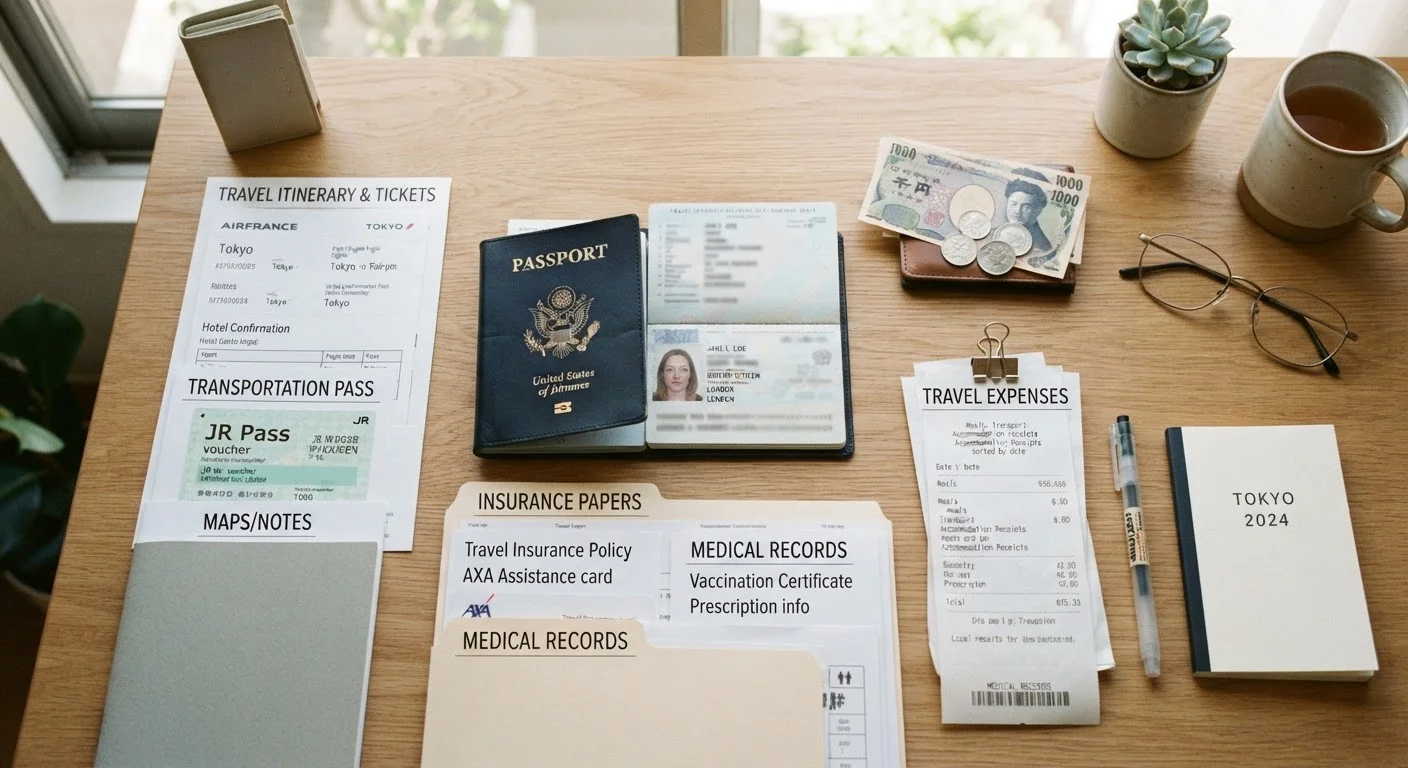
Good document preparation starts at home, long before any incident occurs. The items below form your claim foundation — without them, even a valid claim can face unnecessary hurdles.
Policy and Pre-Trip Essentials
Medical Documentation
Cancellation and Interruption Claims
Theft, Loss, and Baggage Claims
Store digital copies in a secure cloud folder or email them to yourself. Give a trusted contact at home access to copies as well. If you're traveling with a companion, make sure they know where these documents are stored.
Tools You'll Want on Hand
You don't need expensive equipment to stay organized — but a few simple tools make document management far easier when you're away from home.
Cloud Storage App (e.g., Google Drive or iCloud)
Store and access digital copies of all your travel documents securely from any device.
Smartphone Camera or Scanner App
Photograph receipts, medical bills, police reports, and other documents as soon as you receive them.
Physical Document Wallet or Travel Organizer
Keep hard copies of key papers — policy documents, booking confirmations, medication list — organized and accessible throughout the trip.
Secure Password Manager
Store login credentials for your insurer's online portal so you can access your policy and file a claim from anywhere.
During and After an Incident: What to Collect
When something goes wrong — a medical emergency, a theft, a cancelled flight — your first priority is your safety. But as soon as it's practical, begin gathering documentation. Delays in collecting records can make them harder to obtain later.
Don't Rely on Memory — Document in Real Time
After a stressful incident, it's easy to forget exactly what happened, what you paid, or who you spoke with. Make a habit of writing down dates, times, names of medical professionals, and the sequence of events as soon as possible. A handwritten or typed timeline can serve as supporting evidence alongside your formal documents. Insurers may ask for a detailed account of events, and specifics matter.
Once you're back home and ready to file, you'll want to understand exactly what the insurer reviews after submission. Our article on what actually happens after you file a claim gives a clear picture of that process. And if you need a step-by-step walkthrough of filing a medical claim while still abroad, this practical guide for senior travelers covers it in detail.
This article is for general informational purposes only and does not constitute personalized insurance, financial, or legal advice. Coverage terms, required documentation, and claim procedures vary by insurer and policy. Always read your actual policy documents and consult a licensed insurance adviser for guidance specific to your situation.