

Key Takeaways
- Portugal's Atlantic coast offers mild temperatures year-round, making it suitable for senior travelers in most seasons.
- The Algarve, Silver Coast, and Lisbon Coast each offer distinct experiences at a generally relaxed pace.
- Flat promenades, accessible beaches, and public transport make many coastal towns manageable for older visitors.
- Portugal has a well-regarded public healthcare system, and private clinics are available in tourist areas.
- Travel insurance covering pre-existing conditions is strongly recommended before departing.
Why Portugal Works So Well for Senior Travelers
Portugal has quietly become one of Europe's most welcoming countries for older international visitors, and its appeal goes well beyond beaches. The pace of daily life is unhurried, locals are generally hospitable toward foreign visitors, and many coastal towns have invested in accessible infrastructure over recent years. English is widely spoken in tourist areas, reducing the language barrier that can make other European destinations feel daunting.
The country's size is also an advantage. Portugal's Atlantic coastline runs roughly 800 kilometers — long enough to offer variety, compact enough that no major region requires exhausting travel to reach. Seniors can base themselves in one area and explore comfortably without constant suitcase-packing.
For those weighing European options, our editorial team has explored Europe's most accessible cities for senior travelers, including a close look at how Lisbon compares to other capitals on mobility and comfort grounds.
When choosing accommodation in coastal Portugal, prioritize properties that specify ground-floor or elevator access — many older buildings in traditional towns lack lifts, and this is rarely flagged prominently in listings.
Mobility fatigue from stairs is a frequent complaint among senior travelers in European destinations, and it is almost always avoidable with targeted pre-booking research.
Book intercity rail tickets in Portugal at least a week in advance for Alfa Pendular services to the Algarve — these trains fill quickly in shoulder season and offer a notably more comfortable ride than regional alternatives.
Advance reservations secure seat assignments and reduce the stress of last-minute platform decisions, which matters especially for travelers with limited mobility or heavy luggage.
Climate and Best Times to Visit
Portugal's Atlantic-facing coast benefits from a Mediterranean-influenced climate: warm, dry summers and mild, damp winters. Average summer highs along the Algarve reach around 28–30°C (82–86°F), while the Silver Coast and Lisbon area typically see slightly cooler temperatures moderated by Atlantic breezes — often more comfortable for those who find intense heat difficult.
Spring (April–June) and early autumn (September–October) are widely considered the most pleasant windows for senior travelers. Crowds are smaller than peak summer, temperatures are comfortable for walking, and accommodation options are generally more available.
Winter travel is viable along the southern coast. The Algarve averages around 16°C (60°F) in January, and sunny days are common even in the colder months — a meaningful draw for visitors escaping northern European or North American winters. Rainfall is concentrated between November and February, mostly in the north.
300+
Sunny days per year in the Algarve
The Algarve is consistently ranked among Europe's sunniest regions, making it a reliable warm-weather destination across multiple seasons.
16°C
Average January temperature, Algarve
Winter temperatures in southern Portugal remain mild compared to most of northern Europe and the northeastern United States.
~2.5 hrs
Lisbon to Algarve by intercity train
Portugal's Alfa Pendular rail service connects the capital to the south coast without requiring a flight or long road journey.
Key Coastal Regions to Consider
The Algarve (South Coast): Portugal's most visited coastal region offers long sandy beaches, golf courses, and well-developed tourist infrastructure including accessible promenades in towns like Lagos, Albufeira, and Tavira. Tavira in particular is often cited for its quieter, more authentic atmosphere. The Algarve is compared in detail alongside other warm-weather options in our article on the Algarve, Tenerife, and Malta for senior sun-seekers.
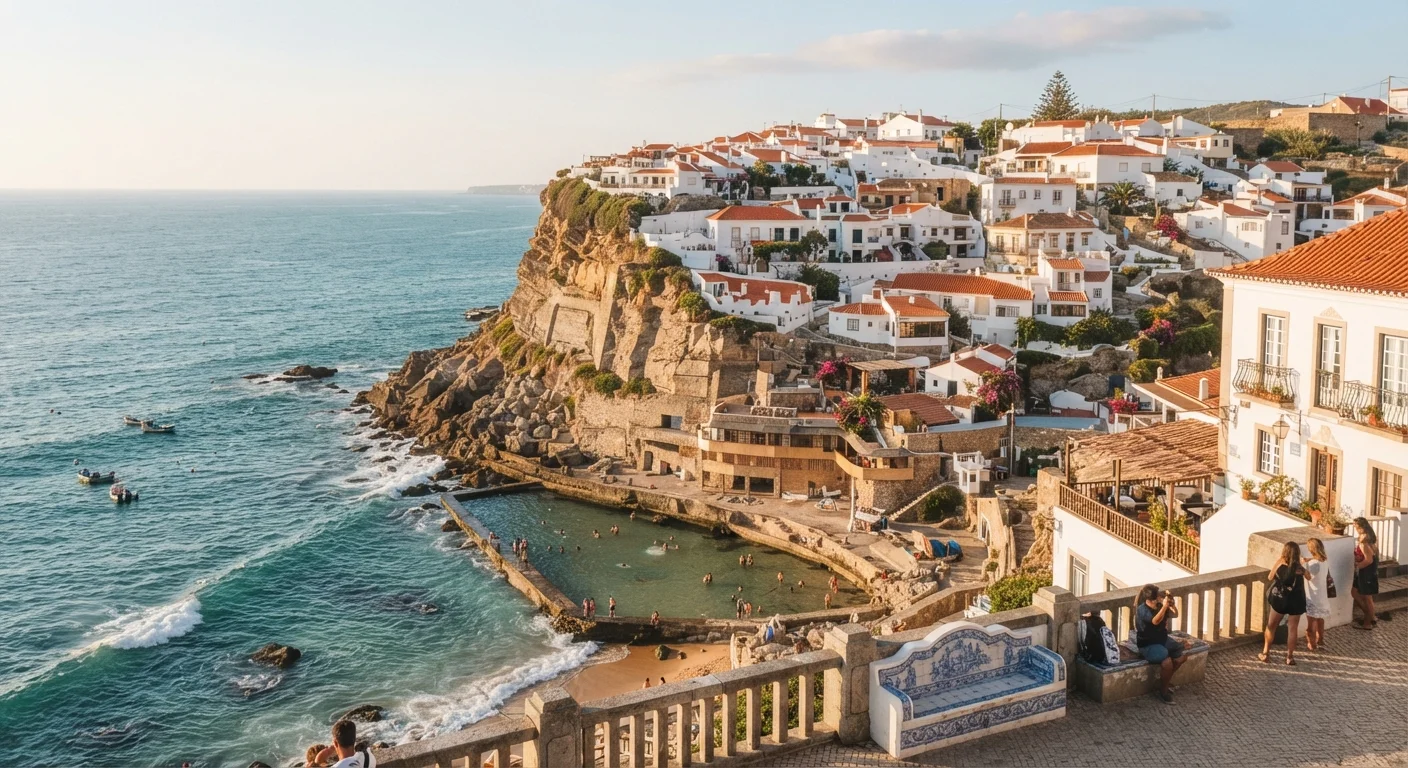
The Silver Coast (Costa de Prata): Stretching north of Lisbon toward Figueira da Foz, this region attracts travelers who prefer smaller fishing villages, dramatic cliffs, and fewer crowds. Towns like Nazaré and Óbidos offer genuine character, though terrain can be hillier in places.
The Lisbon Coast (Estoril and Cascais): Located just 30–40 minutes from the capital by train, Cascais and Estoril offer a relaxed coastal atmosphere with excellent transport connections, flat seafront promenades, and a range of dining options. This area suits seniors who want coastal calm without fully leaving the amenities of a major city behind.
Cobblestones and Hilly Terrain Require Realistic Planning
Portugal's historic town centers, including parts of Lisbon and many Silver Coast villages, feature steep streets and uneven cobblestones that can be genuinely challenging for those using canes, walkers, or wheelchairs. Coastal promenades and newer resort areas tend to be far more accessible. Research your specific base town before booking, and request detailed accessibility information from accommodation providers directly.
Getting Around: Accessibility and Transportation
Portugal's rail network connects Lisbon to the Algarve (about 2.5–3 hours by Alfa Pendular intercity train) and to Porto in the north. Regional buses fill gaps in smaller towns, and taxis and rideshare services are available in cities and tourist areas. Many seniors find that renting a car provides the most flexibility for exploring quieter stretches of coast, though urban driving and parking in historic centers can be stressful.
Within coastal towns, accessibility varies. Modern promenades in the Algarve and Cascais are generally flat and well-maintained. Historic town centers — with their characteristic cobblestones — can present challenges for those using mobility aids. It is worth researching specific towns before committing to accommodation, particularly regarding proximity to key attractions and the flatness of walking routes.
For those considering a cruise as a gateway, Portugal features prominently on Atlantic and Mediterranean itineraries. See our overview of senior-friendly cruise routes and ports for context on what arriving by sea looks like.
Health, Safety, and Practical Considerations
Portugal has a national health service, and private hospitals and clinics are well distributed in the Algarve and around Lisbon. Visitors from countries without a reciprocal healthcare agreement with Portugal should carry comprehensive travel insurance. US citizens, in particular, are not covered by any EU reciprocal scheme and should ensure their policy covers emergency medical treatment and, where relevant, pre-existing conditions.
Travel Insurance Is Essential for US Visitors
US citizens are not covered by any reciprocal healthcare agreement in Portugal or elsewhere in Europe. Without comprehensive travel insurance that includes emergency medical coverage, overseas hospital treatment can result in significant out-of-pocket costs. Seniors with pre-existing conditions should specifically confirm those conditions are covered under any policy they consider, as exclusions vary widely. Consult a licensed insurance adviser for guidance suited to your individual circumstances.
Portugal is considered one of the safer countries in Europe for tourists. Petty theft — particularly pickpocketing in busy areas — is the most commonly reported issue, as it is in most popular European destinations. Sensible precautions such as using a money belt and keeping bags close in crowded spots are advisable.
Those with specific mobility considerations or chronic health needs may benefit from reviewing our editorial guidance on maximizing rest and comfort during extended trips.
Planning Your Trip: What to Keep in Mind
US travelers require a valid passport for Portugal; as of current rules, stays of up to 90 days within any 180-day period do not require a visa for most US citizens, but entry requirements can change. Always verify current requirements with official government sources — both US and Portuguese — before booking.
When comparing Portugal with neighboring Spain, both offer warm climates and cultural depth, but differ in terrain, cost, and crowd levels. Our side-by-side editorial comparing Portugal and Spain for older travelers covers these distinctions in practical detail.
Seniors who prefer a quieter alternative or want to contrast their options will also find value in our look at lesser-known warm destinations for a quieter senior holiday. Portugal's coastal towns, taken together, represent a well-balanced choice: culturally rich, climatically forgiving, and increasingly aware of what older travelers need to feel comfortable and safe.
This article is intended for general informational purposes only. Entry requirements, healthcare arrangements, and travel conditions can change; always verify details with official government sources and consult a licensed travel insurance adviser before departing.