
Getting the Most Out of a Multigenerational Trip to the Great Smoky Mountains

Key Takeaways
- Designating rest days and flexible afternoon windows prevents exhaustion for senior travelers in the Smokies.
- Many Great Smoky Mountains trails and overlooks are accessible without steep hiking or strenuous physical effort.
- Splitting the group into activity subgroups lets seniors and grandchildren each enjoy their preferred pace.
- Choosing centrally located lodging in Gatlinburg or Cherokee reduces daily driving and physical strain.
- Communicating mobility needs and preferences openly before departure is the single most effective planning step.
Why the Smokies Work So Well for Mixed-Generation Groups
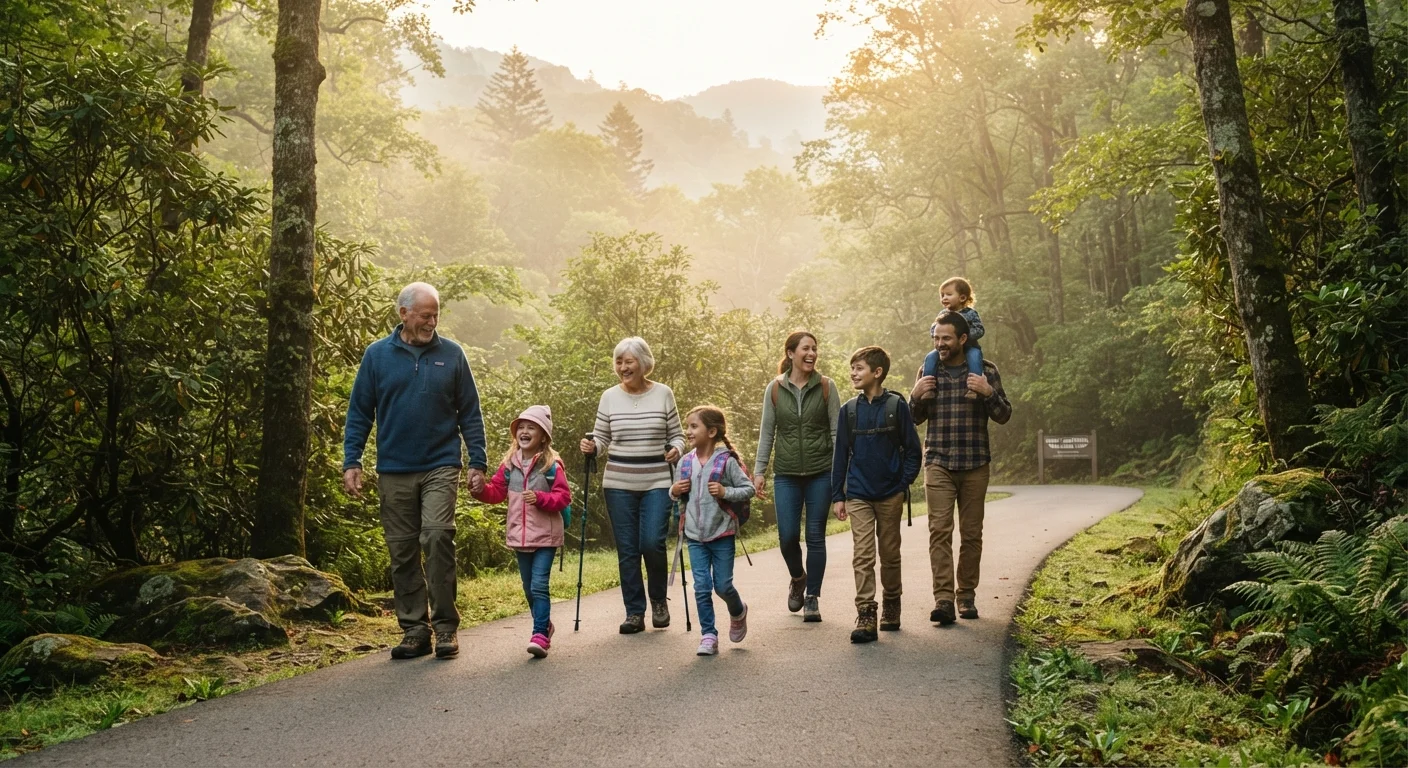
The Great Smoky Mountains National Park — the most visited national park in the United States — draws families for good reason. Its combination of paved scenic drives, accessible overlooks, flat valley walks, and optional strenuous hikes means every generation can find something rewarding without anyone being left behind.
For senior travelers in particular, the park's variety is a genuine advantage. Clingmans Dome Road leads to a short (though steep) paved path to a panoramic observation tower, while Cades Cove Loop offers a flat 11-mile paved drive with wildlife viewing from the car or roadside. Grandchildren who want more challenge can tackle steeper trails while grandparents enjoy the same natural surroundings at their own pace. That parallel-play structure is what makes the Smokies especially effective for multigenerational groups.
Gateway towns — Gatlinburg and Pigeon Forge on the Tennessee side, and Cherokee on the North Carolina side — offer accessible restaurants, cabin rentals with step-free entrances, and medical facilities within reasonable distance. See our Travel Health Tips hub for broader strategies on staying well throughout the trip.
Best Practices for Planning a Trip Everyone Enjoys
Multigenerational travel succeeds or fails in the planning stage. The following practices are drawn from the realities of traveling with mixed mobility levels, varying energy, and differing interests.
Hold a pre-trip family meeting to surface mobility needs and non-negotiables
Unspoken assumptions about pace, walking distance, and activity type are the most common source of frustration on multigenerational trips. When everyone discusses their expectations openly, the group can build an itinerary that respects limits without anyone feeling like a constraint.
Plan at least one built-in rest afternoon for every two days of activity
Senior travelers recover more slowly than younger companions, and fatigue compounds across multi-day trips. Scheduled downtime prevents the cumulative exhaustion that often derails the final days of a trip. See also our complete guide to comfort and rest on extended trips.
Use activity subgroups rather than forcing a single pace on the whole group
Splitting into subgroups by interest or mobility level allows each person to have a genuinely enjoyable experience rather than a compromised one. This approach requires coordination but prevents resentment and physical strain.
Prioritize paved scenic drives and roadside overlooks for shared experiences
Some of the park's most memorable views require no walking at all. Scenic drives provide equal access to stunning landscapes regardless of mobility level, making them ideal anchors for shared family time.
Book accommodations with verified step-free entry and confirm in advance
Photos and listings frequently omit steps, uneven terrain, or other barriers. A single staircase into a cabin can significantly complicate a trip for a senior with limited mobility or joint issues.
Carry a simple printed plan each day with clear meeting times and locations
Cell service inside the park is unreliable. A written daily plan ensures that subgroups can operate independently and reunite without depending on mobile connectivity.
Pacing is one of the most commonly underestimated factors. Our editorial team recommends reading about how overpacking an itinerary quietly exhausts senior travelers before finalizing your schedule.
Start With a Few Quick Wins Before You Arrive
Some of the most effective preparation steps take less than an hour and make a measurable difference on day one of the trip.
Arrive Early to Avoid Parking and Crowd Challenges
Popular Smoky Mountains sites — especially Cades Cove and Laurel Falls — fill parking lots by mid-morning during peak season (summer and fall foliage weeks). Arriving before 9 a.m. significantly reduces walking distances from overflow lots and lowers the stress of navigating crowded facilities. For seniors, this timing adjustment can be the difference between a comfortable visit and an exhausting one.
Accommodation and Logistics That Reduce Daily Strain
Where the group stays shapes the entire rhythm of the trip. Cabin rentals outside Gatlinburg are popular for multigenerational groups because they offer shared common space, private bedrooms, and often level entry — but verify accessibility features directly with the property before booking, as descriptions vary widely.
Seniors who find late-morning departures more comfortable should choose lodging that reduces drive time into the park. Central locations near the Sugarlands Visitor Center or downtown Cherokee allow shorter drives to key sites. For those considering RV travel as an alternative, campground selection criteria that genuinely improve the senior experience — including level sites and proximity to services — deserve careful review.
12.9M
Annual visitors to Great Smoky Mountains National Park
According to National Park Service visitation data, the Smokies consistently receive more visitors than any other U.S. national park, making early planning and off-peak timing especially important.
800+
Miles of hiking trails in the park
The park's trail network spans a wide range of difficulty levels, from flat riverside walks to strenuous ridge climbs — giving every mobility level a suitable option.
For those planning the broader logistics of a senior trip in warm weather, the step-by-step warm-weather trip planning guide offers practical structure that applies here as well. And if the group is considering a packed schedule of activities, the guidance on why itinerary density creates accessibility problems is worth reading before finalizing any plans.
America the Beautiful Pass: A Practical Consideration
U.S. residents aged 62 and older are eligible for the America the Beautiful Senior Pass, which provides lifetime access to national parks and federal recreational lands for a one-time fee. This pass can be purchased at park entrance stations or through the U.S. Geological Survey website. It covers the cardholder and accompanying passengers in a personal vehicle at no-charge entry sites. Confirm current pricing and eligibility details directly with the National Park Service.
This article provides general travel information for planning purposes. Accessibility features, trail conditions, road hours, and facility availability in the Great Smoky Mountains National Park are subject to change — always verify current conditions with the National Park Service or official park resources before your visit. Consult a qualified healthcare professional for any health or mobility concerns related to travel.