
Slow Travel in Italy: Why Staying Longer in Fewer Places Works Better for Seniors

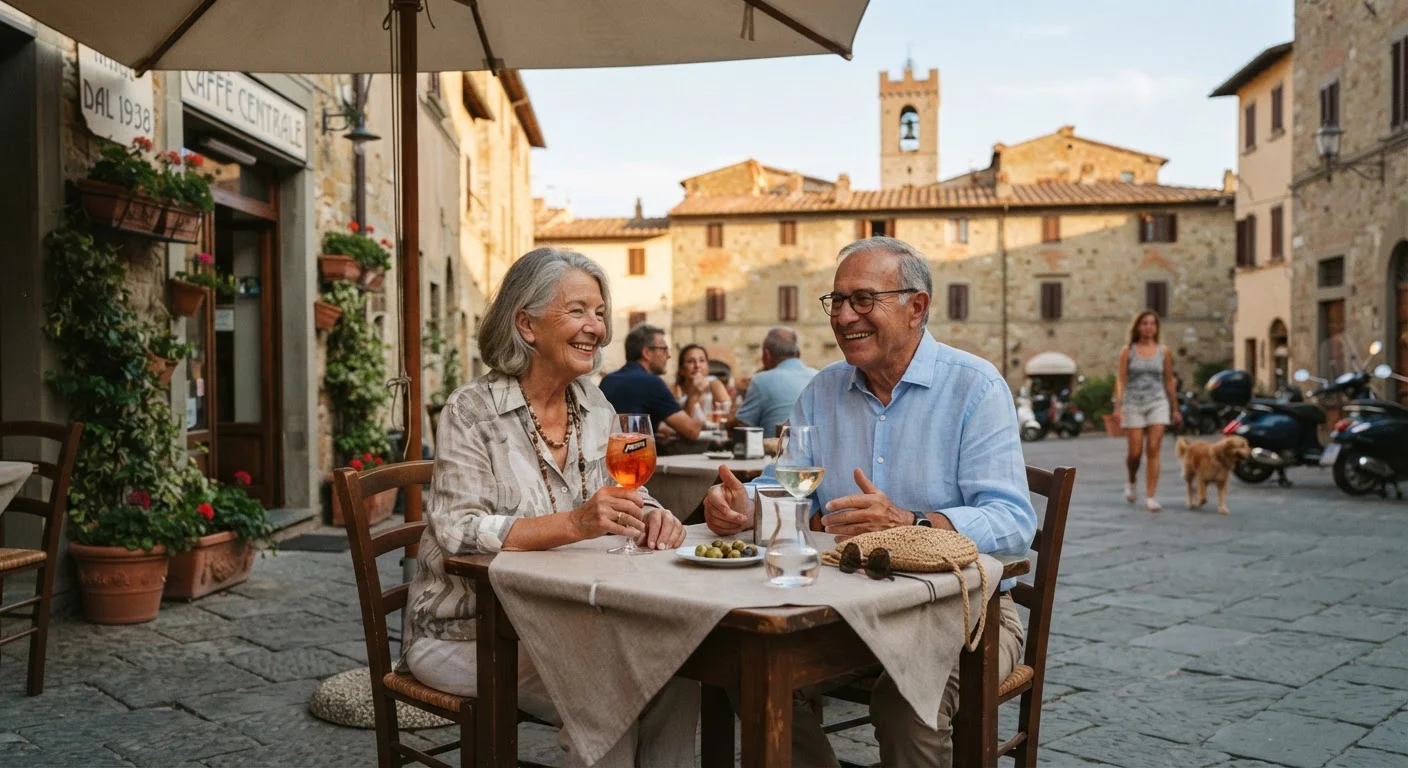
Key Takeaways
- Staying in one Italian region for a week or more reduces packing, unpacking, and transit fatigue significantly.
- Fewer destinations means more time to find accessible routes, reliable restaurants, and trusted local help.
- Slow travel allows rest days to be built in naturally, rather than squeezed around a packed itinerary.
- Regions like Tuscany, Umbria, and Lake Como offer variety within a compact, walkable radius.
- Italy's train network makes day trips from a single base practical and low-stress.
Eliminates repeated packing and unpacking stress
Moving accommodations every one to two days is one of the most physically and mentally tiring aspects of European travel. Staying in one place removes that burden entirely.
Allows natural rest days without guilt
When you have six or seven nights in one location, a quiet day with no plans feels built-in rather than a concession. This is essential for managing energy across a longer trip.
Builds local familiarity that improves daily comfort
Knowing the nearest pharmacy, a reliable grocery store, and a restaurant that seats you comfortably reduces friction and increases confidence throughout the stay.
Reduces transport-related fatigue significantly
Navigating train stations, airports, and taxis with luggage is physically demanding. A single-base approach may mean handling luggage only twice — at arrival and departure.
Deeper engagement with one place over surface-level coverage
Returning to the same piazza, recognizing the same faces, and gradually understanding a neighborhood's rhythm is a form of travel satisfaction that fast itineraries rarely deliver.
Less of Italy's geographic diversity is experienced
Italy varies dramatically from north to south. A single-region stay means coastal, mountainous, and urban Italy may remain unvisited — a real tradeoff for first-time visitors.
Rural areas may have limited accessibility infrastructure
Charming hill towns and agriturismos often lack elevators, ramps, or step-free access. Seniors with specific mobility needs require more thorough vetting of accommodation before booking.
Requires more upfront planning and research
Choosing the right base region demands research into transport links, terrain, medical facilities, and local amenities — more homework than booking a packaged multi-city tour.
Day trips can still be tiring if poorly paced
Having a base doesn't automatically prevent overexertion. Day trips to crowded sites like Florence in summer still require careful planning around heat, crowds, and walking distance.
Our Verdict
Slow travel in Italy is a genuinely better fit for most seniors than racing through multiple cities on a tight schedule. It reduces physical strain, deepens the experience, and gives travelers the flexibility to rest when needed. There are real tradeoffs — less ground covered, some regional limitations — but for the majority of older adults, the trade is well worth making.
Seniors who prioritize comfort and depth over checking off landmarks, particularly those managing joint pain, fatigue, or other health considerations that benefit from a predictable daily rhythm.
What Slow Travel Actually Means in an Italian Context
Slow travel is not about being idle — it's about resisting the pressure to move constantly. In Italy, that typically means choosing one region and staying for at least five to seven nights rather than allocating one or two nights to each city on a highlights tour.
A classic fast-paced itinerary might cover Rome, Florence, Venice, and the Amalfi Coast in ten days. Slow travel would instead place you in a rented apartment in the Siena countryside or a small hotel in Lake Como for the same duration, taking day trips as energy and interest allow.
This distinction matters enormously for senior travelers. Italy is physically demanding in ways that don't always show up on a map. Cobblestones, hills, limited elevator access, and summer heat all accumulate across a fast-moving trip. As we explore in why seniors often underestimate the physical demands of 'easy' destinations, the planning oversights that exhaust older travelers often involve exactly this kind of terrain mismatch.
The Genuine Advantages of Staying Put
Eliminates repeated packing and unpacking stress
Moving accommodations every one to two days is one of the most physically and mentally tiring aspects of European travel. Staying in one place removes that burden entirely.
Allows natural rest days without guilt
When you have six or seven nights in one location, a quiet day with no plans feels built-in rather than a concession. This is essential for managing energy across a longer trip.
Builds local familiarity that improves daily comfort
Knowing the nearest pharmacy, a reliable grocery store, and a restaurant that seats you comfortably reduces friction and increases confidence throughout the stay.
Reduces transport-related fatigue significantly
Navigating train stations, airports, and taxis with luggage is physically demanding. A single-base approach may mean handling luggage only twice — at arrival and departure.
Deeper engagement with one place over surface-level coverage
Returning to the same piazza, recognizing the same faces, and gradually understanding a neighborhood's rhythm is a form of travel satisfaction that fast itineraries rarely deliver.
Beyond comfort, there's a practical case for slow travel that experienced travelers often discover only after one rushed trip. When you spend several days in the same place, you develop a mental map. You learn which streets are smoother, which cafes don't rush you, and which local pharmacist is helpful. That accumulated familiarity is genuinely valuable — and impossible to build when you're only staying for 36 hours.
Unpacking once and not repacking for days also reduces a low-grade logistical stress that seniors frequently underestimate. Overloading the itinerary is one of the most common ways older travelers arrive home more tired than when they left — and frequent hotel transitions are a direct contributor.
The Real Limitations to Consider
Less of Italy's geographic diversity is experienced
Italy varies dramatically from north to south. A single-region stay means coastal, mountainous, and urban Italy may remain unvisited — a real tradeoff for first-time visitors.
Rural areas may have limited accessibility infrastructure
Charming hill towns and agriturismos often lack elevators, ramps, or step-free access. Seniors with specific mobility needs require more thorough vetting of accommodation before booking.
Requires more upfront planning and research
Choosing the right base region demands research into transport links, terrain, medical facilities, and local amenities — more homework than booking a packaged multi-city tour.
Day trips can still be tiring if poorly paced
Having a base doesn't automatically prevent overexertion. Day trips to crowded sites like Florence in summer still require careful planning around heat, crowds, and walking distance.
Slow travel is not a universal solution, and it's worth being honest about its drawbacks before you commit to the approach. Italy is a large, diverse country, and spending ten days in one region means you will not see others. A traveler who has always wanted to experience both Venice and the Amalfi Coast in the same trip will need to either move quickly between them or plan multiple trips.
For those with limited mobility who rely on a specific type of accommodation — perhaps one that requires elevator access or ground-floor rooms — finding that setup in a rural agriturismo or small hill town can require more research than booking an accessible chain hotel in a major city. Planning comfort and rest on extended trips is a useful starting point for thinking through accommodation requirements in advance.
Which Italian Regions Work Best for This Approach
Not every Italian region is equally well-suited to a slow-travel stay. The most workable options for seniors tend to share a few key traits: manageable terrain, good transport links, a range of accommodation types, and enough local activity to fill a week without feeling repetitive.
Italian Regions Well-Suited to a Single-Base Stay
The regions below are frequently highlighted by travel health advisers and accessibility-focused travel writers as strong candidates for senior slow travel in Italy. Each offers a mix of cultural interest, manageable terrain, and practical transport access. Conditions vary by season, so always verify current accessibility and transport options with providers before you travel.
- Tuscany — The region around Siena, Lucca, and the Val d'Orcia offers flat cycling paths alongside hill towns, excellent train connections to Florence, and well-developed tourism infrastructure including accessible accommodations.
- Umbria — Quieter than Tuscany, with towns like Spoleto and Orvieto reachable by train. Less crowded, generally cooler in summer, and increasingly accessible.
- Lake Como and Lake Garda — Northern lake regions with mild climates, ferry services between towns, and a strong tradition of leisure travel that shapes how local businesses treat visitors who aren't rushing.
- The Veneto countryside — The area around Verona, Vicenza, and the Prosecco hills gives access to Venice as a day trip while avoiding the physical toll of basing yourself in Venice proper.
Italy's regional train network, operated primarily by Trenitalia and Italo, makes day trips from most of these bases straightforward. Verify schedules and accessibility options directly with providers before travel, as services and accessibility features can vary by route and season.
5–7 nights
Recommended minimum stay per base location
Travel health practitioners generally suggest senior travelers allow at least five to seven nights in one location to achieve meaningful rest and reduce transit fatigue on international trips.
~60%
Of senior travelers report fatigue as a key trip concern
AARP's travel research has consistently found that managing physical fatigue is among the top concerns for American travelers over 60 when planning international trips.