

Key Takeaways
- Southeast Asia is not uniformly inaccessible — many cities offer well-developed senior-friendly infrastructure.
- Heat and humidity vary significantly by country, region, and season, making blanket warnings misleading.
- English is widely spoken in major tourist areas, reducing communication barriers for most senior travelers.
- Medical facilities in urban hubs like Bangkok, Singapore, and Kuala Lumpur meet high international standards.
- Careful destination selection and trip timing can make Southeast Asia comfortable for older adults.
Why These Myths Persist — and Why They Matter
Southeast Asia carries a reputation among some older Americans as a destination better suited to backpackers than retirees. Images of chaotic street traffic, relentless heat, and language barriers have calcified into assumptions that discourage seniors from ever booking a flight. Yet the region spans eleven countries, dozens of climate zones, and a spectrum of infrastructure — from modest rural guesthouses to world-class urban hospitals.
These myths matter because they cost travelers real experiences. Angkor Wat at sunrise, a slow boat along the Mekong, or a Singapore hawker market at dusk are not inherently out of reach for older adults. Common misconceptions about senior travel more broadly — from insurance assumptions to mobility concerns — create unnecessary anxiety. Southeast Asia deserves the same scrutiny. Below, we examine the most persistent myths and what the reality actually looks like.
Myth
Southeast Asia is too chaotic and difficult to navigate for older travelers.
Fact
Major cities like Bangkok, Singapore, and Hanoi have extensive public transit, ride-hailing apps, and organized tour infrastructure that make navigation manageable for seniors.
Much of the "chaos" perception stems from images of dense street markets or motorbike-heavy traffic in older media. In practice, cities such as Singapore and Kuala Lumpur have world-class metro systems with step-free access on many lines. Bangkok's BTS Skytrain and river ferries allow travelers to move between neighborhoods without navigating street traffic at all. Ride-hailing apps widely available in the region allow door-to-door transport with fare transparency and no language negotiation required. Guided small-group tours, popular throughout the region, can handle logistics entirely — leaving seniors free to focus on the experience.
Myth
The heat and humidity make Southeast Asia unbearable and dangerous for seniors.
Fact
Climate varies widely across the region and by season; traveling during a destination's cooler dry season significantly reduces heat exposure.
Southeast Asia is not a monolith. Northern Vietnam in December can be genuinely cool. Chiang Mai in November sits at comfortable daytime temperatures. Singapore, though consistently warm, benefits from modern air-conditioned infrastructure nearly everywhere travelers go. The key is matching your destination to its optimal travel window. Midday heat can be avoided by scheduling outdoor sightseeing in the early morning or late afternoon — a strategy that experienced travelers of any age use routinely. Warm-season travel in Southeast Asia has its own nuances worth understanding before dismissing the region based on temperature alone.
Myth
Medical care in Southeast Asia is inadequate, making it too risky for seniors with health conditions.
Fact
Several Southeast Asian cities are home to internationally accredited hospitals that serve medical tourists from around the world.
Bangkok, Singapore, Kuala Lumpur, and Ho Chi Minh City each host hospitals accredited by international healthcare quality bodies, staffed by English-speaking physicians many of whom trained abroad. Medical tourism to Thailand in particular is well-established, with facilities routinely handling complex cases. That said, medical infrastructure does thin out in rural areas and smaller islands. Seniors with significant health needs should plan itineraries that keep them within reasonable reach of urban medical centers, and should ensure travel insurance covers emergency medical evacuation. Misconceptions about senior health limitations and travel often overstate the barriers — but preparation remains essential regardless.
Myth
Language barriers make it nearly impossible for English-speaking seniors to get around.
Fact
English is widely used in tourism, hospitality, and business contexts across most major Southeast Asian destinations.
In Singapore, English is an official language. In Thailand, Vietnam, Indonesia, and Malaysia, hotel staff, tour operators, restaurant workers in tourist areas, and airport personnel routinely communicate in English. Signage at major attractions is frequently bilingual. Translation apps on smartphones have also reduced friction dramatically in contexts where language gaps do arise. Challenges are more likely in off-the-beaten-path rural areas — another reason destination research matters more than blanket assumptions about an entire region.
Myth
Senior travelers are especially vulnerable to crime in Southeast Asia.
Fact
Tourist-focused crime in Southeast Asia typically involves petty theft and scams — risks that apply broadly to all travelers and are manageable with standard precautions.
Violent crime targeting tourists is statistically uncommon in most Southeast Asian destinations. The risks seniors face are largely the same ones any visitor encounters: bag snatching in crowded areas, taxi overcharging, or tourist-targeted scams. These risks are real but not unique to the region or to older travelers. Myths about senior traveler safety outlines how fear of crime is often disproportionate to actual incidence rates. Staying alert, using reputable services, and keeping valuables secured are effective and practical responses — not reasons to avoid a destination entirely.
Planning Considerations That Make a Real Difference
Separating myth from reality is not the same as saying Southeast Asia is effortless. Smart trip design matters enormously. Choosing the dry season in your target country (which varies — Thailand's north is coolest November through February, while Singapore is relatively consistent year-round) can transform your comfort level. Opting for slower-paced itineraries with buffer days reduces fatigue in ways that suit most senior travelers far better than rushed multi-stop tours.
11
Countries comprising Southeast Asia
Each country has its own climate patterns, infrastructure levels, and accessibility features — generalizations across the region are rarely accurate.
Top 3
Medical tourism hubs in the region
Bangkok, Singapore, and Kuala Lumpur are consistently cited by international health travel organizations as leading destinations for quality medical care.
Nov–Feb
Peak dry season across much of mainland Southeast Asia
Traveling during this window generally means lower humidity, reduced rainfall, and more comfortable daytime temperatures across Thailand, Vietnam, and Cambodia.
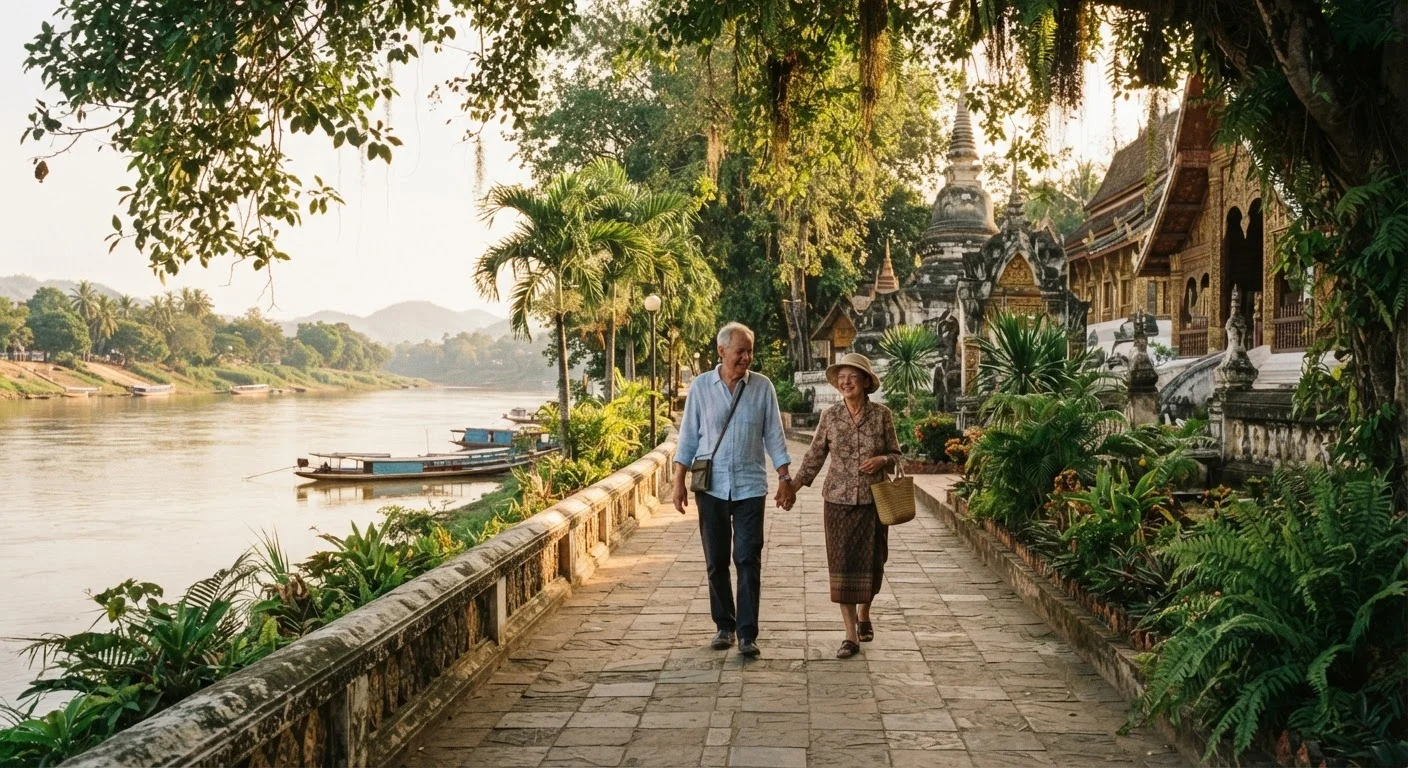
Accessibility at individual sites remains uneven. Cobblestoned temple complexes and steep staircases exist alongside elevator-equipped museums and flat river promenades. Researching specific sites — and accepting that some require adaptation rather than avoidance — is more useful than ruling out a country wholesale. Southeast Asia cruise itineraries can also offer a structured, lower-logistics way to sample multiple ports without repeated hotel changes.
Travel health preparation is equally important. Consult a qualified healthcare professional or travel medicine specialist well before departure to discuss vaccinations, medications, and any destination-specific health considerations relevant to your personal situation. For general wellness strategies en route, the Travel Health Tips hub covers practical guidance suited to senior travelers. Safety concerns deserve the same evidence-based lens — our resource on travel safety tips for seniors separates genuine risks from inflated fears.
Verify Entry and Health Requirements Before You Travel
Visa rules, vaccination requirements, and travel advisories change. Always check current guidance from the U.S. Department of State and the Centers for Disease Control and Prevention (CDC) before finalizing travel plans. Do not rely on travel articles — including this one — as a substitute for official, up-to-date government guidance.
This article provides general travel information for educational purposes only. It is not medical advice. Always consult a qualified healthcare professional for guidance tailored to your personal health needs before traveling internationally.