
Staying Upright: Why Falls Are the Leading Travel Injury Risk for Seniors

Key Takeaways
- Falls are the most common cause of travel-related injury among adults over 65.
- Unfamiliar environments, fatigue, and jet lag significantly heighten fall risk during trips.
- Specific settings — cruise ship decks, cobblestone streets, and hotel bathrooms — are frequent incident sites.
- Simple precautions, including appropriate footwear and rest planning, meaningfully reduce risk.
- Travel insurance that covers emergency medical care can limit the financial impact of a fall abroad.
- Consulting a healthcare provider before travel helps identify personal risk factors.
Travel Fall Risk for Seniors
Travel fall risk refers to the elevated likelihood that older adults will experience a slip, trip, or stumble while away from home. Unfamiliar environments, fatigue, jet lag, and changes in routine all combine to make travel a particularly hazardous period for falls. Understanding this risk is the first step toward preventing it.
Age-related changes in balance, proprioception (the body's sense of its own position), and muscle strength reduce the margin for error when navigating irregular or unexpected surfaces.
Why Falls Top the Injury List for Older Travelers
Among travelers over 65, falls consistently rank as the leading cause of injury — outpacing food-related illness, traffic incidents, and other common travel health concerns. This isn't a coincidence. The conditions that make travel exciting — new places, different architecture, unfamiliar routines — are precisely the conditions that increase fall risk.
At home, most older adults have adapted their environment and daily patterns to manage any balance or mobility challenges. Grab bars are in the right places, lighting is familiar, and the distance between furniture is known without thinking. Travel strips away all of that built-in safety and replaces it with unknowns.
Jet lag, dehydration, and the physical fatigue of long flights or bus journeys further erode the reflexes and concentration needed to navigate safely. Even a traveler who rarely stumbles at home can find themselves genuinely vulnerable in an unfamiliar hotel corridor at 2 a.m.
#1
Cause of travel injury in adults over 65
Falls consistently rank as the top cause of travel-related injury among older adults, according to travel medicine researchers and wilderness medicine literature.
3x
Higher fall-related hospitalization risk post-fall
The CDC notes that older adults who fall are significantly more likely to fall again, making the first incident a key prevention opportunity.
80%
Of falls involve a preventable environmental factor
Research in geriatric health consistently finds that the majority of falls involve at least one modifiable environmental hazard, such as surface type or lighting.
Environments That Trigger Falls Most Often
Not all travel settings carry equal risk. Certain environments come up repeatedly in travel health data and clinician reports as fall hotspots for older travelers.
- Cruise ship decks: Moving vessels, wet surfaces, and steep interior staircases create constant balance challenges. Our related article on overlooked cruise risks for seniors covers this in depth.
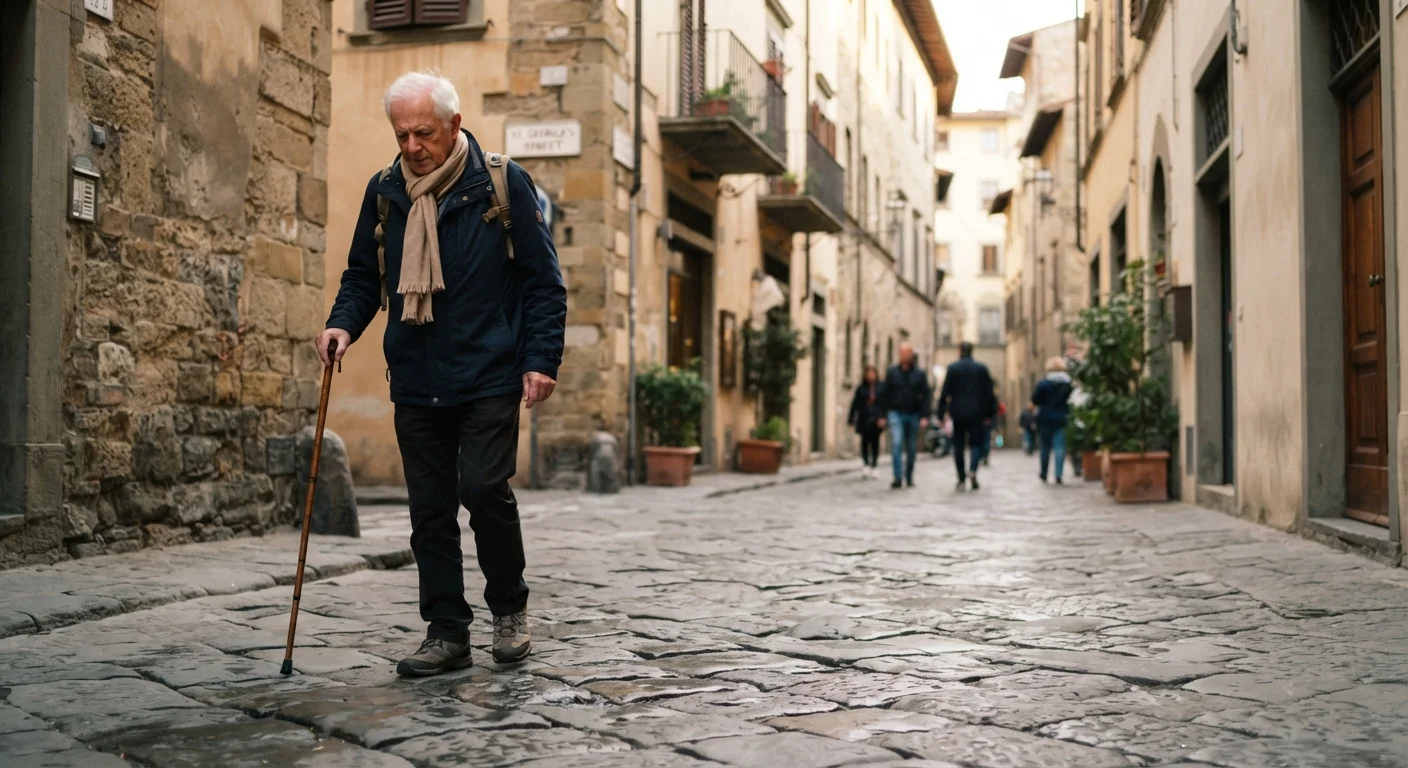
- Cobblestone and uneven streets: Popular in historic European cities, cobblestones are charming but highly irregular. A single misplaced step can cause a serious ankle twist or fall.
- Hotel bathrooms: Hard tile floors, unfamiliar layouts, no grab bars, and the disorientation of a new space — especially at night — make hotel bathrooms a surprisingly frequent fall site.
- Airport moving walkways and escalators: The transition on and off moving walkways requires quick weight shifts that can challenge older travelers, particularly when carrying luggage.
- Poorly lit historic sites: Ruins, old churches, and archaeological sites often have uneven stone floors, unexpected steps, and limited artificial lighting.
Being aware of these environments in advance allows you to approach them more deliberately rather than being caught off guard. For a broader look at hazards that older international travelers often miss, see hidden risks seniors overlook on international trips.
Practical Precautions That Make a Real Difference
The good news is that fall risk during travel is not fixed. A handful of deliberate choices before and during a trip can substantially reduce the likelihood of an incident.
Arrive a Day Early to Adjust
Jet lag and travel fatigue peak in the first 24–48 hours after a long journey. Arriving at your destination a day before any scheduled touring gives your body time to recalibrate before you're navigating busy streets or active excursions. Use that first day for light activity, good hydration, and extra sleep.
Before You Leave
- Schedule a pre-trip conversation with your healthcare provider, particularly if you have balance concerns, vision issues, or take medications that affect coordination or blood pressure. This is general guidance — your provider can assess your individual situation.
- Pack footwear with non-slip soles and ankle support. Shoes should already be broken in.
- If you use a cane or walking aid, confirm it's in good repair and consider whether a lighter travel version makes sense for longer distances.
During Your Trip
- Build rest into your itinerary. Fatigue is one of the most underestimated fall triggers. Packing too many activities per day leaves little margin for safe movement.
- When entering unfamiliar spaces — a new hotel room, a ship cabin, a restaurant with steps — take a slow visual scan before moving through.
- In hotel bathrooms, use any available towel bars cautiously (they are often not weight-bearing) and consider packing a portable non-slip mat.
- Carry a small flashlight or use your phone's torch for poorly lit areas. Don't assume that hallways or outdoor paths will be adequately lit at night.
For ongoing wellness strategies that support stability and stamina during travel, the Travel Health Tips hub offers a range of practical guidance.
Insurance, Emergency Readiness, and Recovery
Even with careful preparation, falls can happen. Having a plan in place before you travel can mean the difference between a manageable setback and a financial or medical crisis.
Travel insurance policies vary widely in what they cover for medical emergencies, including fall-related injuries. Some include emergency evacuation; others limit coverage based on pre-existing conditions. Because terms differ so significantly between providers, it's important to read any policy document carefully and speak with a licensed insurance adviser if you're unsure what applies to your situation. For a plain-language look at common misconceptions, see travel insurance myths that affect senior travelers.
If you do need to file a medical claim abroad after an injury, the process can feel overwhelming. Our related guide on filing a medical claim abroad walks through the steps in plain, manageable terms.
Before departing, note the location of the nearest medical facility at each destination, keep emergency contact information accessible (not just on your phone), and carry a brief written summary of your medications and any relevant medical history in your wallet or travel bag.
This article is for general informational purposes only and does not constitute medical, insurance, or legal advice. Always consult a qualified healthcare provider about your personal health situation before traveling, and review actual policy documents with a licensed adviser for insurance guidance.