

Key Takeaways
- The Inside Passage is sheltered water, making it one of the calmest cruise routes available to seniors.
- Most major ports — including Juneau, Ketchikan, and Sitka — offer accessible pier infrastructure and flat walking areas.
- Alaska's cruise season runs roughly May through September, with July and August offering the mildest weather.
- Shore excursions vary widely in physical demand; always confirm accessibility details directly with the excursion provider.
- Cold, damp conditions require layered clothing and non-slip footwear — preparation matters for comfort and safety.
- Travel insurance with medical evacuation coverage is especially important when cruising remote Alaskan waters.
Alaska's Inside Passage
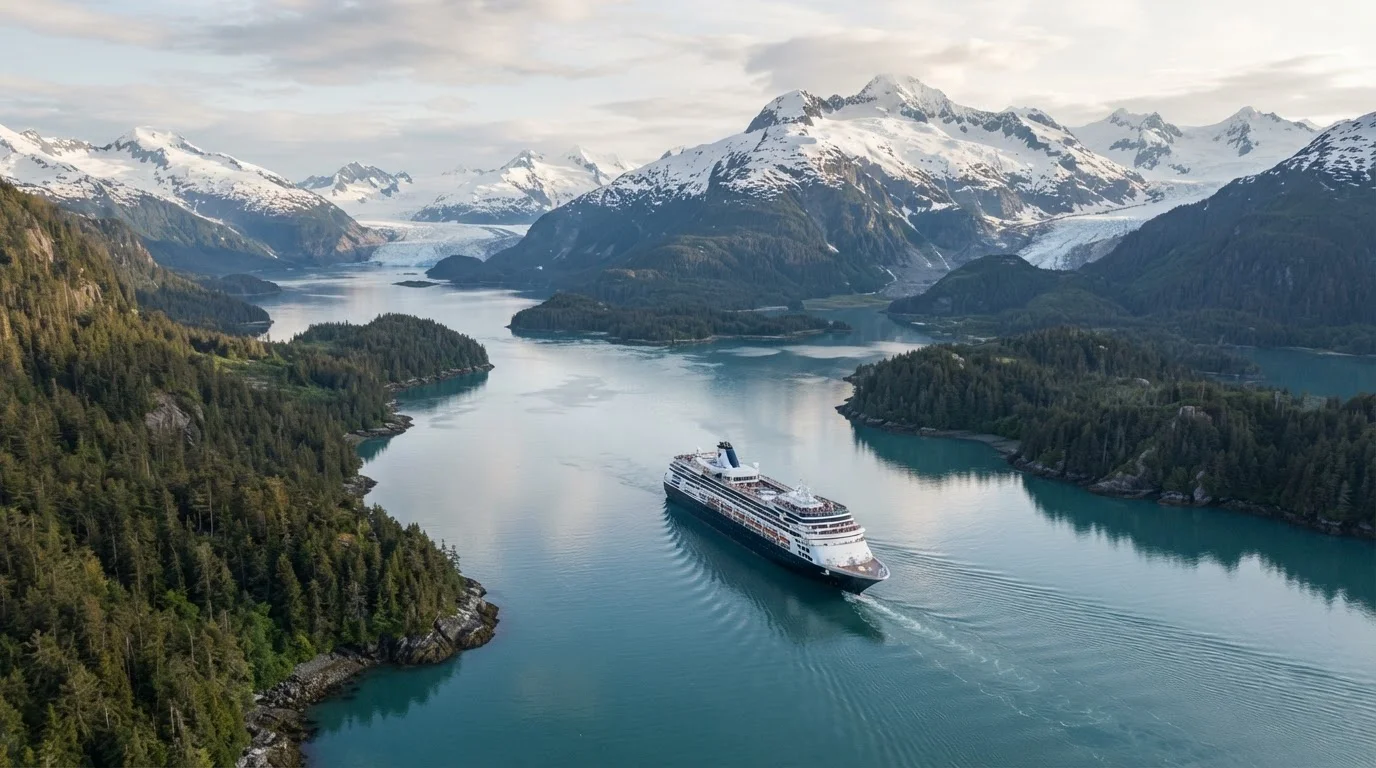
Alaska's Inside Passage is a coastal waterway stretching roughly 500 miles along the southeastern Alaska and British Columbia coastline. Protected from open-ocean swells by a chain of islands and fjords, it forms one of the calmest and most scenic cruise routes in North America. Ships travel through narrow channels past glaciers, old-growth forests, and wildlife-rich shores, typically departing from Seattle, Vancouver, or San Francisco.
The route is sheltered rather than open-ocean, meaning sea conditions are generally calmer than transatlantic or Caribbean routes — a practical advantage for those sensitive to motion.
Why the Inside Passage Appeals to Senior Cruisers
Few cruise routes combine dramatic scenery with practical comfort the way Alaska's Inside Passage does. Because the waterway winds between the mainland and a protective arc of islands, swells from the open Pacific are largely absorbed before reaching the ship. The result is a remarkably smooth sailing experience — an important consideration for seniors who may be sensitive to motion or who are taking certain medications that can amplify the effects of rough seas.
The route is also structured in a way that suits a relaxed travel pace. Rather than docking at a new destination each day with rushed turnarounds, Inside Passage itineraries typically include full days at sea spent cruising past glaciers and fjords, with port days interspersed at a comfortable rhythm. This balance of active exploration and unhurried observation makes it well suited to travelers who want immersive experiences without the physical demands of fast-paced tourism.
~500 miles
Length of the Inside Passage waterway
The route stretches along the coasts of southeastern Alaska and British Columbia, passing through some of North America's most dramatic scenery.
May–Sept
Alaska cruise season window
The majority of Inside Passage sailings operate within this five-month window, with peak weather and wildlife activity in July and August.
4–5
Typical port stops per roundtrip itinerary
Most standard 7-day Inside Passage itineraries include four to five port days, providing a relaxed rhythm with ample sea-day viewing time between stops.
For a broader overview of how to plan a comfortable cruise experience as an older traveler, see our complete guide to cruising comfortably.
Ports Along the Route: What to Expect on Shore
The most visited Inside Passage ports — Juneau, Ketchikan, Sitka, and Skagway — each offer a different character, and each has practical features seniors should be aware of before stepping ashore.
- Juneau has a compact downtown waterfront accessible on foot, with flat paved streets near the pier. The Mount Roberts Tramway provides a seated, accessible way to reach elevated views without hiking. Mendenhall Glacier, a popular excursion, involves some uneven terrain at the visitor area.
- Ketchikan is known for its historic Creek Street boardwalk, which is flat and easy to navigate. Totem pole parks are typically accessible by bus.
- Sitka requires a short tender-boat transfer (a smaller boat used when the ship cannot dock directly), which may present a challenge for those with significant mobility limitations. The town itself is manageable and historic.
- Skagway is best explored by the White Pass scenic railway — a seated excursion that eliminates the need for extensive walking.
Before choosing excursions, always confirm physical demand ratings and accessibility accommodations directly with the provider. Our accessibility features checklist can help you ask the right questions.
Cold-Weather Comfort: Dressing and Pacing for Alaska
Even in summer, Alaska's Inside Passage can feel brisk. Temperatures typically range from the mid-40s to low 60s Fahrenheit (roughly 7–17°C), and rain is frequent along this coastal corridor. The key to comfort is layering rather than packing one heavy coat. A moisture-wicking base layer, an insulating mid-layer, and a waterproof, windproof outer shell give you flexibility as temperatures shift between the ship's heated interior and outdoor deck observation.
Layer Up for Deck Viewing
Some of the most memorable Inside Passage moments — glaciers calving, humpback whales surfacing, bald eagles in flight — happen from the open deck. Keep a packable insulating layer and a windproof shell easily accessible in your cabin or day bag so you can step outside quickly and stay comfortable for extended viewing without returning to change clothes.
Footwear deserves particular attention. Docks and tender platforms can be wet and slippery. Non-slip, waterproof shoes or boots — rather than standard sneakers — provide meaningfully better grip and can reduce the risk of a fall. Rubber-soled hiking boots are a practical choice for most port days.
For a detailed packing and pacing guide tailored to cold-weather cruise routes, our cold-weather cruising preparation guide covers layering strategies, mobility considerations on icy docks, and how to pace excursions in northern climates.
Health, Safety, and Insurance Considerations
Cruising remote Alaskan waters means that access to advanced medical care can take time. Most large ships carry onboard medical staff and basic equipment, but serious conditions requiring hospital-level treatment may necessitate medical evacuation by helicopter or small aircraft — a significant expense without appropriate coverage.
Travel insurance that includes medical evacuation is widely recommended for Alaska cruises, particularly for older travelers or those managing ongoing health conditions. However, coverage terms, exclusions, and premiums vary considerably between providers. This article provides general information only and is not personalized insurance or financial advice. Consult a licensed insurance adviser and read actual policy documents before purchasing any coverage.
Medical Evacuation in Remote Waters
Alaska's Inside Passage passes through stretches where the nearest major hospital may be hours away by air. Cruise ships carry onboard medical staff, but complex conditions may require evacuation. Travel insurance with medical evacuation coverage is an important consideration for this route. Coverage terms vary widely — always read the actual policy and consult a licensed adviser for guidance specific to your situation.
Regardless of your health status, speak with your own healthcare provider before any cruise. This is general travel health information, not medical advice. Your provider can advise on managing specific conditions, medication adjustments for travel, and whether any vaccinations or preventive measures are appropriate for your trip. For broader planning guidance, our senior cruiser's guide to choosing a cruise walks through health and mobility considerations as part of the booking process.
This article is for general informational purposes only and does not constitute medical, insurance, financial, or legal advice. Always verify entry requirements, health recommendations, and safety conditions with official government and provider sources before traveling.