
Warm-Weather Itineraries vs. Cultural Discovery Routes: Finding Your Cruise Style

Key Takeaways
- Warm-weather itineraries typically feature more sea days, which allows greater rest and ship-based recovery time.
- Cultural discovery routes often involve multiple port days in quick succession, requiring careful pacing and mobility planning.
- Ship size and onboard accessibility matter as much as destination when choosing a cruise style.
- Seniors benefit from reviewing sea-day-to-port-day ratios before booking any itinerary.
- Neither style is universally better — the right choice depends on health, mobility, and personal travel priorities.
Our Verdict
Warm-weather loops and cultural discovery routes each serve distinct senior traveler profiles. The former rewards those who prioritize rest, tropical scenery, and a gentle rhythm; the latter suits those energized by history and varied port experiences. Matching your itinerary style to your stamina and interests is the single most important planning decision you can make.
| Best for | Recommended |
|---|---|
| Travelers who value rest, warm climates, and predictable onboard routines | Warm-Weather Itinerary |
| History enthusiasts who enjoy walking tours and varied cultural experiences | Cultural Discovery Route |
| Those managing mobility limitations who need carefully spaced port days | Warm-Weather Itinerary |
| Active seniors with solid stamina who want maximum destination variety | Cultural Discovery Route |
Understanding the Two Cruise Styles
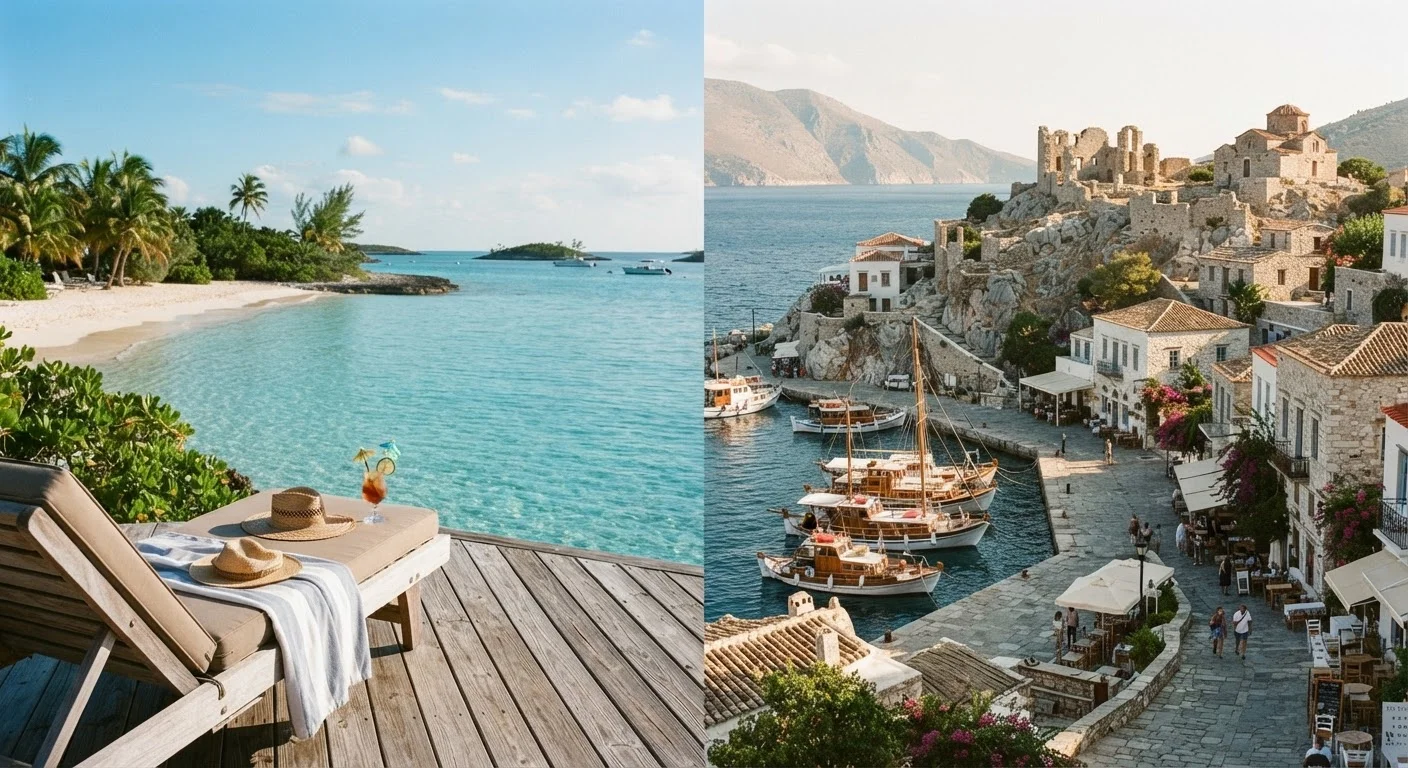
Cruise itineraries generally fall into two broad categories: warm-weather loops — think Caribbean, Mexican Riviera, or Pacific island circuits — and cultural discovery routes, such as Mediterranean coast crawls or Baltic capital tours. Both can be excellent for senior travelers, but they differ substantially in pacing, port accessibility, and what they demand physically and logistically.
A warm-weather loop typically combines several sea days with port calls at resort-oriented destinations. The emphasis is on relaxation, sunshine, and unhurried beach or marina visits. A cultural discovery route, by contrast, may dock in a different historic city nearly every day, inviting passengers to explore ancient ruins, art museums, or old-town districts — often involving cobblestones, inclines, and longer walking distances.
For a deeper look at how itinerary structure affects day-to-day comfort, see our guide to structured vs. freestyle cruise schedules.
Pacing, Sea Days, and Physical Demand
One of the clearest differences between these two styles is the ratio of sea days to port days. Warm-weather Caribbean itineraries often include two or three consecutive sea days at the start and end of a voyage, giving travelers time to settle in, manage jet lag, and recover between excursions. Cultural routes in regions like the Mediterranean or Northern Europe may feature six or seven consecutive port days — each requiring early departures and sustained walking.
3–4
Average sea days on a 7-night Caribbean cruise
Industry itinerary data generally shows Caribbean loops balance roughly equal port and sea days across a standard week-long sailing.
6–8
Port calls on a typical 10-night Mediterranean itinerary
Mediterranean itineraries are frequently port-intensive, with some sailings stopping in a different city on nearly every day of the voyage.
Before booking, count port days carefully. A 10-night Mediterranean itinerary with eight port calls may sound appealing in a brochure but can leave travelers feeling exhausted rather than enriched. Our senior traveler's walkthrough for reading cruise itineraries explains how to spot pacing red flags before you commit.
Use the Sea-Day Ratio as a Planning Tool
Before finalizing any itinerary, add up the total number of sea days versus port days and consider whether that balance matches your stamina. A trip with four or more consecutive port days can be tiring even for active travelers. If you find an itinerary you love but the pace is too intense, look for a longer version of the same route — more sailing time often means more recovery built in.
Accessibility at Sea and Ashore
Ship size plays a significant role in both itinerary types. Larger ships — common on Caribbean routes — tend to offer more onboard accessibility features: elevators between all decks, wider corridors, pool lifts, and accessible cabin designs. Smaller expedition or river-style vessels used on some cultural routes may have limited accessibility infrastructure.
Port infrastructure varies just as widely. Caribbean ports in Nassau, Cozumel, or St. Thomas are largely built around cruise tourism and generally offer flat pier access, accessible transportation, and English-speaking guides. Mediterranean ports like Santorini require tender boats (small vessels ferrying passengers from ship to shore) and steep terrain, while others like Barcelona or Lisbon have modern, flat pier facilities.
For a detailed destination-by-destination comparison, our article on Caribbean vs. Mediterranean cruises for senior travelers covers shore excursion accessibility across both regions.
| Warm-Weather Itinerary | Cultural Discovery Route | |
|---|---|---|
| Typical sea-day ratio | Higher — more rest days at sea | Lower — frequent consecutive port days |
| Physical demand ashore | Moderate — flat piers, beach settings | Higher — cobblestones, inclines, longer walks |
| Port accessibility | Generally purpose-built for cruise visitors | Varies widely; some require tender boats |
| Ship size tendency | Often larger, full-accessibility features | Ranges from large to small expedition vessels |
| Ideal traveler profile | Rest-focused, mobility-conscious seniors | Active seniors energized by history and culture |
| Climate predictability | Consistently warm and sunny | Seasonal variation; weather can be variable |
Matching Your Style to Your Priorities
Choosing between these two itinerary styles comes down to an honest assessment of your travel goals, stamina, and health considerations. If your primary aims are rest, warm weather, and low-pressure port days, a Caribbean-style loop will likely suit you better. If you are energized by history, architecture, and diverse cultures — and you have the physical capacity for frequent half-day excursions — a cultural discovery route can be deeply rewarding.
Seniors managing chronic conditions or mobility considerations should discuss travel plans with their healthcare provider before booking. This article provides general guidance only and is not a substitute for personalized medical advice. General travel health tips for seniors can help you think through wellness planning for either style.
It is also worth considering whether a single destination or a multi-port approach better matches your energy levels. Our analysis of island hopping vs. single destination travel explores this trade-off in depth. For a broader planning foundation, the senior traveler's complete guide to choosing a cruise ties all of these factors together in one resource.
This article is for general informational purposes only and does not constitute medical, financial, or travel advice. Verify entry requirements, accessibility conditions, and health considerations with official sources and qualified professionals before traveling.